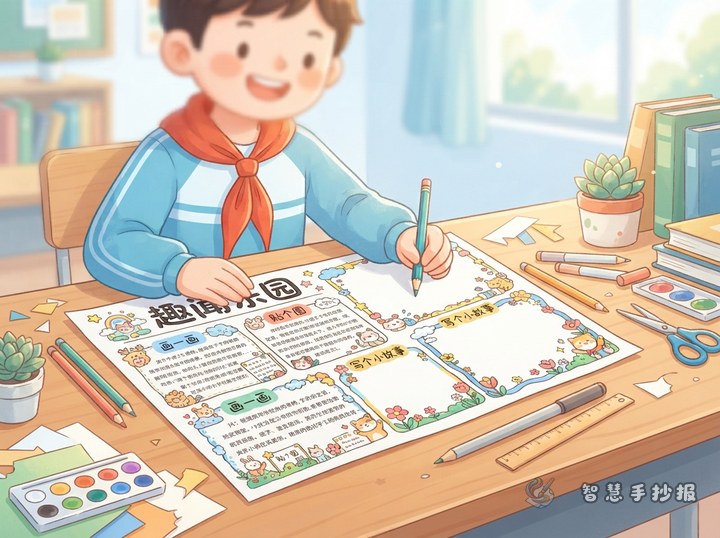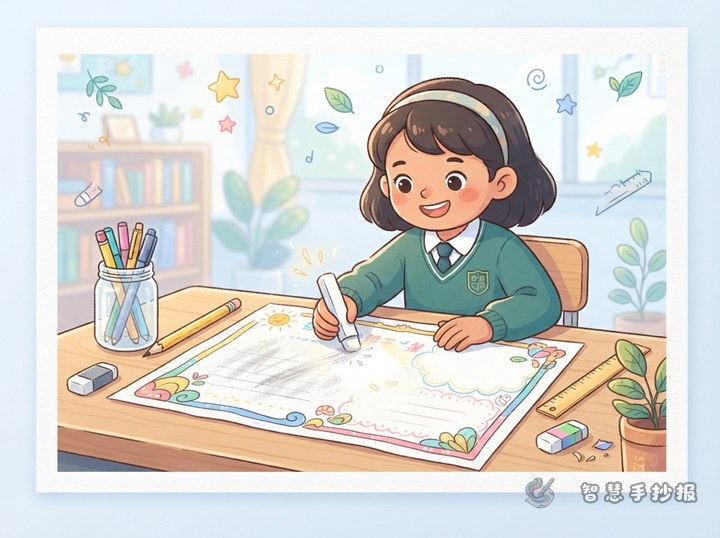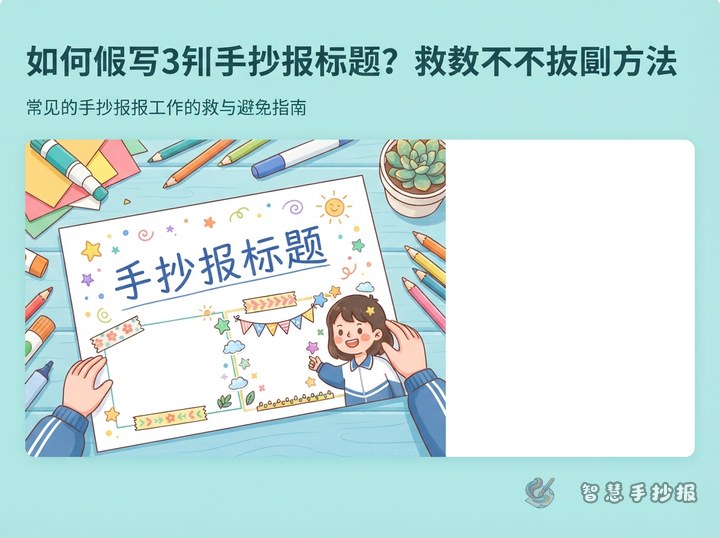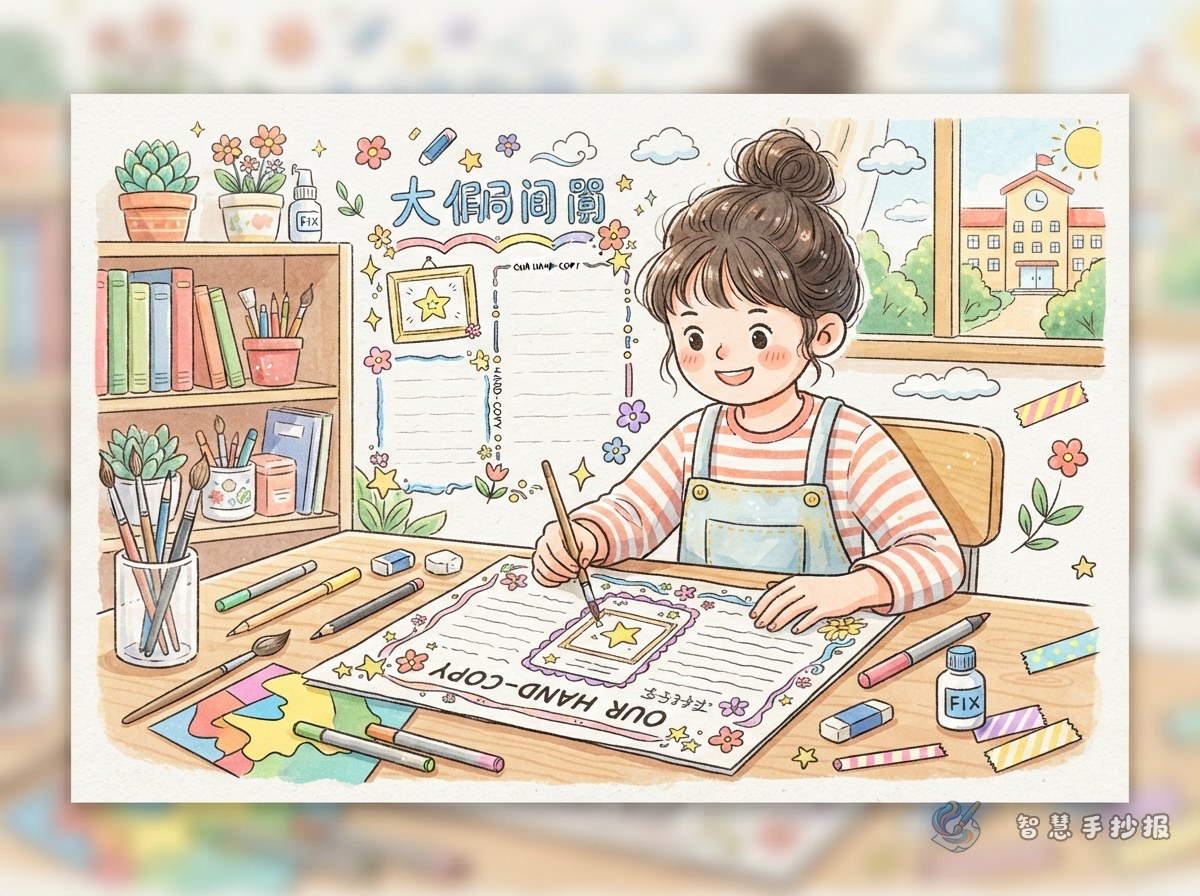
Decide First: Crooked Frame or Uneven Columns?
They look similar but need different fixes. A crooked frame means the outer border is not parallel to the paper edge. Uneven columns means the inner dividing lines cut the page into sections of very different widths. Before you reach for the eraser, step back and look from a distance: if it only looks off up close, leave it alone.
- Slightly tilted frame, but all text still lines up: keep it.
- Strong tilt that pushes text into the border or squeezes out an illustration: fix it.
- Inner sections differ by more than a third: rebalance the content instead of redrawing.
Three Ways to Rescue a Crooked Border
- Draw a double line. Add a second line parallel to the crooked one, outside it, then fill the gap with light colour or small dots. From a distance it reads as a deliberate double frame.
- Turn straight lines into decorative edges. Swap the ruler-straight border for waves, dashes, triangles, vines or scallops. Decorative edges are meant to move, so small wobbles disappear.
- Cover the worst corner. Paste a small square of coloured card, or draw a flower or star over the spot where the line goes wrong. Use a thin layer of glue so the paper does not wrinkle.
Uneven Columns: Change the Content, Not the Lines
Erasing a divider is the fastest way to roughen your paper. Leave the line where it is and adjust what goes inside:
- The wide column becomes the main section: a bigger title, one illustration, or a longer piece of text.
- The narrow column holds short items: two lines of a poem, a quick tip, a number fact.
- Thicken the divider into a ribbon, a book spine or a rope. The width difference gets absorbed by this decorative band.
If the gap is really large, cut a narrow strip of coloured card and paste it along the old line as a fresh divider. It works and it takes two minutes.
Which Slants Can You Simply Ignore?
A handwritten poster is not a printed page. A little unevenness looks handmade. In a layout with pictures and text mixed freely, an extra bit of white space or a deliberately staggered text block, nobody is going to measure your straight lines.
Fix only what blocks reading: text running into a border, sections crammed together, an illustration cut in half. When you fix that one spot, resist the urge to redo the rest.
Two Minutes of Setup That Prevent the Whole Problem
- Tape the four corners of your paper to the desk. Paper that slides drags your lines with it.
- Sketch the outer margin in pencil, about one and a half to two centimetres, measuring each side rather than guessing.
- Find the centre line, then measure the division points for two or three columns. Keep the pencil lines faint.
- Draw a matchbox-sized thumbnail sketch first: where the title, illustration and text blocks will sit, and how big each one is.
- Erase all pencil lines at the very end, in one pass, for a cleaner finish.
If you are unsure about proportions, open the ZhiHui ShouChaoBao WeChat mini program, pick a layout style, and drop your content into its sections before copying it onto paper. You will spend far less time repairing mistakes.