Make the theme “A Day in the Life of a Plant”
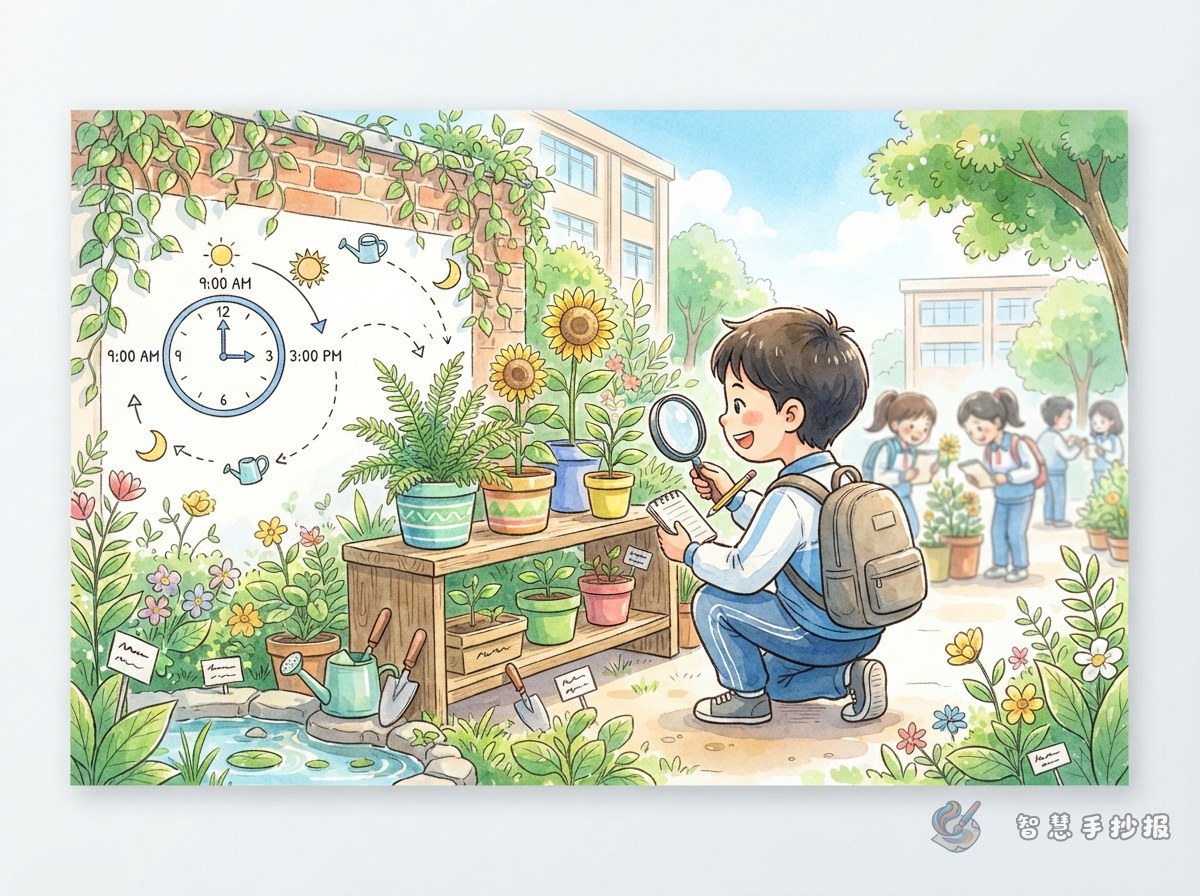
Build the handwritten newspaper around a one-day observation of the school plant corner. You do not need to describe a long period of growth. Instead, compare the plant at different times on the same day. A clear main line is morning, afternoon, and before leaving school. At each point, observe the plant’s location, light, leaf position, soil moisture, and nearby surroundings.
You can begin with a short introduction: “The same plant meets different light and temperatures during one day. Let us follow the observation timeline and see what I discovered in the plant corner.” This helps readers understand the purpose of the page right away.
What to record at the three time points
Morning: Describe your first impression
- Time and location: Note the approximate time and whether the plant is beside a window, near a wall, or on a shelf.
- Appearance: Write whether the leaves look open, upright, or slightly droopy, and describe their color.
- Surroundings: Check whether the soil surface looks moist and whether the area around the pot is tidy.
Afternoon: Focus on light and surroundings
- Changes in light: Note whether sunlight reaches the plant and where its shadow falls.
- A small detail: Record the leaf texture, the direction of the stem, or one leaf that catches your attention.
- Your impression: Use suitable words such as quiet, bright, fresh, or warm to describe the setting.
Before leaving school: Write the day’s conclusion
- Compare again: Compare this record with the morning note and identify one similarity and one difference.
- Your question: Write one thing you want to keep observing, such as “Will the leaves look the same tomorrow?”
- Care action: Add practical actions such as handling the plant gently, watering only when needed, and keeping the corner clean.
Turn the diary into clear newspaper sections
Besides the timeline, add four small sections to make the page feel complete. The first is a Plant Profile with the plant name, location, observation date, and observer. The second is Three Observation Cards, each containing only the time, a detail, and one feeling. The third is My Discovery, where two or three sentences summarize the day. The fourth is Plant Corner Rules, with reminders about caring for plants, taking turns, and not touching them carelessly.
You may use this sentence pattern: “In the morning, the light in the plant corner was soft and the leaves looked open. In the afternoon, the sunlight moved beside the pot, making the leaf patterns easier to see. Before leaving school, I observed the plant again and decided to check the same spot tomorrow.” Replace the sample sentences with details you actually observed.
Plan the page with a clock route
A horizontal sheet works well for a timeline. Place a small clock and the morning card on the left, connect them with a curved arrow to the afternoon card in the middle, and put the final record and conclusion on the right. On a vertical sheet, arrange the three time points from top to bottom and draw one small plant through the center of the page.
Possible titles include “A Day in the Life of a Plant,” “My Three Visits to the Plant Corner,” or “Watching a Plant Through the Day.” Use green as the main color with light yellow, sky blue, or brown. Keep all time labels in a consistent shape, and avoid making each paragraph too long. Clocks, windows, flowerpots, sunlight, and leaves make useful decorations, but they should not cover the observation notes.
Check four details before finishing
- Are the three observation times clear and arranged from morning to evening?
- Did you record details you truly saw instead of only writing that the plant was pretty?
- Are the plant name, date, and location complete?
- Can readers quickly find the title, timeline, conclusion, and care reminder?
Plan the timeline and wording on scrap paper before copying them onto the final page. If you need help arranging sections and a layout, you can continue creating the page in the WeChat mini program “Smart Handwritten Newspaper,” then revise the wording with your own observations.