Choose a Clear Theme: Estimate, Calculate, and Check
This handwritten newspaper can focus on the idea that careful calculation includes more than finding an answer. A title such as “The Decimal and Fraction Math Detective” or “Every Calculation Has a Reason” can make the page feel like a small math investigation. The main message should highlight careful thinking, useful methods, and checking.
An opening sentence could say: Math calculation is not only about writing an answer. We should look at the numbers first, choose a suitable method, estimate the likely result, and then check the answer by using another method or calculation.
Turn Calculation into a Checkpoint Route
- Read for information: Circle the numbers and operation signs, then identify what the problem asks you to find.
- Choose a method: Pay attention to denominators in fraction work and decimal points in decimal work. Complete longer problems step by step.
- Estimate first: Replace numbers with nearby whole numbers, tens, or simple fractions to predict the approximate answer.
- Check the result: Use an inverse operation or calculate again in a different way. Check signs, regrouping, simplification, and decimal-point placement.
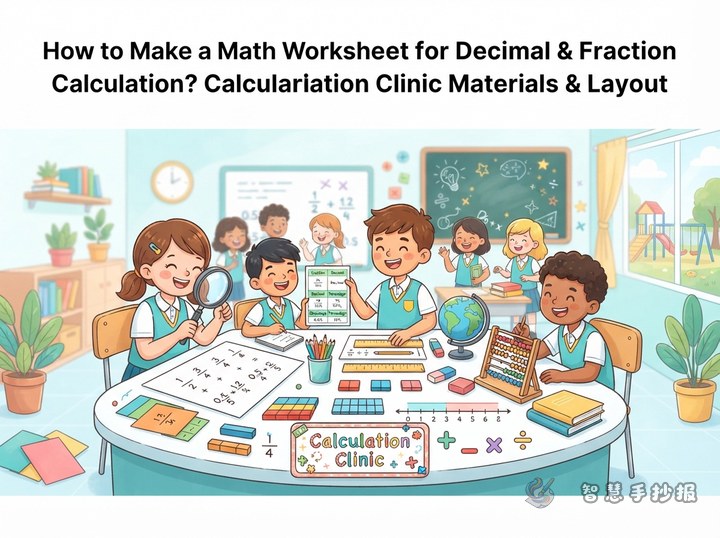
Add a magnifying glass, footprints, or a checklist beside the route. These decorations can also help readers remember the order of the steps.
Useful Math Materials for the Page
An Estimation Rhyme
“Find the nearby number first, estimate before you work; keep the answer range in mind, then check so errors hurt less.” You can place this rhyme inside a colorful note box. Add a reminder that estimation is not random guessing: it uses convenient nearby numbers to judge whether a result is reasonable.
Checking Cards
- Use subtraction to check addition.
- Use addition to check subtraction, while keeping track of the minuend, subtrahend, and difference.
- Use division or switch the factors to check multiplication.
- Use multiplication to check division, and remember that a remainder must be smaller than the divisor.
- After working with fractions or decimals, check whether the answer falls within a sensible range.
Calculation in Daily Life
Write about shopping and change, recipe quantities, running distance, water records, or sharing fruit. A drink capacity can be shown with a decimal, while sharing a cake can be shown with a fraction. Buying several items requires estimating the total and checking the change. Everyday examples make the newspaper more concrete and show why calculation skills matter.
Plan the Page as a Math Laboratory
Try a two-column layout with a summary strip at the bottom. Put the title and introduction in the upper left, followed by an “Estimation Radar” with reminders such as “the result cannot be negative” and “do not change a fraction denominator casually.” Use the right side for the calculation route and checking cards. At the bottom, add a “How I Check” section where students write their common mistakes and one improvement goal.
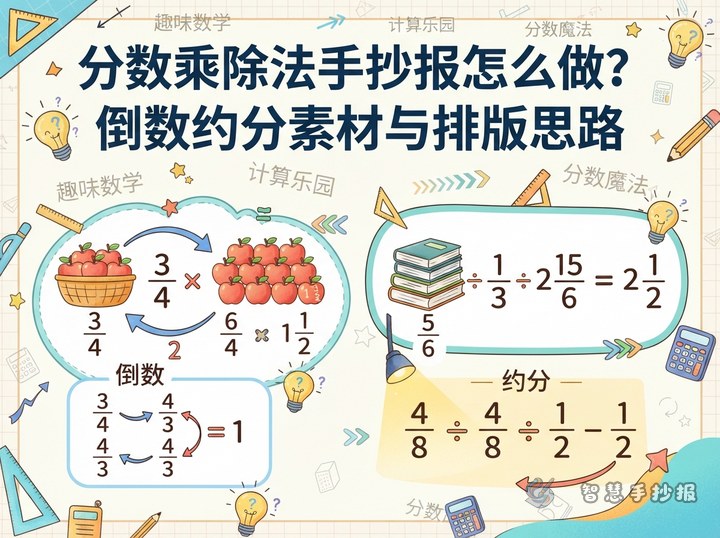
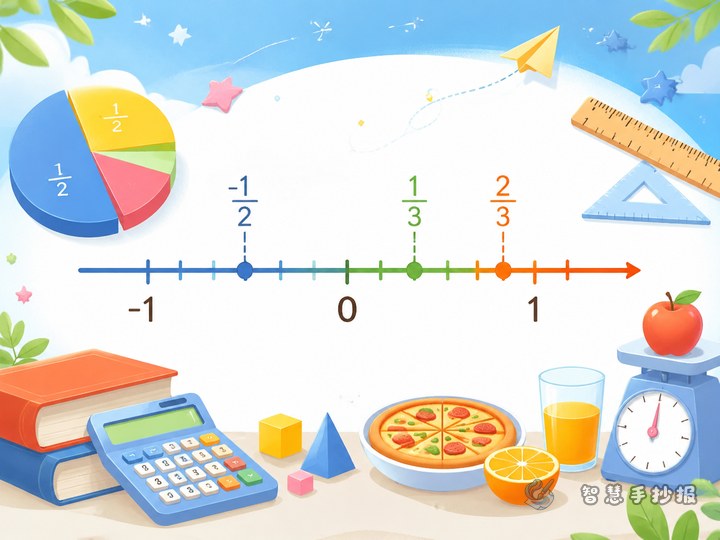
Blue, orange, and green can represent thinking, calculating, and checking. Fraction bars, decimal points, number grids, rulers, and magnifying glasses make suitable border elements. Highlight important rules with large lettering, colored boxes, and outlines. Keep examples limited so the page remains easy to read.
Make the Final Version Neat and Easy to Follow
Use a pencil to plan the title, sections, and illustrations before copying the text and adding color. Each section should explain one main idea. Choose simple examples with clear steps, and write the estimate or checking method beside the answer. Do not fill every space; leaving room around decimal points, fraction bars, and key steps makes them easier to notice.
For help organizing sections, adjusting the layout, and adding decorations, continue creating in the WeChat mini program 智慧手抄报 and turn these ideas into a neat, well-organized math handwritten newspaper.