How to Choose the Core Idea
A Great Wall handwritten newspaper works best when it has one clear focus. Instead of trying to include every fact, choose a simple angle such as the Great Wall in my eyes, why the Great Wall is important, or learning about Chinese heritage through the Great Wall. This makes the whole page easier to plan.
Useful Content to Write
Short introduction
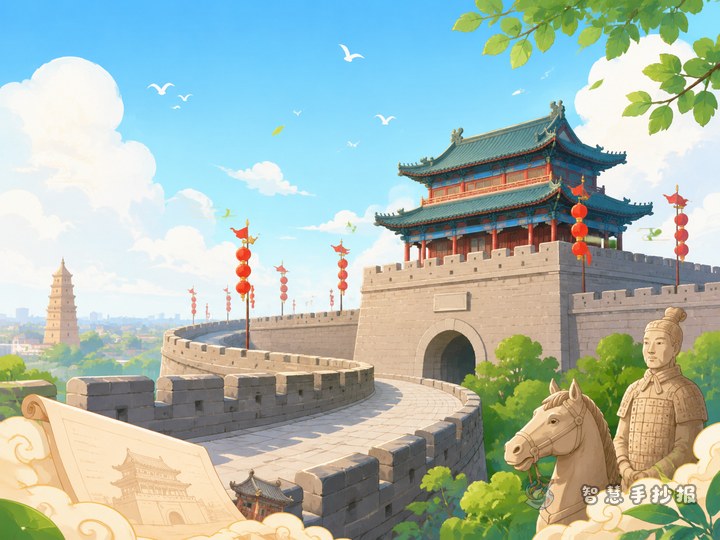
The Great Wall is a famous ancient structure in China. It stretches across mountains and plains and is an important symbol of Chinese history and traditional architecture.
What makes it special
- It follows the shape of the mountains.
- It uses watchtowers, walls, and passes as connected parts.
- Different sections were built in different times and places.
Why it matters
The Great Wall shows the wisdom and hard work of ancient people. Today, it also reminds us to protect historical sites and respect traditional culture.
Section Ideas for the Page
- Great Wall Basics: where it is and what it was used for
- Famous Passes: simple facts about well-known sections
- Architectural Features: walls, steps, watchtowers, gates
- Protecting Heritage: what students can do
- My Thoughts: one short personal paragraph
Layout and Drawing Tips
You can place the title at the top center and draw a long wall line running across the page. Use two or three text boxes in the middle, then add small drawings of mountains, flags, watchtowers, or stone patterns around them. Keep the page neat so the title remains the first thing readers notice.
- Recommended colors: brown, gray, dark green, brick red
- Border ideas: wall bricks, clouds, mountain lines
- Small decorations: watchtower silhouettes, ancient-style frames, footprints of travelers
Short Sentences You Can Use
- The Great Wall is one of the most famous ancient landmarks in China.
- It shows the wisdom, courage, and perseverance of the Chinese people.
- Protecting the Great Wall means protecting our shared cultural memory.
- When we learn about the Great Wall, we also learn about history and responsibility.
Make the Poster More Complete
If you are preparing this for homework or a class display, keep the wording short, the handwriting clear, and the sections balanced. After drafting your text, you can continue organizing titles, columns, and decorative details in the Zhihui Shouchaobao WeChat mini program to improve the final result.