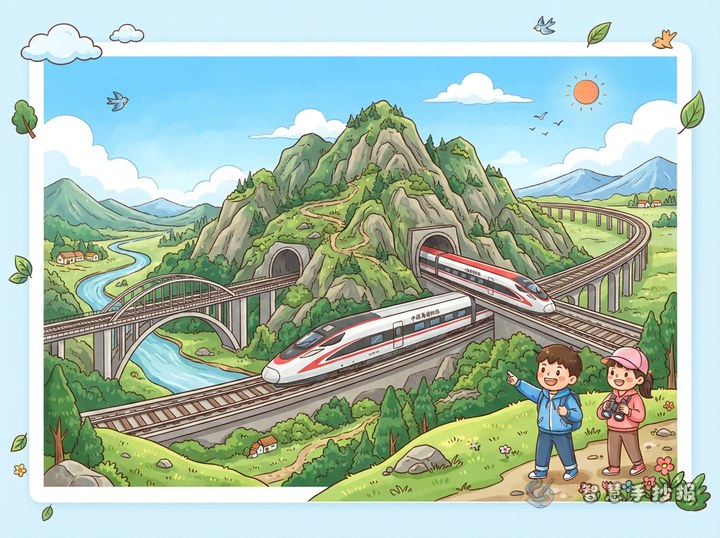
Make the signal light the star of the page
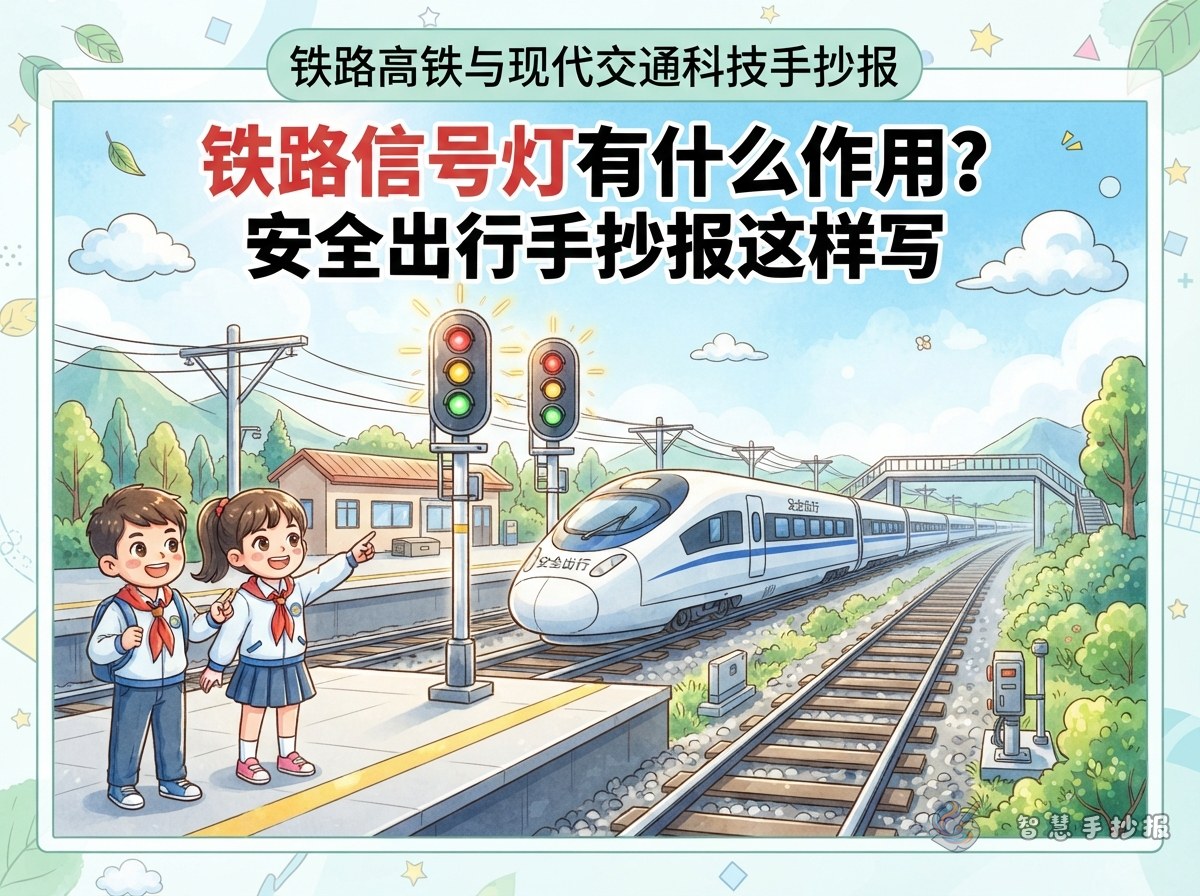
Use the railway signal as the visual center of this handwritten newspaper project, with a train leading the reader toward different sections. The main idea can answer a question children often ask: when the track ahead cannot be seen for a long distance, how does a train know whether to stop, slow down, or continue? Building the page around this question gives the project a clear story.
Title and subtitle ideas
- Main title: What Do Railway Signals Do?
- Subtitle: Understanding Safety Messages Along the Track
- Opening line: A small signal light connects trains, tracks, stations, and the people who protect railway safety.
Connect the facts with a safe-train route
Arrange the main explanation in the order of before departure, during the journey, and arrival. Dispatchers review how the tracks are being used, while station staff and other railway workers organize and inspect the operation. The train then follows the signals and operating rules. When the route needs to change, a turnout guides the train toward the correct track. You do not need to draw complicated machinery; arrows connecting these steps can show how the railway system works as a team.
- Confirm the route and operating plan so information is clear.
- Check the signal and track condition, then follow the operating rules.
- Use a turnout to guide the train when the route changes.
- After the train reaches the station, staff continue to organize boarding and provide safety reminders.
Four sections with both facts and warmth
1. Signal Light Basics
For a simple introduction, red can represent stop, yellow can represent caution or preparation, and green can represent proceeding according to the rules. Remind readers that signal displays and equipment systems may differ between railway lines. The three-color drawing is only a simplified way to learn the idea. Modern railways may also use communication equipment and in-cab messages to deliver operating information more promptly.
2. Turnouts and Tracks
A turnout works like a branching point in the track. It connects one route with another and guides a train in the planned direction. Draw it as a Y-shaped split, use two bright arrows to show the possible routes, and add three key phrases: change direction, follow dispatching, and connect accurately.
3. The People Behind Railway Safety
Railway safety depends on dispatchers, drivers, station staff, equipment inspectors, and track maintenance workers. Their duties are different, but they share the same priority: safety. Draw five small portraits and place a short action word beside each one, such as check, communicate, confirm, or maintain.
4. Safe and Courteous Travel Tips
- Wait behind the safety line and never push or chase others.
- Line up and follow staff instructions when boarding or leaving the train.
- Do not touch railway equipment or signal facilities.
- Tell a staff member promptly if something seems unusual.
Short railway safety lines you can copy
- Signals share operating messages, and careful procedures protect every journey.
- Routes are planned, and trains move in an orderly way.
- A small turnout connects a large transportation system, so careful inspection matters.
- Every step of courteous waiting supports a safer trip.
At the bottom of the page, add this short conclusion: Railway transportation is a modern technology system that depends on teamwork. Signals, tracks, trains, communication equipment, and railway workers work together so trains can operate in an orderly way. Following travel rules makes each passenger part of the safety chain.
Use color and lines to create a technology theme
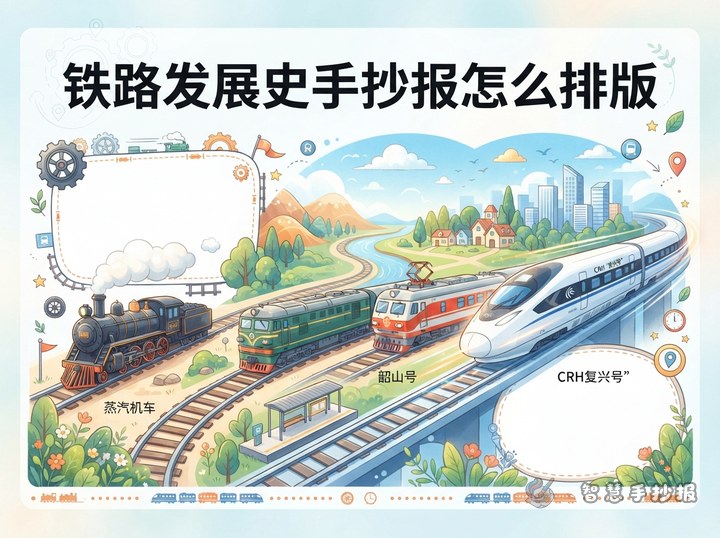
Try dark blue, silver gray, and bright yellow as the main colors to suggest the night sky, rails, and signal warnings. Place the title near the train headlight or signal, draw a signal and turnout diagram on the left, and put the people-behind-the-scenes section on the right. At the bottom, use a curved rail line to connect the safety tips. Rails, gears, route lines, and small dots make useful borders, but leaving some empty space will keep the words easy to read.
Three finishing details
- Use a pencil to divide the title, drawing, and writing areas before outlining them.
- Give each section one main idea; short lines work better than long paragraphs on a handwritten newspaper.
- Keep the signal colors consistent and make sure every arrow follows the train's direction.
After making a draft, you can open the WeChat mini program 智慧手抄报 to continue arranging the sections and layout, then present the railway safety theme more neatly on paper.