Start With a Question: Where Did All the Gravel Go?
Look out of an ordinary train window and you will often see a layer of crushed stones under the rails. On a high-speed line, the track sits on smooth concrete instead. That contrast is a perfect opening for a handwritten newspaper: ask the question first, then let your readers follow along.
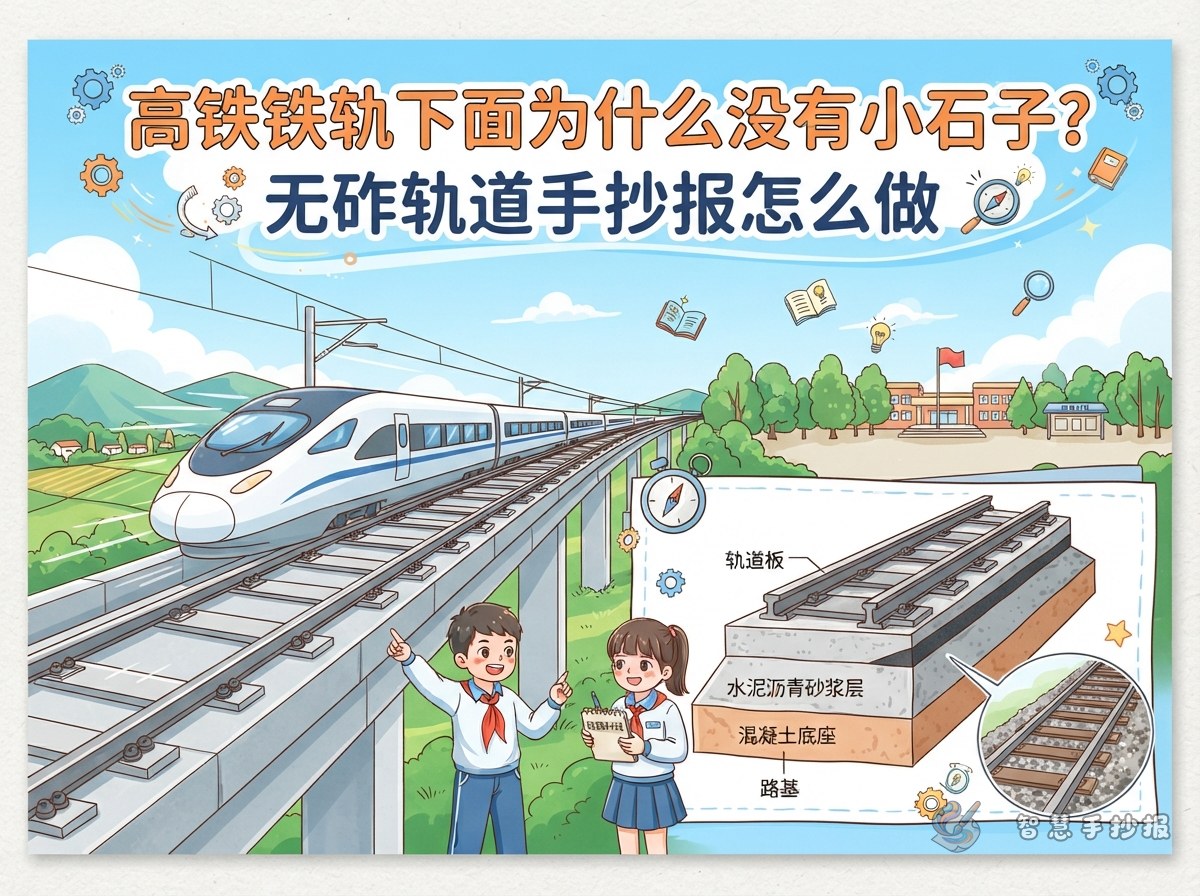
The crushed stones are called ballast. They drain water, absorb vibration and hold the sleepers in place. High-speed trains run fast and often, so light stones can be blown away by the wind and the track can shift more easily. Engineers therefore replaced the stones with ballastless track: a concrete base, fastening clips and steel rails are locked tightly together, so the track stays flat and the ride stays smooth.
Three key words to write correctly
- Ballast – the layer of crushed stone under a traditional railway track.
- Ballastless track – concrete slabs and clips hold the rails instead of stones.
- Welded rail – short rails joined into one long rail, so there are fewer clickety-clack joints.
Choosing Sections for Your Layout
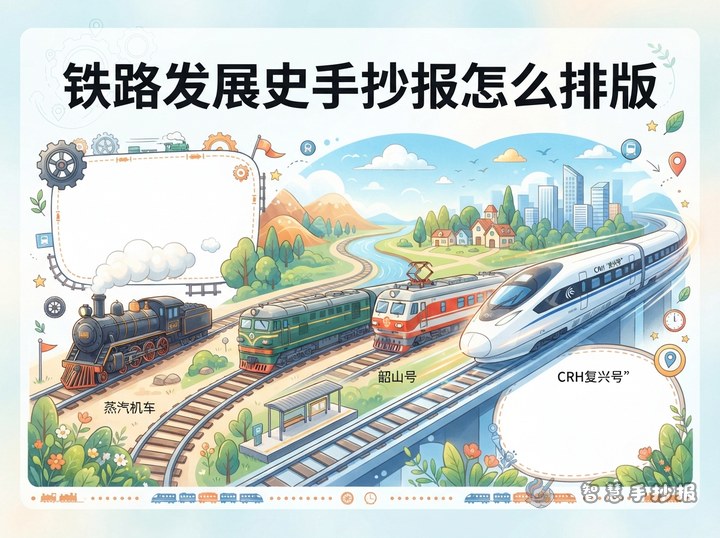
The biggest risk with a science page is one giant block of text. Split the content into small boxes so readers can move around the page easily.
- Main title area: “The Secret Under the Rails” or “Why High-Speed Tracks Use No Stones”.
- Question box: one question plus a small question mark or magnifying glass.
- Word bank: the three key words with a one-line explanation each.
- Comparison box: an ordinary track on the left, a ballastless track on the right.
- Future corner: one or two sentences about quieter, smoother tracks.
You do not need all five. Three or four boxes are plenty, and leaving some white space makes the page breathe.
Sentences You Can Copy Straight Onto the Page
Pick the lines that fit your layout, or rewrite them in your own words:
- Crushed stone ballast drains water and reduces vibration, but wind can move it.
- Ballastless track uses a concrete base and clips to hold the rails firmly.
- When rails are welded together, there are fewer joints to make noise and shaking.
- The flatter the track, the smoother the train ride.
- Progress in technology often hides in places we never notice.
Drawing Tips That Look Technical
Many students draw the rails as one flat horizontal line, which can look dull. Try one of these three approaches:
- Perspective: let the track run from the bottom left to the top right, getting narrower as it goes, so the page gains depth.
- Cross-section: draw a small slice in one corner, showing the steel rail, clip, concrete slab and roadbed from top to bottom, with arrows and short labels.
- Top and bottom split: keep the sky and the train in the upper half, leave the lower half for the track structure, and place the title on the dividing line.
Stick to blue, grey and silver, then add a touch of orange for the train or the markings. The page will look like a technology guide rather than a plain landscape drawing.
Three Quick Checks Before You Hand It In
- Check the spelling of the key words, especially “ballast” and “welded”.
- Check that no text touches the border and that titles have a little breathing room.
- Check that your class and name are written neatly in a corner.
If you would rather start from a ready-made layout, open the 智慧手抄报 mini program in WeChat, choose a railway or transport template, paste in the sentences above, and adjust the borders and illustrations your own way. Your newspaper will come together in no time.