Why a Cicada Makes a Complete Observation Subject
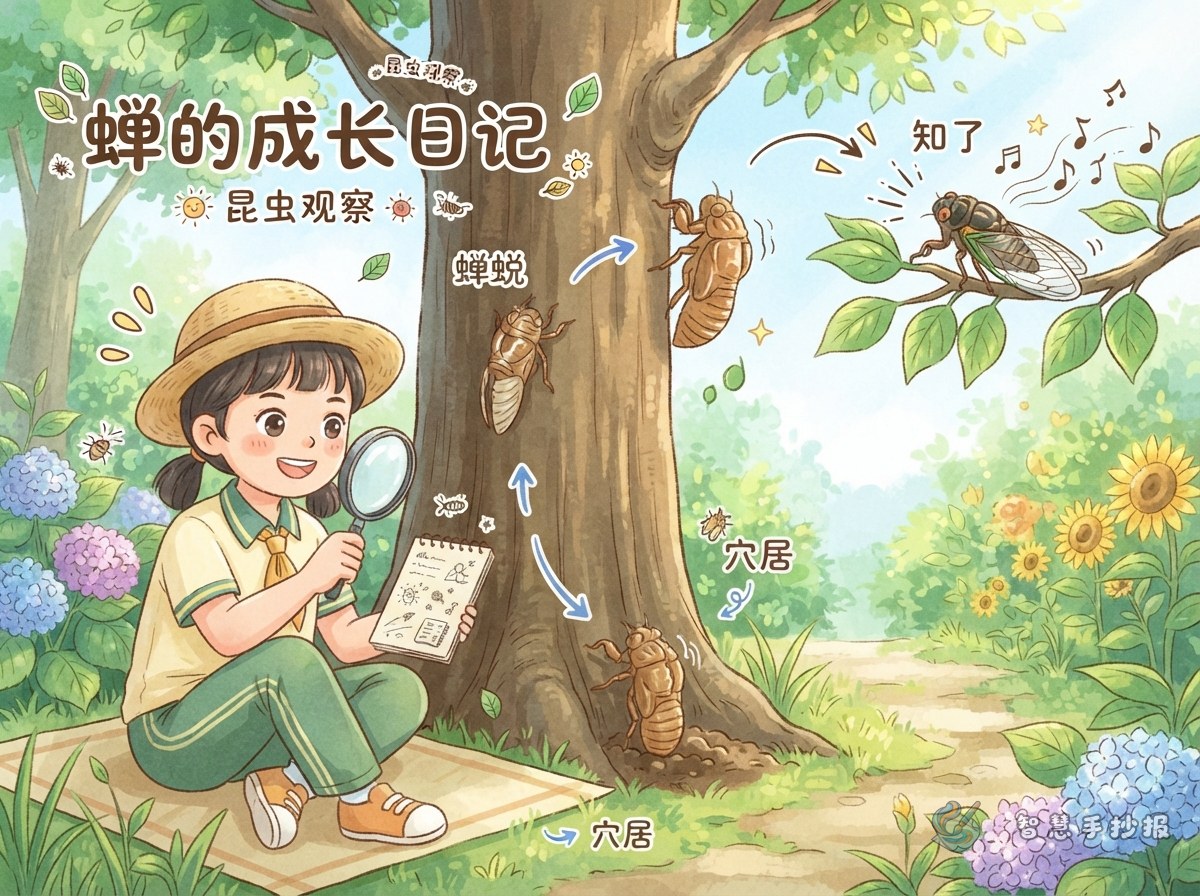
Choosing an insect for an observation poster is easier when you can see the evidence. Cicadas give you three things in one summer: empty shells on tree bark, singing adults in the branches, and sometimes small holes in the soil where nymphs climbed out.
Link those three together and your poster becomes a real record of observation instead of a general fact sheet, which is exactly what makes it interesting to read.
Four Sections That Carry the Page
1. The Shed Shell Corner
Draw one empty shell clinging to the bark. Beside it, note when you found it, where it was, what the weather was like, how high it hung and whether the back had a split. A short line works well: “There is a neat crack down the back, like a zip pulled open.”
2. A Record of the Singing
Draw a horizontal timeline for morning, noon and evening. Under each point, write whether you heard singing, whether the calls were long or short, and whether it was one insect or a whole chorus. Male cicadas sing with sound organs on the abdomen, which is how they attract a mate, so a small note about this adds accuracy.
3. The Life Cycle Line
Use arrows to run from egg to underground nymph to climbing the trunk to moulting to adult, with a small picture at each stage. Nymphs live in the soil and grow slowly by feeding on juices from plant roots, and some species stay underground for several years. That single detail explains why shells are so easy to find.
4. A Small Poem Card
Save one corner for a line of poetry about cicadas, then add a sentence of your own about how the sound makes you feel. It gives the page a summer mood without taking up much space.
Lay the Page Out from Soil to Treetop
Instead of cutting the paper into four equal boxes, treat the whole sheet as one tree. Draw soil and roots at the bottom for the start of the life cycle, the trunk in the middle for shells and field notes, and the canopy and sky at the top for the singing record and poetry. The reader’s eye travels upwards naturally, which gives the page a clear order.
- Let the trunk act as your vertical divider instead of ruled lines.
- Repeat the shell two or three times as a small decoration on the branches.
- Use dark green or brown for headings, black for body text, and keep one bright accent such as yellow or orange.
Short Lines You Can Copy Straight Onto the Page
Observation notes do not need to be long. Short lines suit a poster better:
- “The first cicada song I heard was at …”
- “The shell has a crack along its back, and the front legs look like tiny hooks.”
- “At noon the calls joined into one sound; by evening only a few were left.”
- “It spends far longer underground than it does in the tree.”
You can also add a small box titled “My Questions” and write things like “Why is the song so loud?” or “How does it find the same tree again?” Leaving a little space makes the page feel honest.
Three Small Reminders Before You Start
- Write the text first, then draw, so you do not run out of space.
- Only write down what you really saw or heard, without inventing numbers or times.
- Leave a small spot for the date and your name so a teacher can display it.
If you would rather not build the layout from scratch, search for “智慧手抄报” in the WeChat mini program, pick an insect-themed page, and replace the sample text with the sections above. Adjust it to match your own observations and you will soon have a finished cicada poster that looks like real fieldwork.