Start with the star: a beetle that glows after dark
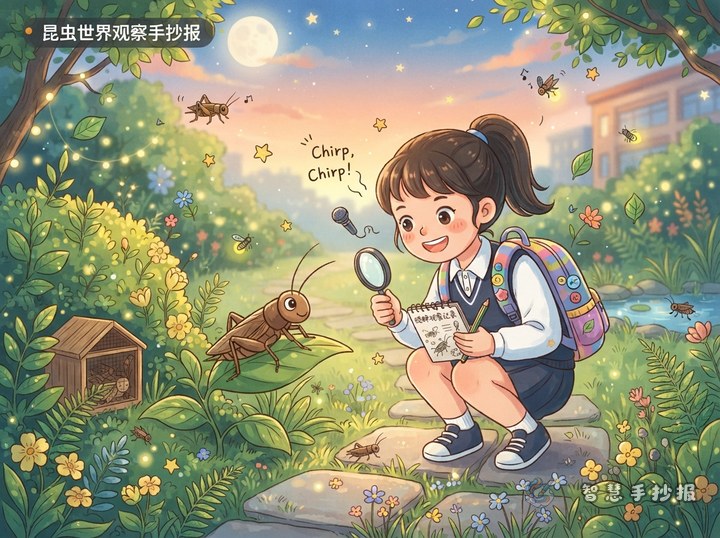
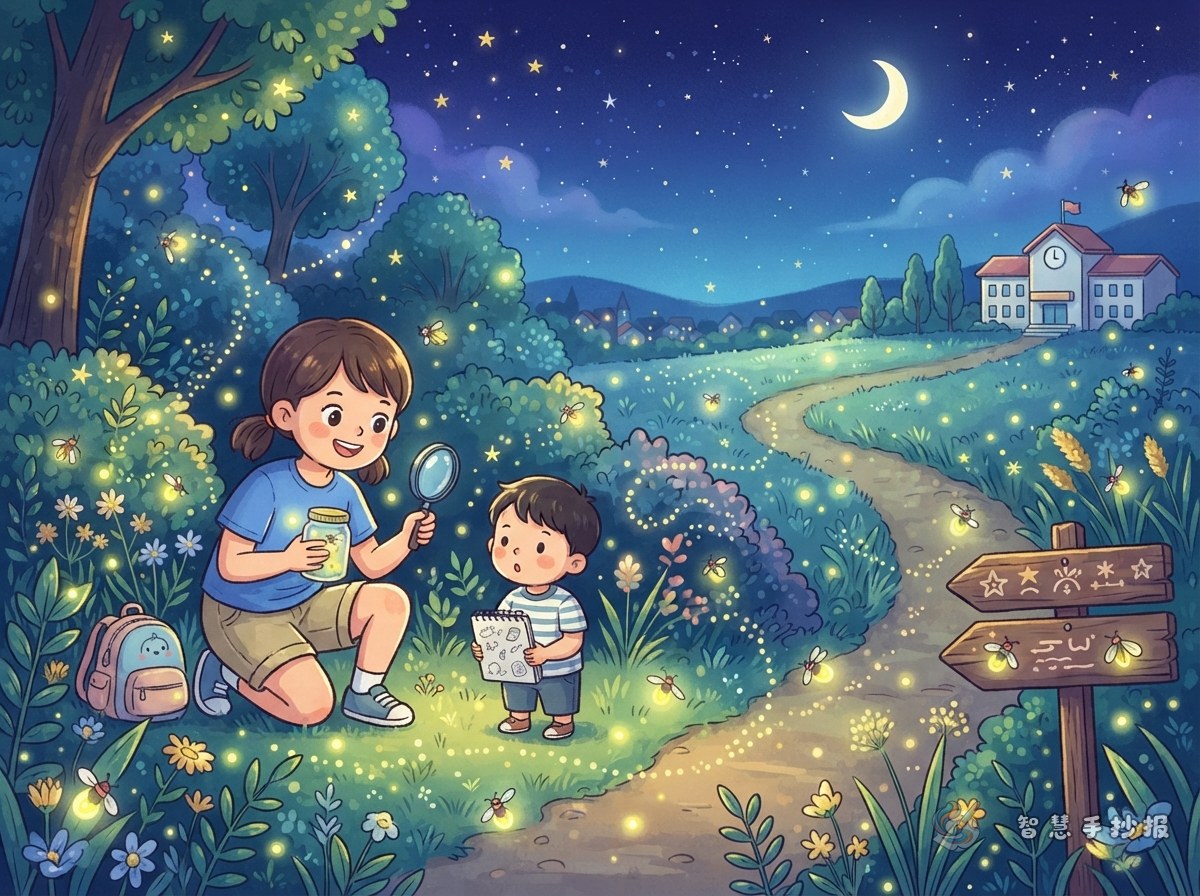
Fireflies are the insect children most want to see on a summer evening. You do not need to turn the poster into an encyclopedia. Answer three questions instead: what does it look like, why does it glow, and how can we watch it? Those three questions map neatly onto an illustration area, a fact area and an observation area, and the whole page suddenly has a skeleton.
Facts worth putting in the info boxes
Where the light comes from
A firefly has a light organ at the tip of its abdomen, and the glow involves oxygen, which is why the light pulses on and off while the insect sits still. Add a small diagram: draw a firefly from above and mark the light organ with a yellow dot, plus one short line such as “the light starts at the tail.”
Where it likes to live
Damp grass, stream banks and leaf litter under trees are common places to look. A simple line like “it likes damp, quiet places with little light” sticks in a reader's mind better than a long paragraph.
Why it is harder to find now
Bright lights at night make it difficult for fireflies to find each other, and dirty water near their habitat drives them away. Turn this into a short reminder asking people to avoid strong lights and not to catch the insects by hand.
Five sections that keep the page tidy
- Title area: write “Firefly Observation Poster” in large letters with a firefly beside it.
- Fact cards: split the three facts above into three small boxes, each with a tiny icon.
- Observation record: columns for time, place, weather, number of light dots and my thoughts.
- Question corner: notes like “where does it hide in the day?” make it feel like exploring, not homework.
- Gentle reminder: one line telling classmates not to shine a flashlight straight into the grass.
Building the summer-night look
- Paint the background deep blue or navy, and leave the text boxes white so they stay readable.
- Dot yellow-green glow marks with a highlighter, varying the sizes so they look alive.
- Use grass blades, a small mound or a crescent moon along the border, but do not fill every corner.
- Write the title in white or pale yellow with a thin outline so it stands out on the dark paper.
- Stick to three main colors: deep blue, yellow-green and light green.
Leave room for your own findings
Keep a small “my field notes” box at the bottom of the page. Even three lines are worth it, for example: “8 p.m., beside the grass, two light dots, flying slowly.” If you cannot find a firefly nearby, switch to two boxes labeled “what I learned about fireflies” and “questions I still have.” The poster will still feel personal.
Once your draft is ready, you can pick a layout inside the WeChat mini program “Smart Handwritten Poster,” arrange the text neatly, print it out and add color. A firefly poster with a real summer-night mood is then finished.