Start with a title that shows growth clearly
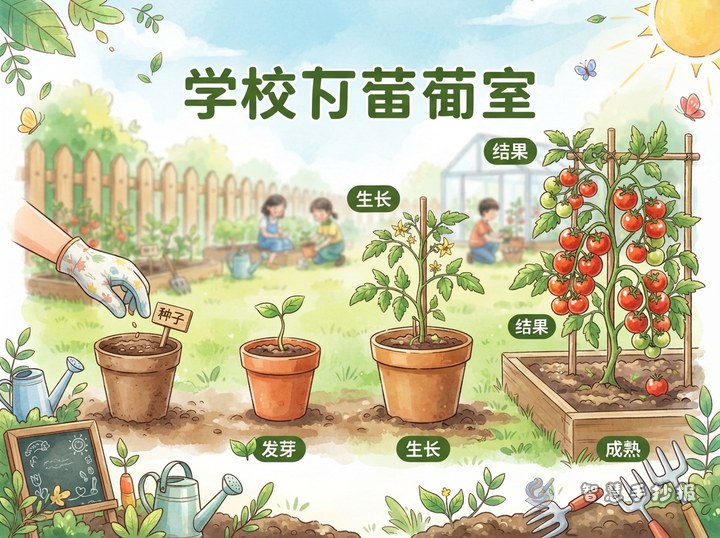
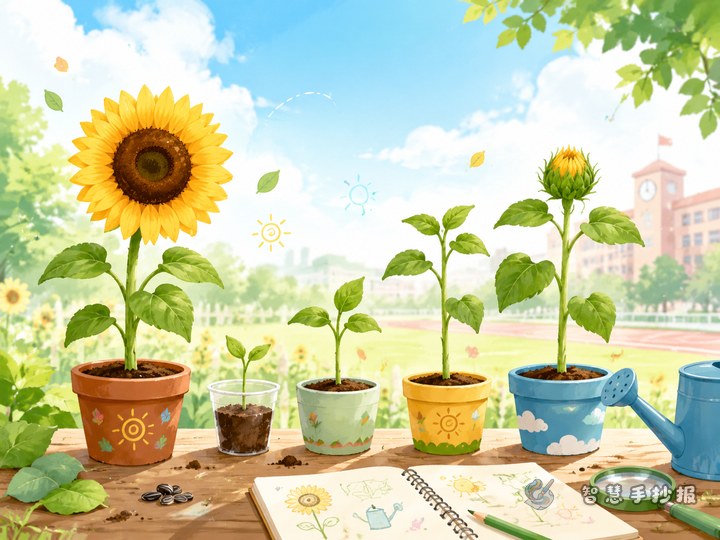
A plant growth newspaper works best when the title feels visual and easy to understand, such as My Sunflower Growing Taller, A Seedling Growth Diary, or From Seed to First Leaves. Titles like these make it easier to organize the page around change over time.
If the theme is for a class activity, a more formal title also works well, such as Campus Plant Growth Observation or Planting and Learning in School. Write the title larger than the rest of the text and add simple decorations like leaves, flowerpots, sunshine, or water drops.
Use practical sections so the page never feels empty
This kind of topic is easiest to build around a process. A clear layout can include these sections:
- Plant Profile: plant name, planting date, growing place, and favorite conditions.
- Growth Calendar: note changes on Day 1, Day 3, Day 7, and so on.
- What I Observed: leaf color, number of leaves, plant height, and how it grows toward light.
- Care Tips: watering, sunlight, loose soil, and fresh air.
- My Thoughts: what you learned from school planting and observation.
If you have more space, add a Plant Facts section with short lines about what seeds need to sprout, such as water, air, and the right temperature.
Short text materials you can use directly
These simple sentences fit well in a student-friendly handwritten newspaper:
- A tiny seed slowly wakes up with water and sunshine.
- The fresh green sprout pushes through the soil like a little greeting.
- Plant growth needs patience and careful observation every day.
- School gardening makes the campus more beautiful and teaches responsibility.
- Recording plant changes helps us notice the growth of life.
If you want a more personal touch, you can also write: I found that plants do not grow all at once. They change little by little every day.
Try a timeline layout instead of equal boxes
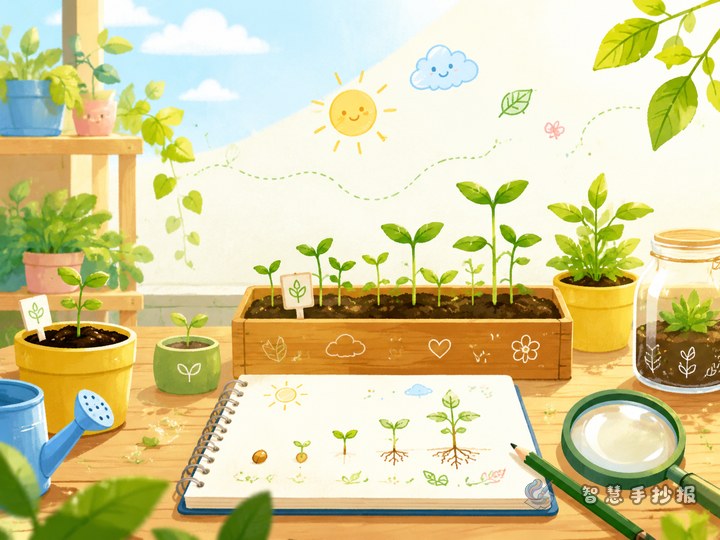
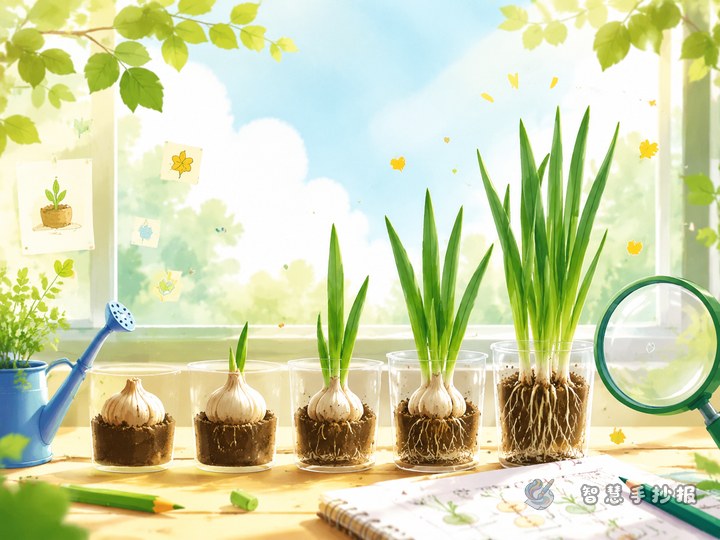
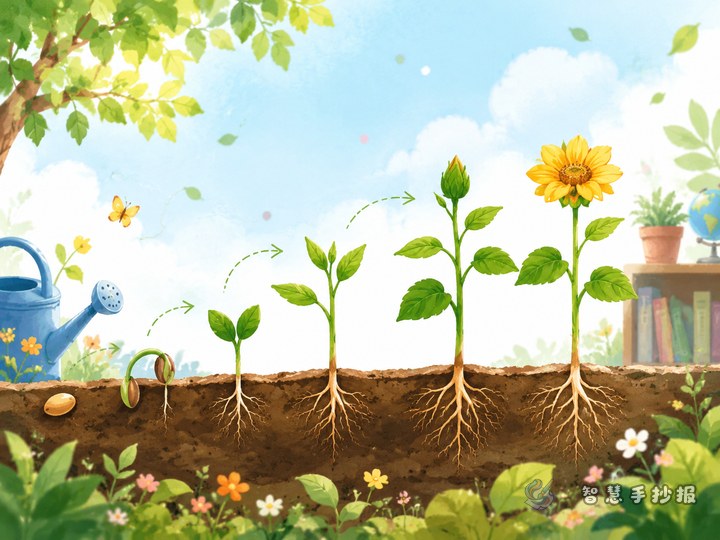
To make the page look more lively, divide it into a title area at the top, a timeline in the middle, and a reflection area at the bottom. A horizontal or vertical timeline is perfect for showing each growth stage with one or two short notes.
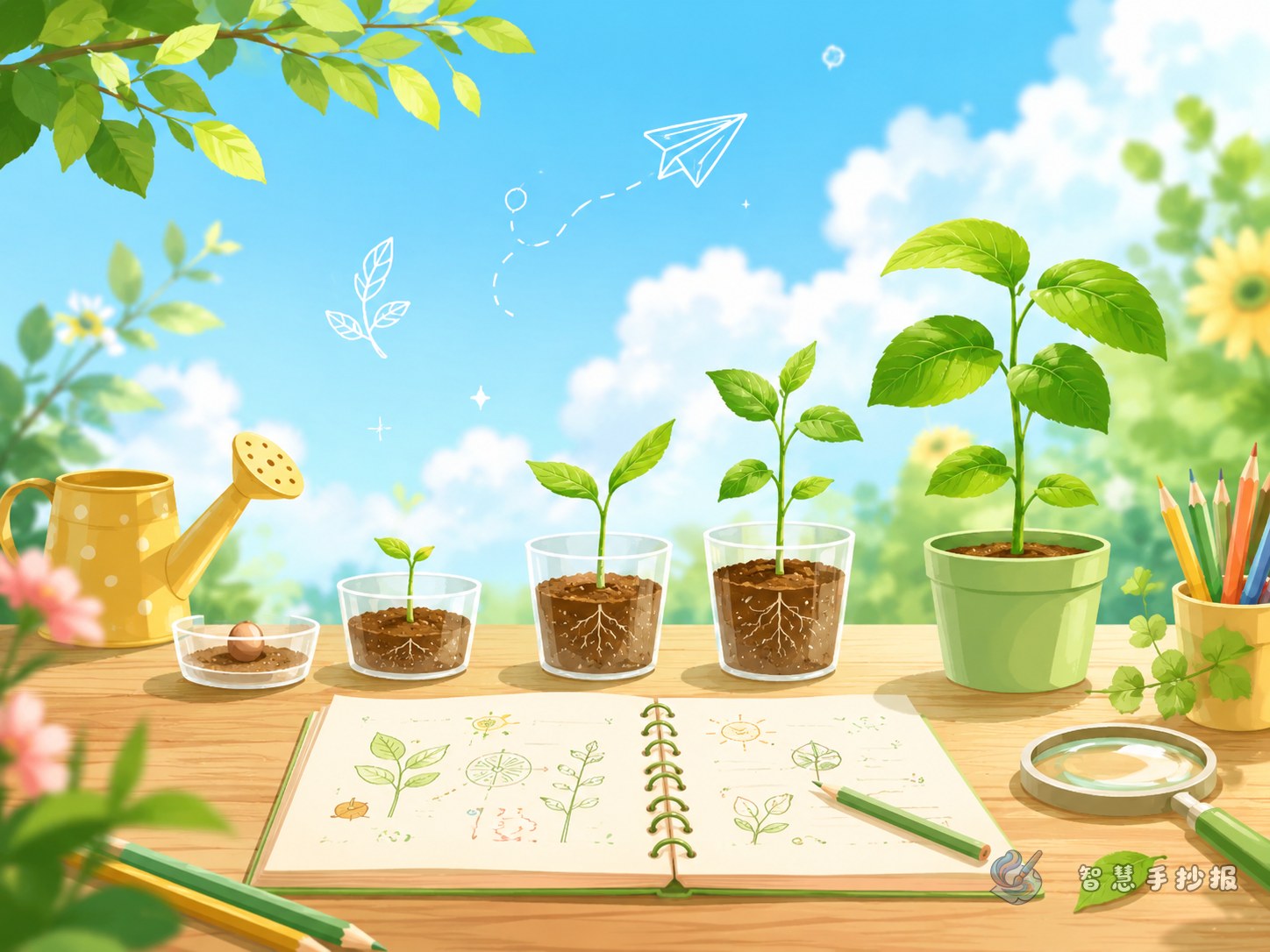
Another good option is a layout with observations on the left, facts on the right, and drawings in the center. You can draw a pot, seed, leaves, and a ruler to show how much the plant has grown. This feels more natural than splitting the page into four identical blocks.
- Use green, light yellow, and brown as main colors.
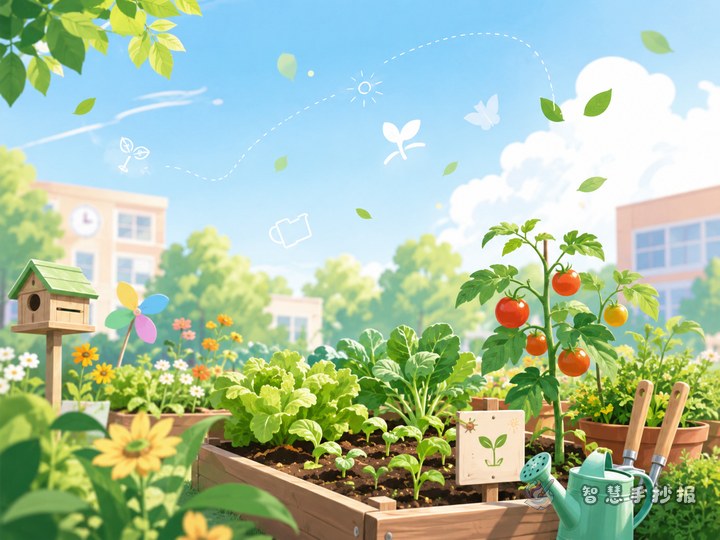
- Add borders with vines, leaves, fences, or small gardening tools.
- Use rounded label boxes for section headings.
- Leave enough white space so the page feels clear and neat.
Finish with a simple and meaningful ending
The ending does not need to be long. Focus on observation, effort, and growth. For example: Through this school planting activity, I learned that plants need time and care to grow, and I also learned the value of patient observation. I will continue to protect every bit of green on our campus.
If you want to keep improving your title design, section arrangement, and overall layout, you can continue your work in the Zhihui Shouchaobao WeChat mini program.