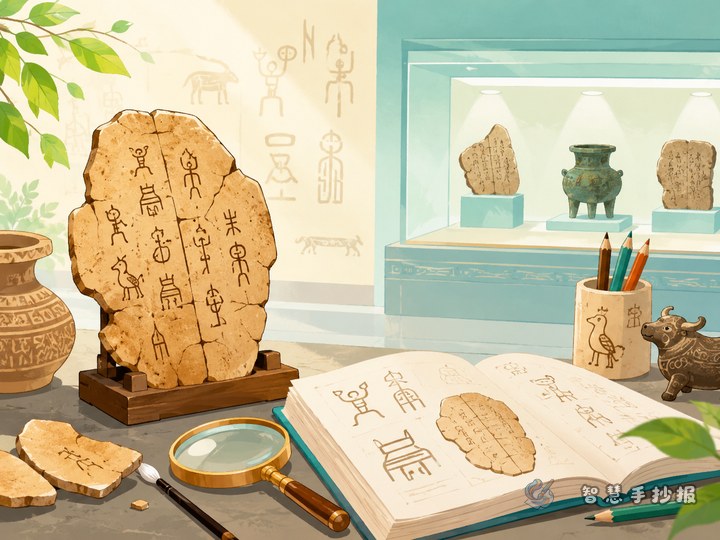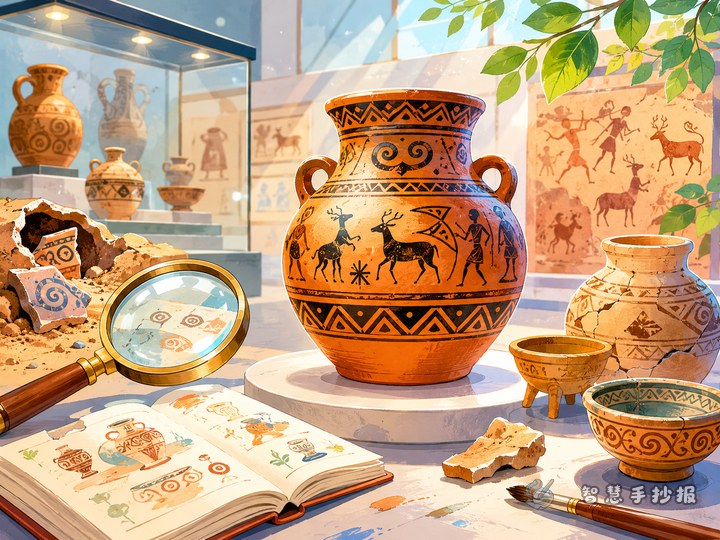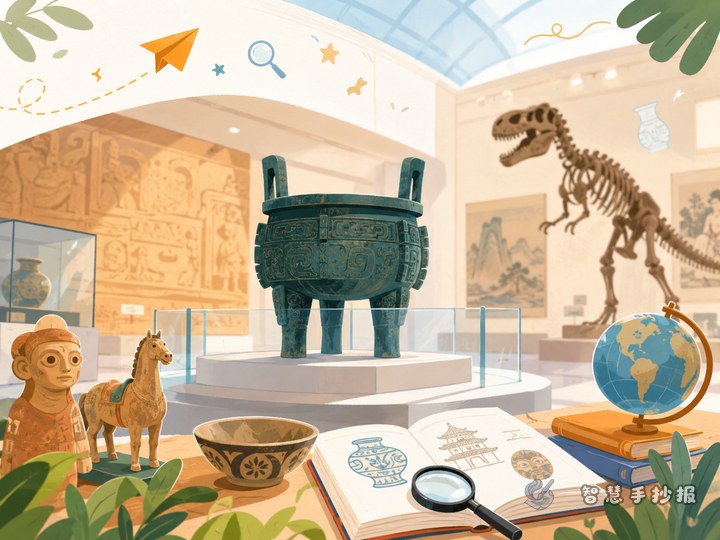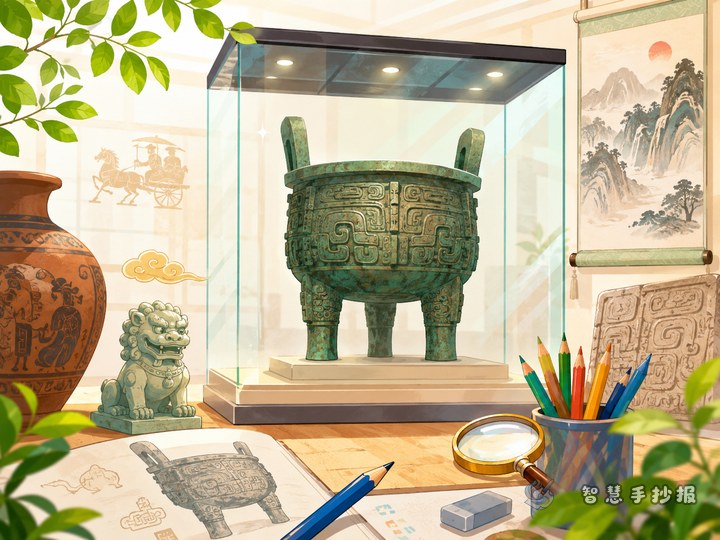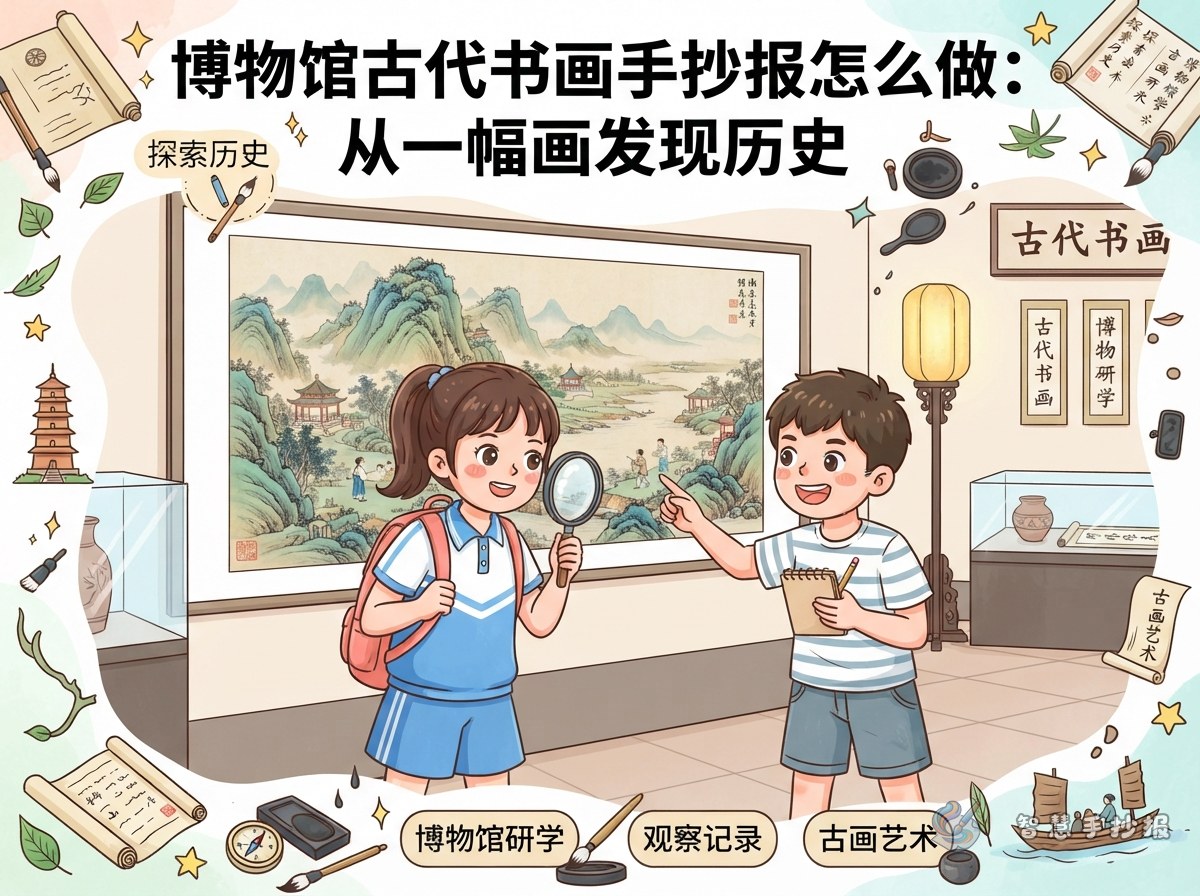
Choose an Observation Theme: Discovering Ancient Life in a Painting
Build the project around “ancient paintings in museums” instead of simply listing artifact names. Choose a painting you saw in a museum or studied in class, then observe its people, buildings, clothing, transportation, and household objects. Write about what the details reveal. Possible titles include “Ancient Life Hidden in a Painting” and “A Study Trip Through a Scroll.”
If you do not have one specific artwork in mind, design the page as an “ancient painting observation notebook.” Use an imagined scroll to connect clothing, food, homes, and travel. The focus should be on the process of observing and asking questions, not on difficult historical terms.
Useful Sections for the Handwritten Newspaper
- Artwork Profile: Write the title, category, and approximate period. If you are unsure, turn the detail into a question you would like to investigate.
- Detail Magnifier: Select two or three details, such as a person, house, boat, tree, or tool, and record what each one tells you.
- Past and Present: Compare transportation, clothing, or streets in the painting with life today.
- My Study-Trip Notes: Describe what you learned and what you would like to explore further, including why cultural relics should be protected.
Text You Can Adapt
Opening: “When I entered the museum, I did not look only at whether the painting was beautiful. I tried to find clues about ancient life in its details. A doorway, a piece of clothing, or a bridge may all tell a story about the past.”
Observation: “The people in the painting are doing different things. Some are walking, some are talking, and others are working. These details make the still image feel alive and help me understand that cultural relics can open a window to history.”
Ending: “Understanding a painting is not only about remembering its name. It is also about learning to observe carefully and ask questions. Protecting cultural relics allows these memories of history to reach future generations.”
Design the Page Like an Unrolled Scroll
Try a horizontal scroll layout. Place the study-trip introduction and artwork profile on the left, give the central area to the main observation section, and put the past-and-present comparison and personal notes on the right. Connect the sections with scroll borders, small seal-shaped decorations, or fine lines.
Use ivory, light brown, dark green, and vermilion. Write the main text in a dark color and highlight key words with vermilion or gold. Leave enough open space around the title, drawings, and text. Simple outlines of people and buildings are enough to express the theme.
Three Tips Before You Finish
- Use a pencil to divide the title, main illustration, and text areas before copying the final words.
- When introducing a specific artwork, follow the museum label, textbook, or information provided by a teacher. Do not guess the artist or date.
- After finishing, summarize the project in three sentences: what I saw, what I wondered, and what I learned. You can also enter the WeChat mini program and use 智慧手抄报 to continue arranging and making the page.