Choose a Main Character: Tiny Residents in the Gut
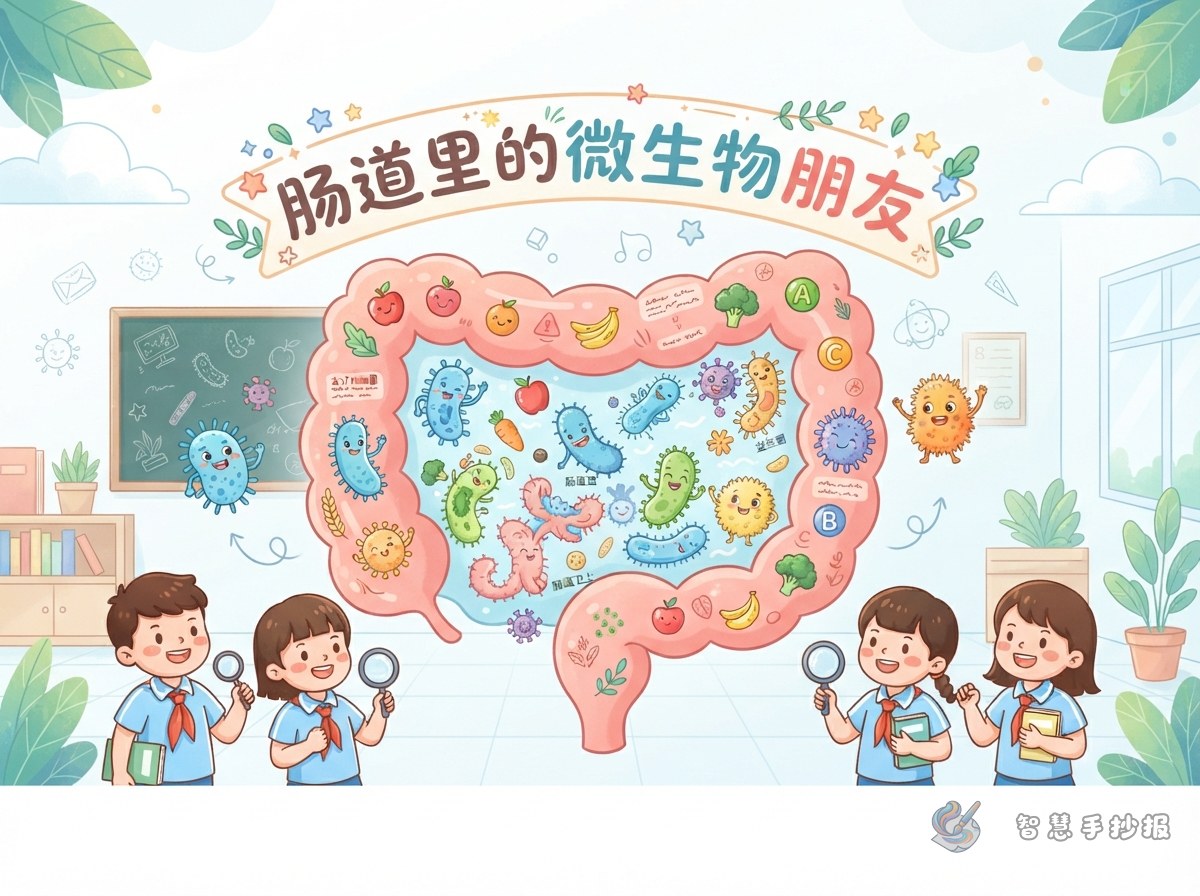
This handwritten newspaper can focus on “microbial neighbors inside the human body” and imagine the gut as a lively little town. A good main title is “Friends in the Gut,” with a subtitle such as “Invisible residents that help us live.” Draw a curved intestine in the center and place colorful cartoon microbes around it so the science is easier for children to understand.
Science Facts to Include
Microbes are not all harmful
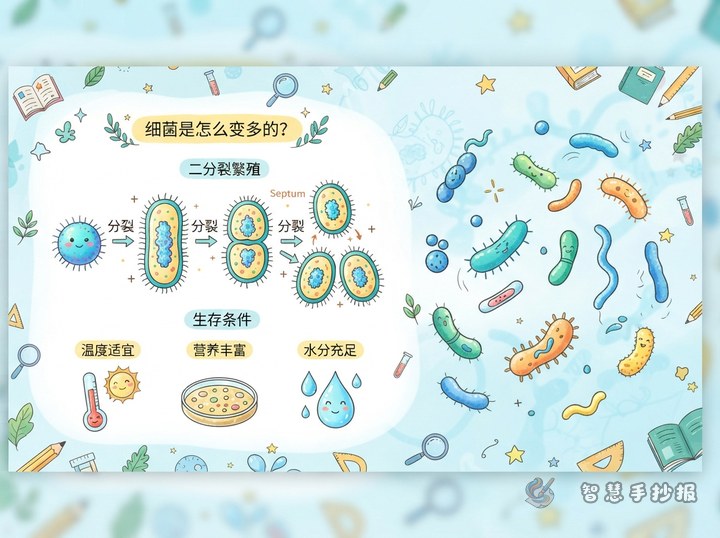
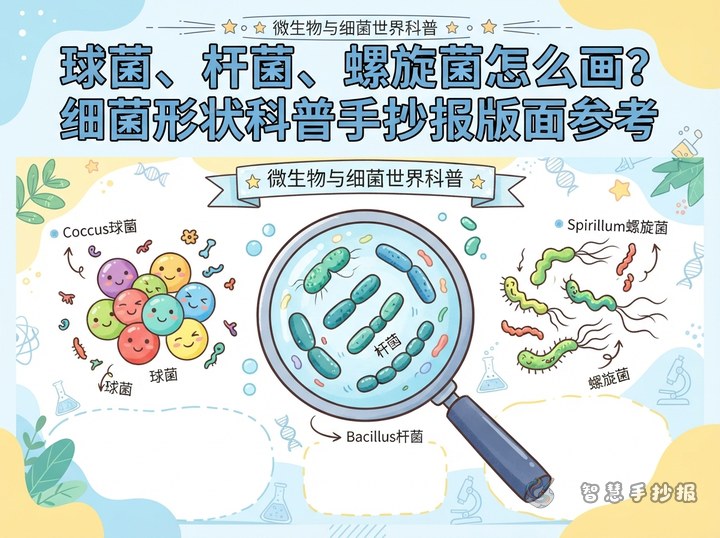
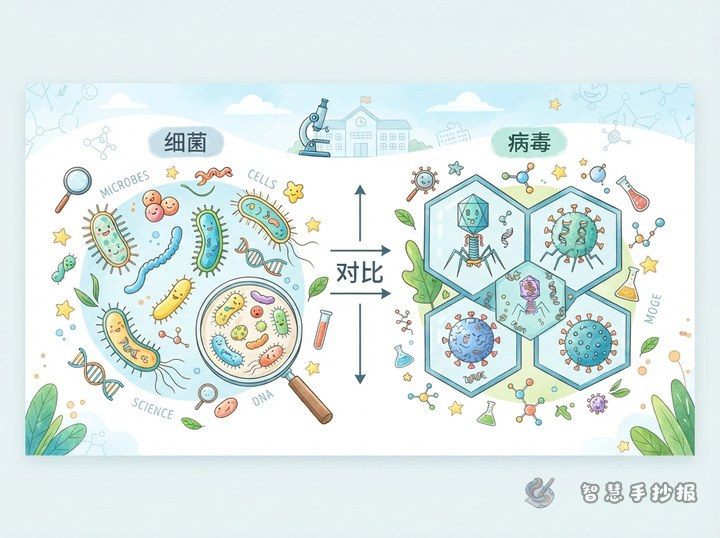
Microbes are tiny forms of life that are usually too small to see with the naked eye, and bacteria are one type of microbe. Many microbes live on and inside the human body. Some may cause problems, while others can take part in digestion and help maintain balance inside the body. Instead of showing every bacterium as a frightening enemy, create three sections: “helpful residents,” “ordinary visitors,” and “visitors we should be careful about.”
Short fact cards for young readers
- Microbe: A tiny living organism or biological form found in many places in nature.
- Gut microbiome: A community of many microorganisms living in the gut.
- Keeping balance: Regular meals, suitable exercise, and good sleep support a healthy lifestyle.
- Scientific thinking: Learn what microbes do before deciding how to respond to them.
Turn the Facts into a Microbe Journey
Use a left-to-right route for the layout. On the left, draw food entering the body; in the middle, draw the “gut town”; on the right, show how healthy habits support the body. Add three stops along the route: “Meet the Microbes,” “Learn about the Microbiome,” and “Healthy Habits.” Keep each stop to two or three sentences and add small icons such as a magnifying glass, food, sneakers, and a moon for sleep.
Green, yellow, and light blue can represent life, energy, and cleanliness. Microbe characters can use circles, short lines, and tiny feelers, but make the characters visually different. Bright colors can represent helpful microbes, while warning sections can use a clear border. There is no need to draw every microbe as a monster.
Finish with a Healthy Action List
At the bottom, add a “My Healthy Actions” checklist: eat meals on time, choose a varied diet, move every day, get enough sleep, and tell a parent when you feel unwell. End with the sentence, “Tiny lives make up a big world; understanding them helps us protect ourselves.” After planning the sections, open the WeChat Mini Program “智慧手抄报” to choose a layout, organize the text, and complete the handwritten newspaper.