Make One Seed the Main Character
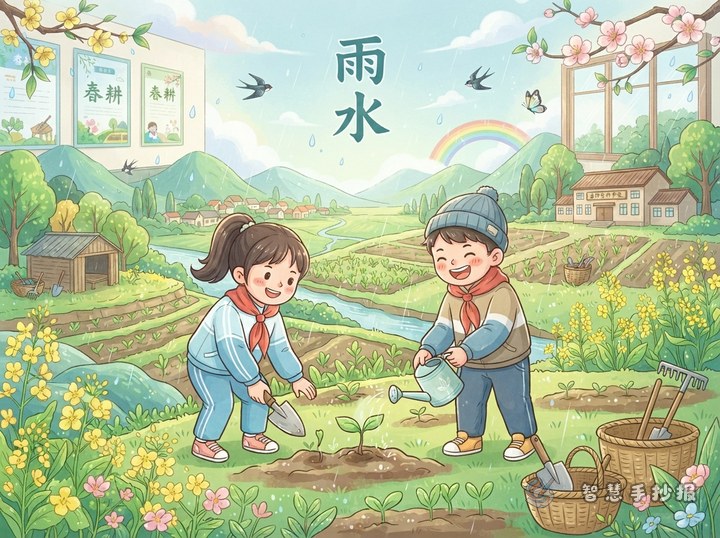
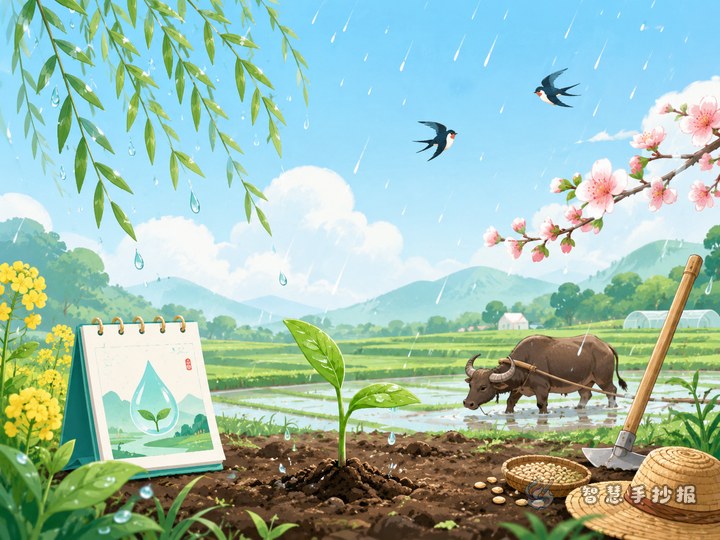
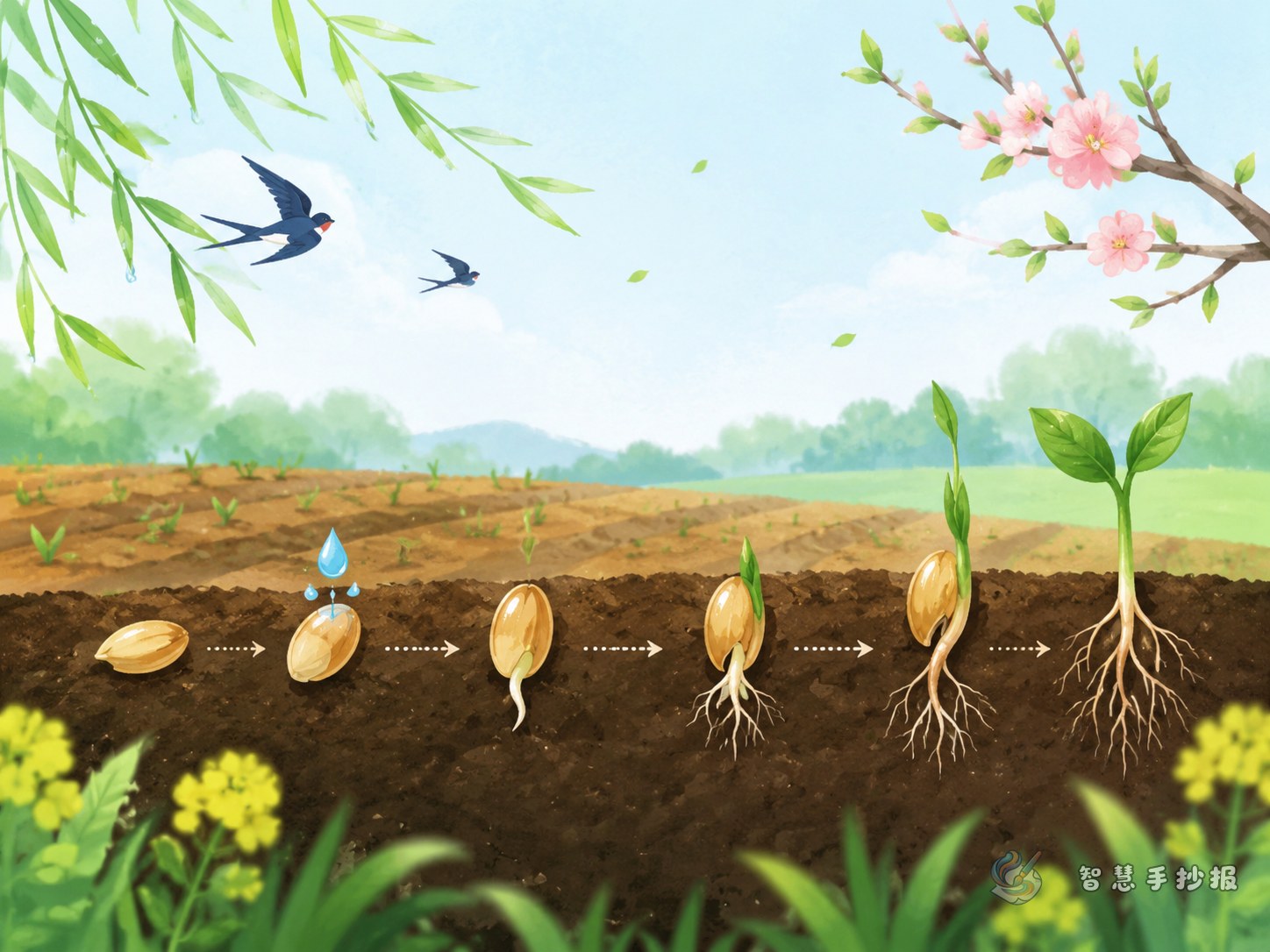
To give a Rain Water solar term spring-farming handwritten newspaper a clear story, do not begin with a long list of seasonal facts. Let one seed become the main character. It is selected, placed in rain-softened soil, covered after sowing, and then waits to sprout. This approach explains spring farming while giving the page an easy-to-follow growth journey.
A title and guiding sentence
Suggested title: A Seed’s Spring Farming Journey
Guiding sentence: Rain nourishes the fields, farmers sow hope, and a seed slowly wakes in the spring wind and soil.
- Key words: rain, soil, seed selection, sowing, and sprouting.
- Main images: a round seed, curved field ridges, and a young seedling.
- Main message: respect labor, value food, and notice the energy of spring.
Show the Sowing Order as a Path through the Field
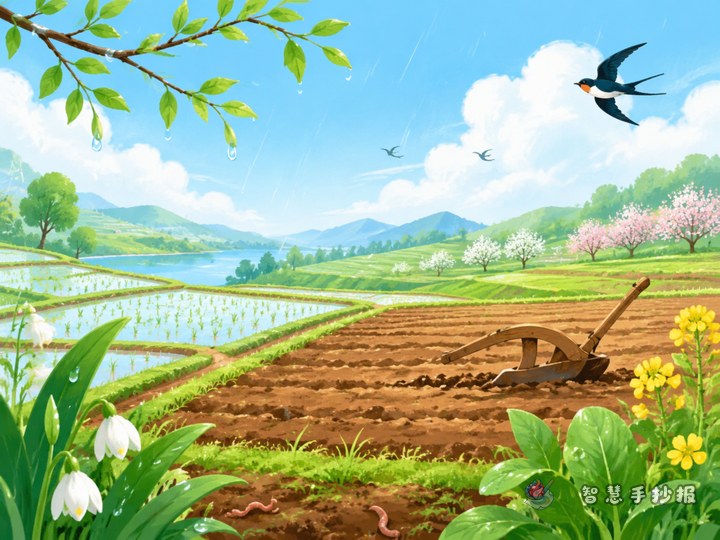
Draw a field-ridge path from the upper left toward the lower right of the page. Place a small picture and one short explanation at each turn. Readers can follow the arrows and understand the general process of spring sowing.
- Rain softens the soil: Around the Rain Water solar term, the air and earth gradually become more moist, and fields begin preparing for sowing.
- Select the seeds: Choose full, undamaged seeds that suit the local growing conditions.
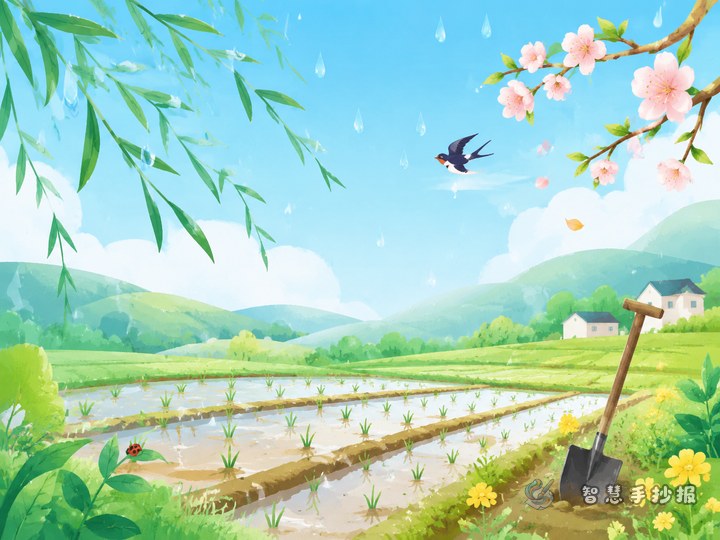
- Loosen and level the soil: A hoe or shovel can help make the soil loose and even, giving the seed room to grow.
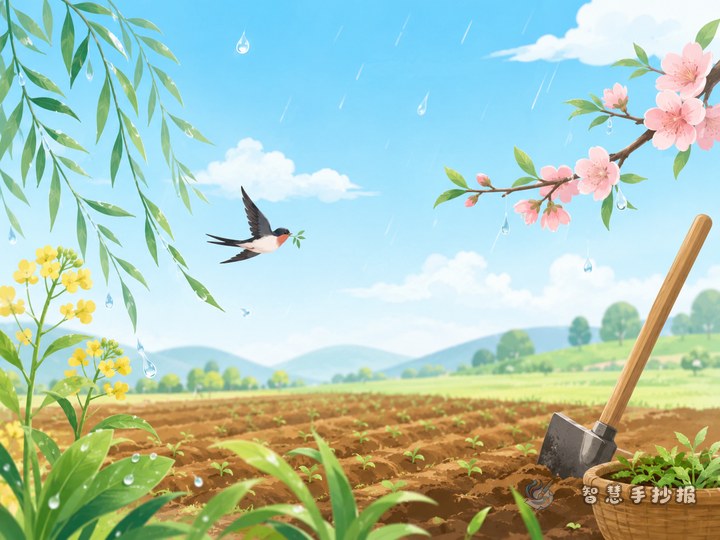
- Sow and cover: Place the seed in the soil and cover it with a thin layer so it is not left exposed.
- Wait for the sprout: The seed still needs sunlight, water, and careful attention before a tender shoot appears.
Four Short Text Blocks for the Page
A seasonal note
Rain Water is the second of the 24 traditional solar terms. As the weather gradually warms, changes in rainfall remind people to pay attention to soil moisture and spring farm work. Sowing times vary from place to place, so the page can include the sentence, “Follow the weather and arrange farm work wisely.”
A seed profile
A seed may be tiny, but it holds the power of growth. Full seeds are often chosen first. After sowing, the soil should remain moderately moist, and the crop should receive the sunlight it needs.
A tool profile
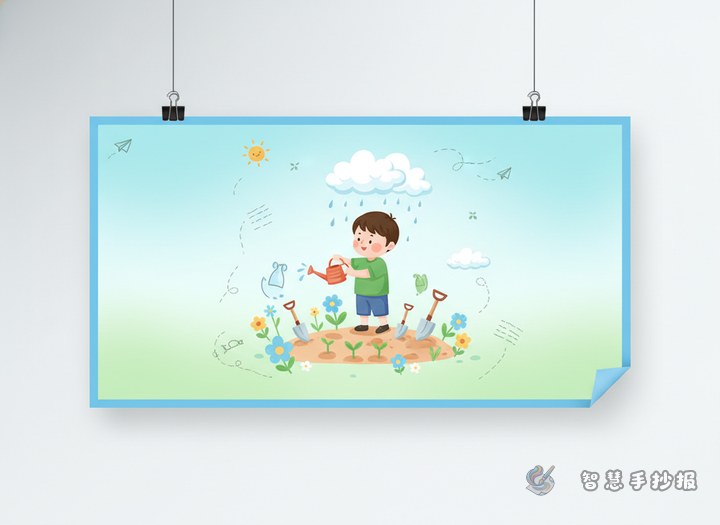
A hoe can loosen soil and remove weeds, a shovel can turn and prepare the ground, and a watering can provide moisture for young plants. Simple outlines are enough when drawing the tools; add their names beside them.
A reminder for young plants
Care for crops by avoiding young seedlings, never pulling them out without reason, saving water, and valuing food. Placing this reminder at the bottom connects spring-farming knowledge with everyday action.
Make the Page Feel Like a Field Waking Up
Draw light-blue raindrops and a warm yellow sun at the top, the field path in the middle, and soil, seeds, and seedlings at the bottom. Instead of putting all the writing in one block, place the five steps in cloud-, leaf-, or sign-shaped text boxes. Fresh green, earthy yellow, light blue, and a little orange can show spring while keeping the page bright and clean.
- Use green or brown for the arrows and keep them aligned with the field path.
- Emphasize words such as “seed selection,” “sowing,” and “sprouting” with thicker lines or colored circles.
- Keep each text box to two or three sentences so the drawings and blank space remain visible.
Finish the Newspaper by Drawing the Path First
- Use a pencil to place the title, field path, and five process steps.
- Draw small images of seeds, tools, raindrops, and seedlings so the pictures support the text.
- Copy the short sentences into the open spaces and keep the lettering and text boxes consistent.
- Trace the final lines with colored pens and check for crowded writing or disconnected arrows.
For a quicker starting point, open the WeChat mini program “智慧手抄报” for seasonal layout inspiration, then adapt the design around your own seed story to give the project a personal touch.