Start With a Plan: Proverbs Give the Page Its Flavor
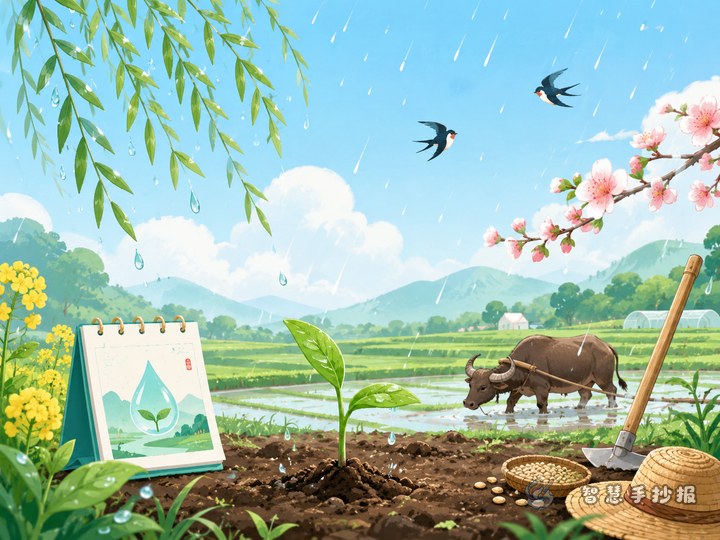
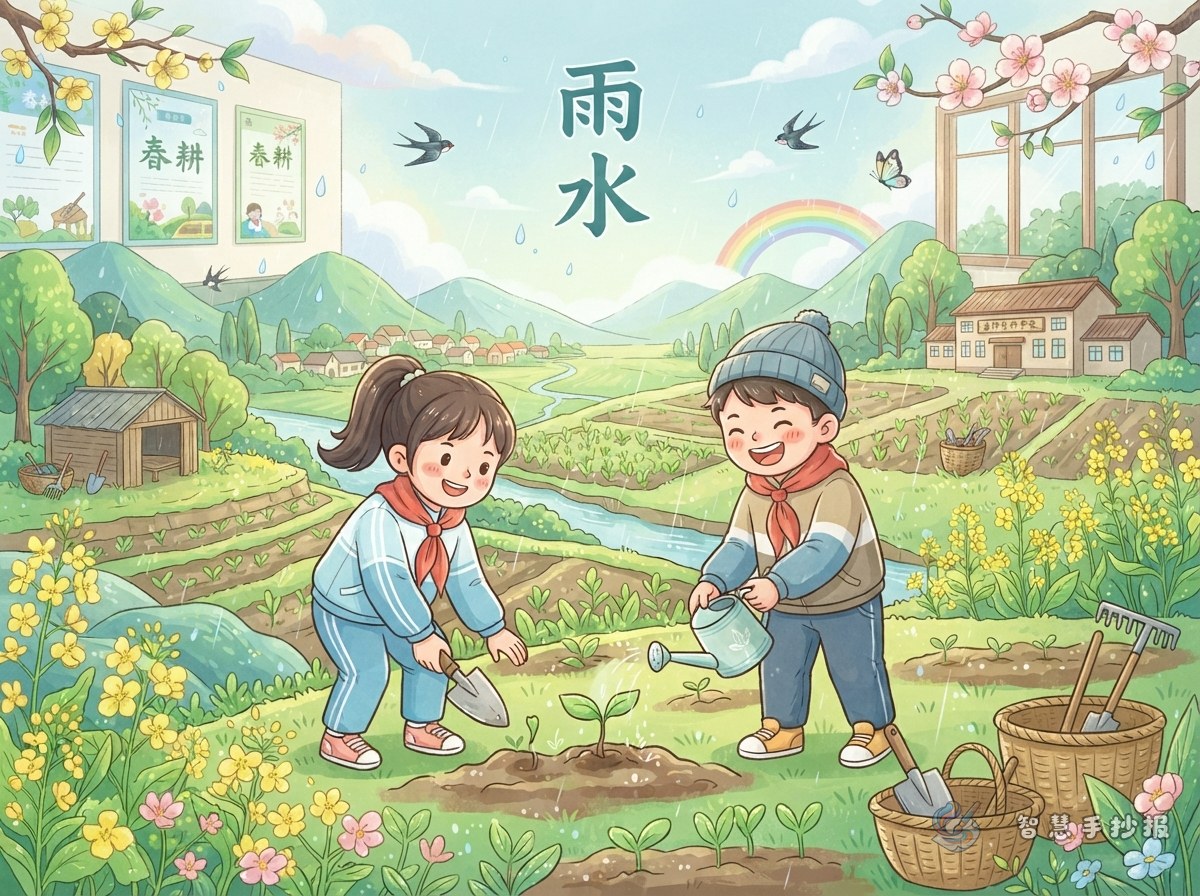
Around the Rain Water solar term, the weather shifts from cold to mild, rain becomes more frequent, and spring farming gets moving. A handwritten newspaper that only says "spring is here" looks thin. Farming proverbs fill that gap: each one is a short piece of weather wisdom with a strong picture in it, perfect for titles, borders and small cards.
Set the idea before you write: proverbs make the page sound good, facts make it clear. Use proverbs as column titles or decorations, and use seasonal facts and farm tasks as the main text.
Three Groups of Proverbs Worth Copying
Sort the proverbs into sky, soil and living-sign groups. One or two lines per group is plenty — too many turns the page into a list.
Weather proverbs
- "Rain on Rain Water, a good year for crops."
- "If it rains hard on Rain Water, the rivers will be full."
- "An east wind on Rain Water brings rain in midsummer."
Soil and field proverbs
- "Spring rain is as precious as oil."
- "At Rain Water, rain takes the place of snow."
Living-sign proverbs
- "When the river ice opens, the wild geese come north."
Add a short note beside it: melting river ice and geese flying north are signs that warmth is back, and that spring ploughing is about to start.
Seasonal Facts Work Best as Short Sentence Cards
Handwritten newspaper boxes are small, so cut the facts into short lines. Begin with the three Rain Water stages: otters presenting fish, wild geese flying north, and grass and trees sprouting. Three lines, stacked or in a row, both work.
Then list spring farm tasks as keywords:
- Wheat turns green again — check the seedlings and add fertilizer.
- More rain — clear ditches so water can drain from low fields.
- Prepare seeds and tools, plan seedling raising and sowing.
- Rapeseed bolts and blooms — keep up field care.
Add half a sentence after each one. "Clear the ditches" becomes "with more rain, water must flow away so roots do not rot" — clear for teachers and easy for classmates to read.
Columns and Layout: Proverbs as Titles, Facts as Notes
Three small columns are enough:
- Solar term file: the date, meaning and weather of Rain Water.
- One-line proverbs: each proverb with a short explanation, framed in a box or cloud shape.
- Spring farming now: ditch clearing, seed selection, greening wheat and other tasks.
Put the longest proverb in the middle as the main title, short cards on both sides, and leave a corner for "what I saw" — your own spring observations. Leave a little white space; it reads better than a page packed edge to edge.
Text You Can Copy Straight Onto the Page
"When Rain Water arrives, the wind carries dampness. River ice slowly opens and wheat quietly turns green. The old saying goes, 'spring rain is as precious as oil,' and also, 'rain on Rain Water means a good harvest.' Spring farming begins with clearing ditches and choosing seeds."
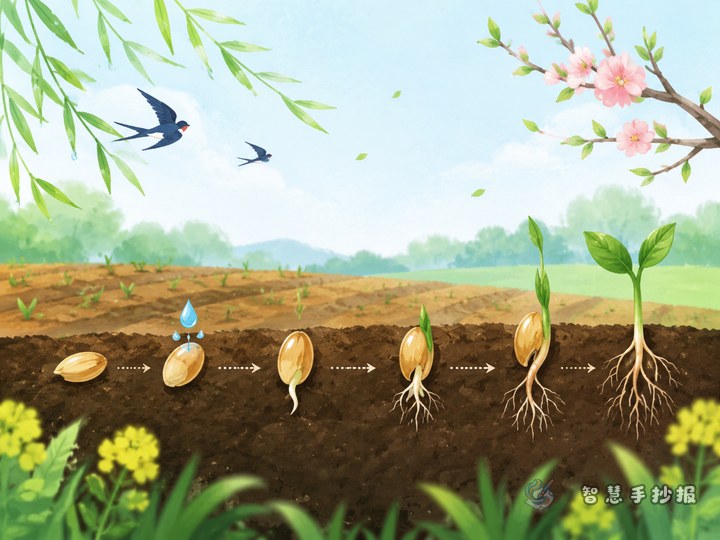
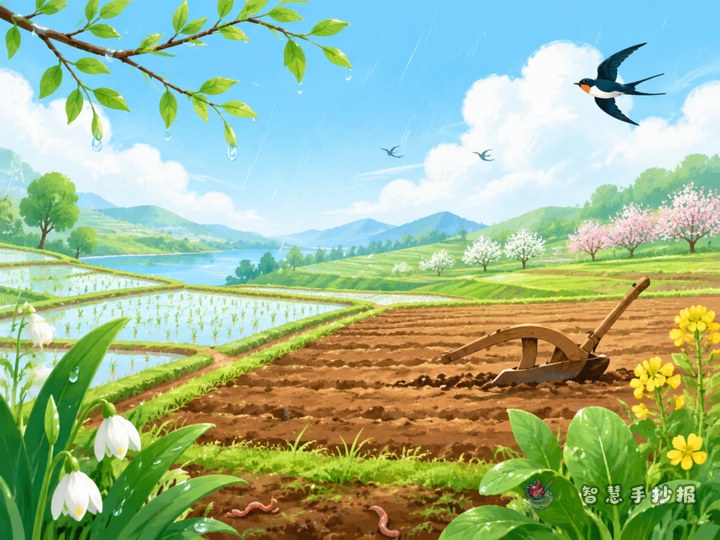
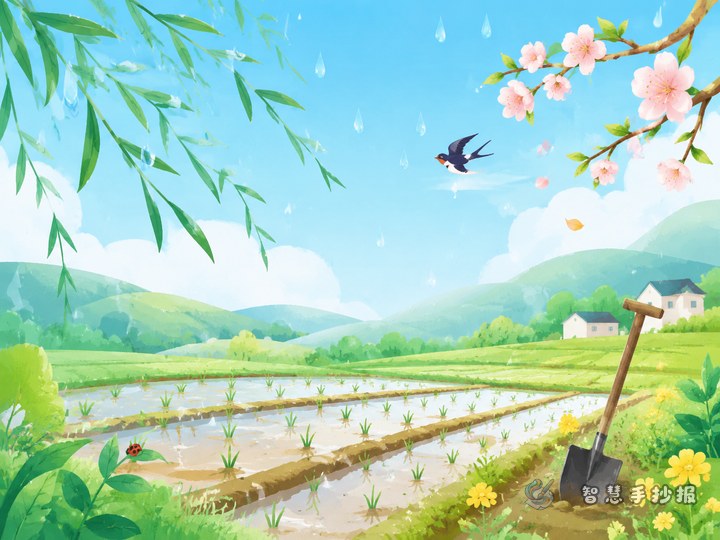
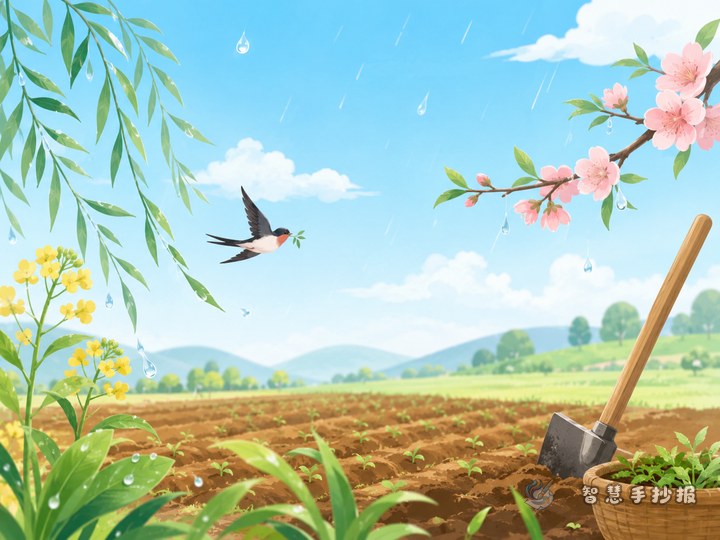
Split it into three lines, place them in three boxes, and add small drawings of raindrops, wheat sprouts and swallows. If you want a different layout or new column titles, you can keep choosing templates and adjusting the text and pictures in the WeChat mini program Smart Handwritten Newspaper.