A Bridge Is Strong, but It Still Needs Checkups
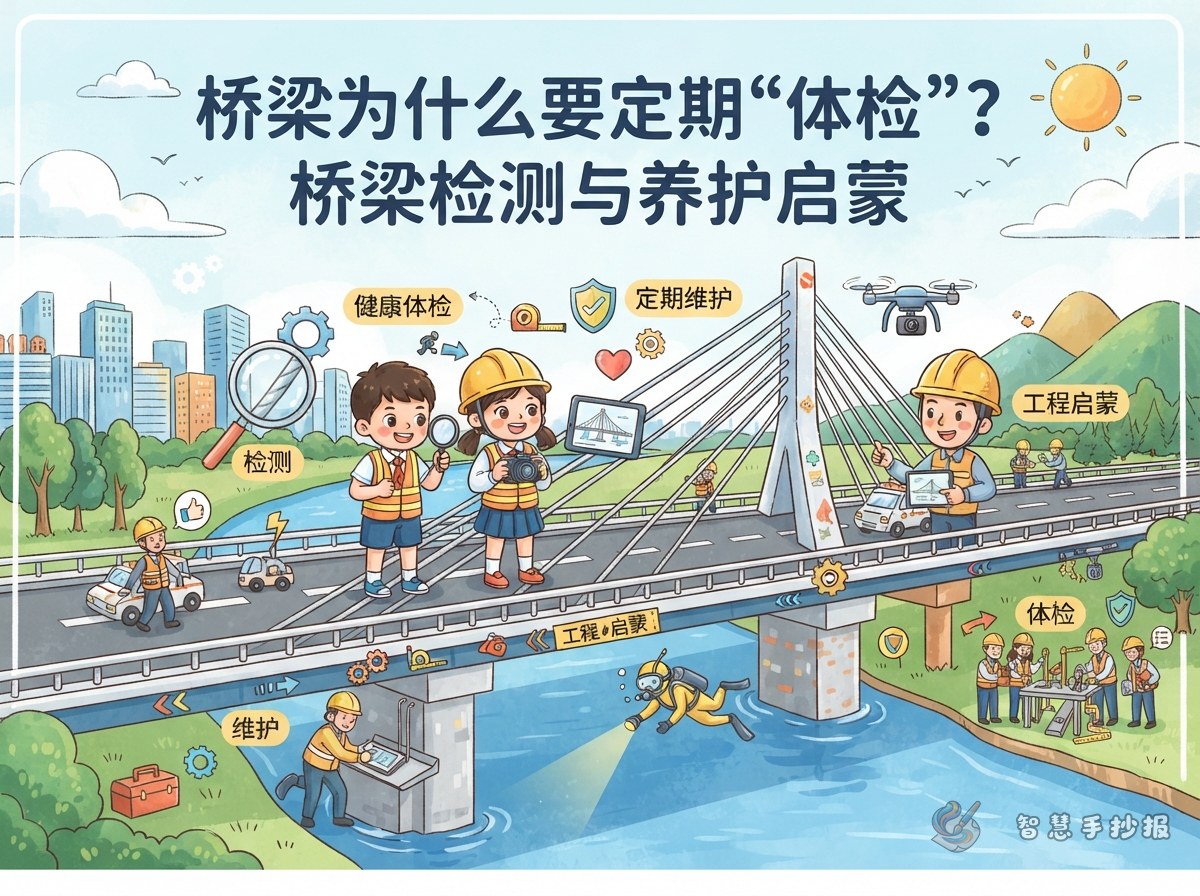
A bridge carries pedestrians and vehicles every day while facing sunlight, rain, wind, and changing temperatures. Even a strong structure must be inspected regularly. Build the poster around three connected actions: spot a problem, understand its condition, and maintain the bridge.
Create a Bridge Checkup Sheet
Turn this section into a checklist with small boxes. It will help readers see what inspectors examine.
- Deck: Look for uneven surfaces, cracks, holes, or standing water.
- Drainage: Check whether drains are blocked and whether rainwater can flow away.
- Piers: Observe unusual cracks and the condition of the surrounding foundation.
- Bearings and joints: Check for visible movement, deformation, or loose parts.
- Railings and signs: Make sure protective features are complete and warnings are easy to see.
Short Facts to Write on the Poster
Why Standing Water Matters
Water on a bridge can make travel less safe and keep bridge components wet for long periods. Clear drainage outlets are therefore an important part of routine bridge care.
Why Small Problems Need Attention
Minor damage may grow under repeated traffic and changing weather. Regular records help engineers see whether a condition is stable or getting worse, so they can choose the right time to clean, repair, or replace a part.
How Inspection Tools Help
Inspectors use careful observation as well as measuring tools and testing equipment. These tools provide useful information, while trained engineers study the records before deciding what action is needed.
Turn the Page into an Inspection Route
- Draw a bridge across the center of the page as the main visual.
- Place the checkup sheet in the upper-left corner and use arrows to point toward the deck, piers, and area below the bridge.
- Add three short inspection notes on the right for the observed condition, possible cause, and maintenance response.
- Draw a toolbox, reflective vest, and safety cones along the bottom. Use green for normal, yellow for attention, and red for prompt action.
Keep the title above the bridge outline. Straight lines, dotted paths, and small labels can give the page an organized engineering-log appearance. Limit each paragraph to a few lines and leave open space around the main drawing.
Connect Engineering with Responsibility
End with a simple message: protecting bridges is not only an engineer's job; everyone should travel responsibly. Children can avoid littering, never damage railings, and tell an adult if they notice something clearly unusual. After planning the content, students and parents can use the Smart Handwritten Poster WeChat Mini Program to choose a layout, arrange sections, and continue creating the final poster.