Start with a clear theme
Many students only write general environmental slogans, but a stronger page begins with one clear question: Why are wetlands important, and why should we protect them? When every section supports that idea, the whole handwritten newspaper feels complete and well organized.
You can choose a title such as “Protect Wetlands, Protect Life” or “Small Wetlands, Big Value.” A short subtitle can explain the focus in a simple way.
Four practical sections that work well
Section 1: What is a wetland?
Write a short explanation: wetlands include places closely connected with water, such as marshes, riverbanks, shallow lakes, and mudflats. They are important living spaces for many forms of life.
Section 2: Why are wetlands important?
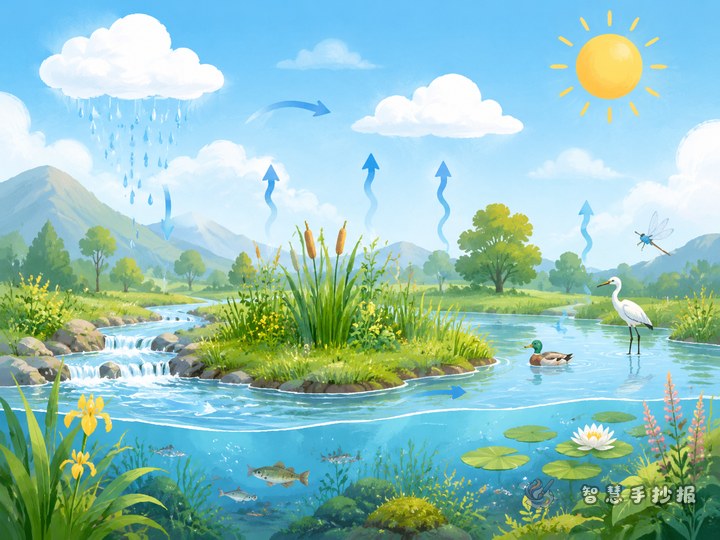
- They store and regulate water like a natural sponge
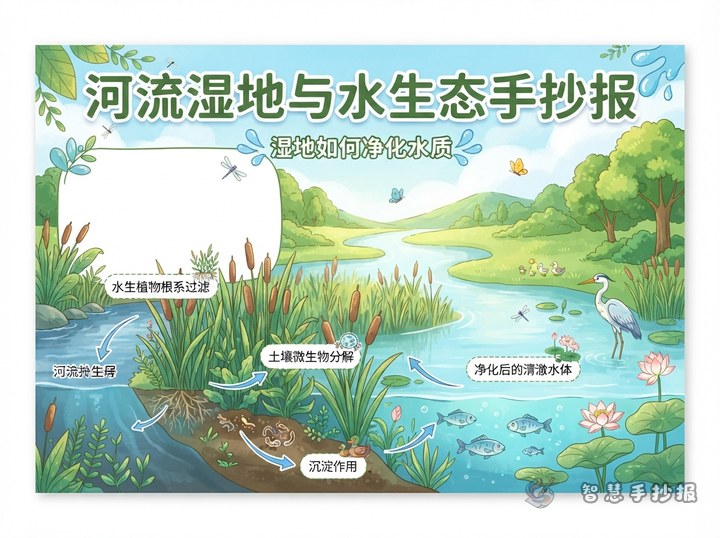
- They help improve water quality
- They provide homes for birds, fish, insects, and plants
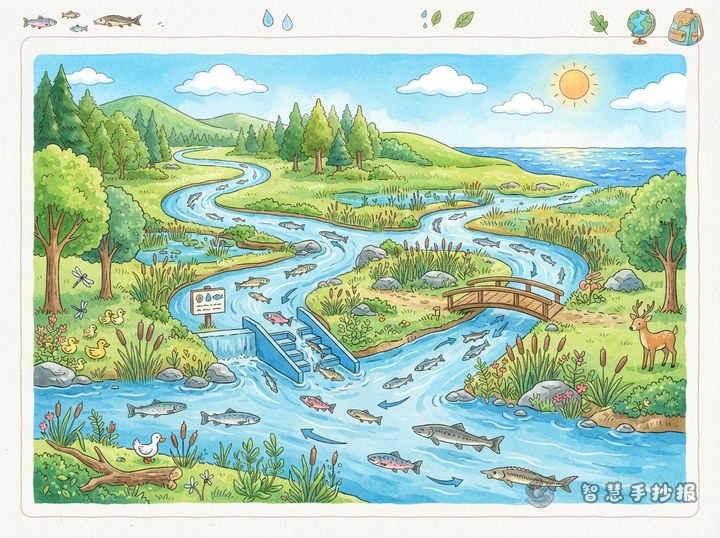
- They are closely linked to healthy river ecosystems
Section 3: Life in wetlands
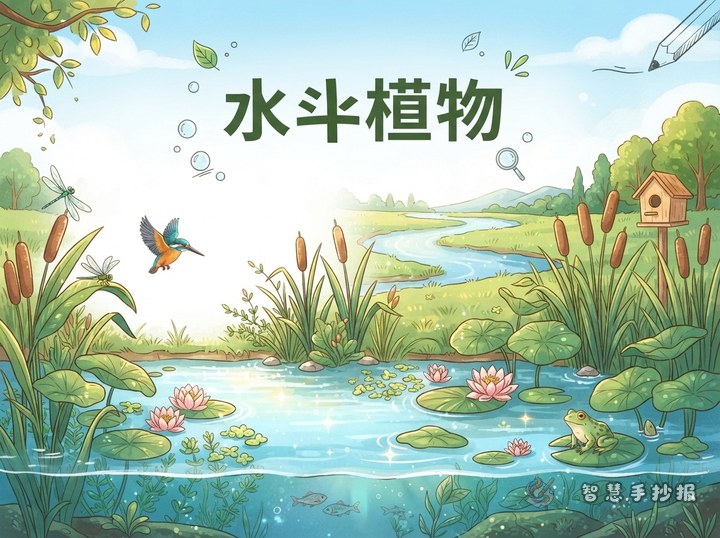
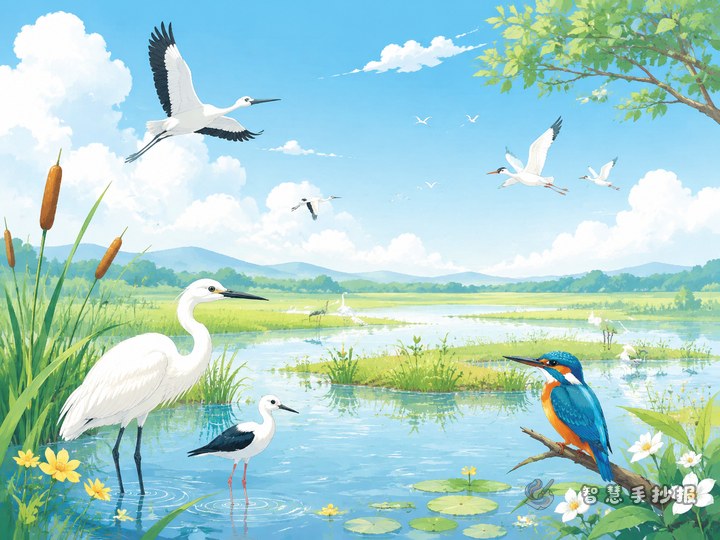
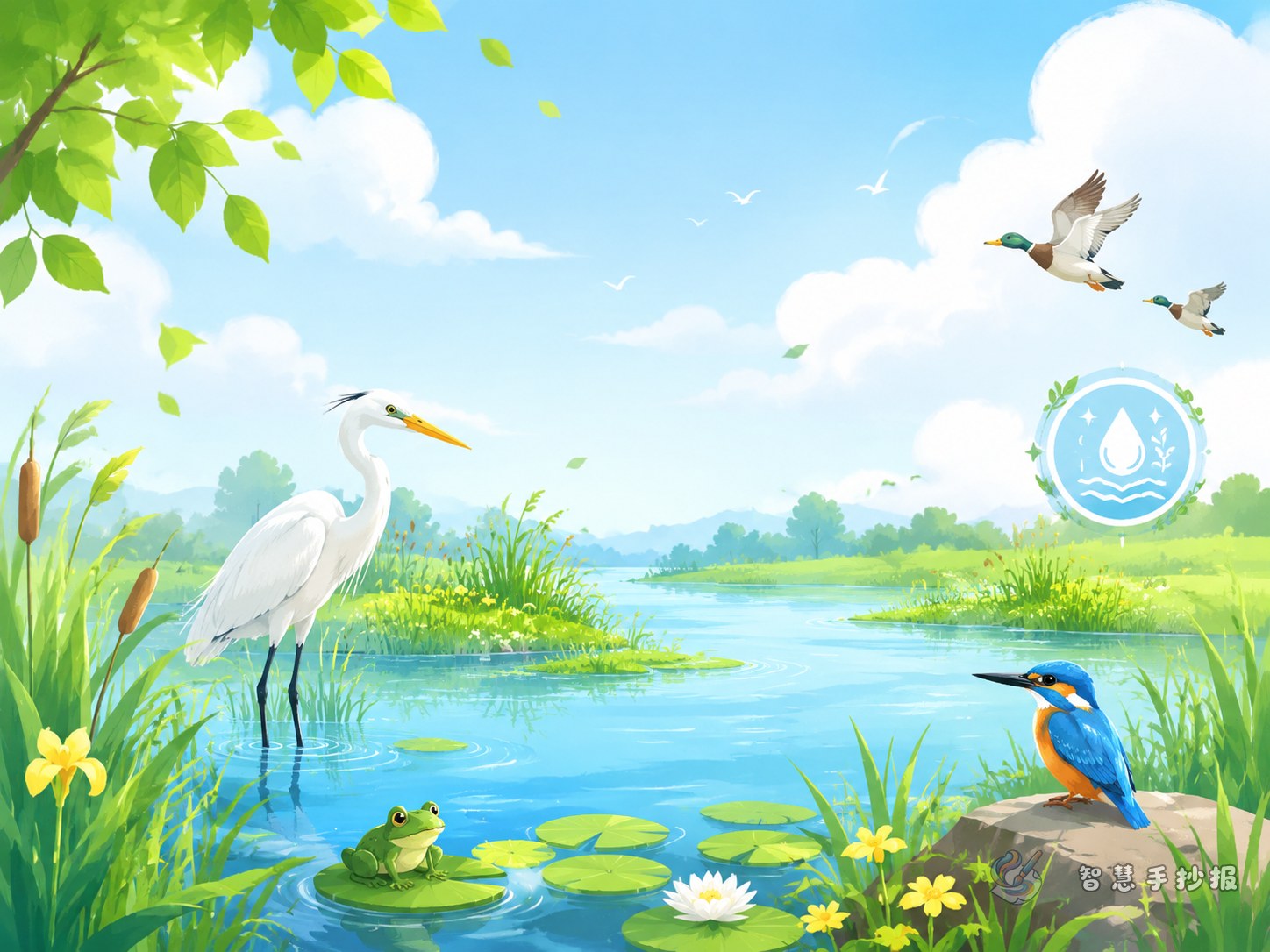
This part can be more vivid. You may mention reeds, lotus leaves, frogs, fish, dragonflies, and water birds. These details also make drawing decorations easier.
Section 4: What can we do?
- Do not throw rubbish near rivers or ponds
- Save water in daily life
- Do not catch wild animals casually
- Join clean water and green protection activities
- Encourage others to care for wetland environments
Short text materials students can copy
Text 1: Wetlands are like natural water storerooms on Earth. They connect rivers, land, and life. Protecting wetlands means protecting clean water and our shared home.
Text 2: Rivers keep the land flowing, and wetlands allow life to gather. Fish swim in the water, birds rest by the shore, and plants grow in wet soil. All of these depend on healthy water ecology.
Text 3: Every drop of water saved and every piece of rubbish not thrown into nature helps rivers and wetlands. Students can also become protectors of the water environment through small daily actions.
Keep the layout natural and easy to read
A blue-green nature style fits this topic very well. You can place a large title in the center, knowledge boxes on the left and right, and an action section at the bottom. A curved river across the page can connect the whole design.
- Main colors: blue and green
- Border ideas: water drops, waves, reeds, lotus leaves, clouds
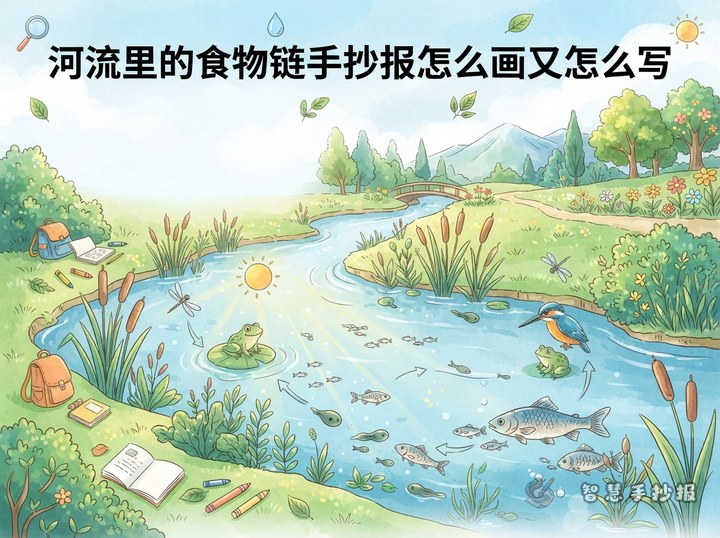
- Small drawings: fish, birds, frogs, dragonflies
- Writing tip: make the title lively and keep the main text neat
Add small creative touches
To make the work more lively, include a slogan strip, a short pledge, or a mini question box.
- Add a simple message such as: Start with me, protect wetlands.
- Create a small question: Can wetlands help clean water? Answer: Yes.
- Draw a comparison between a clean river and a polluted river to make the theme stronger.
If the content is ready and you want to improve the layout and section arrangement, you can also continue designing in the Zhihui Shouchao Bao WeChat mini program.