Build the Poster Around One Emergency Backpack
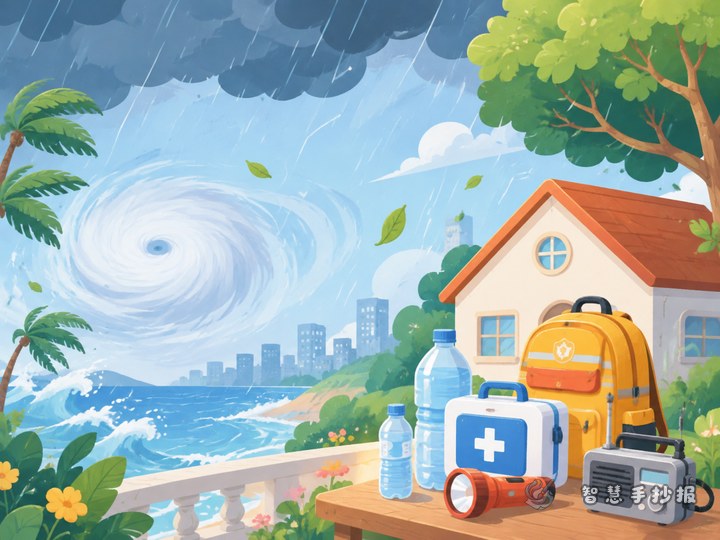
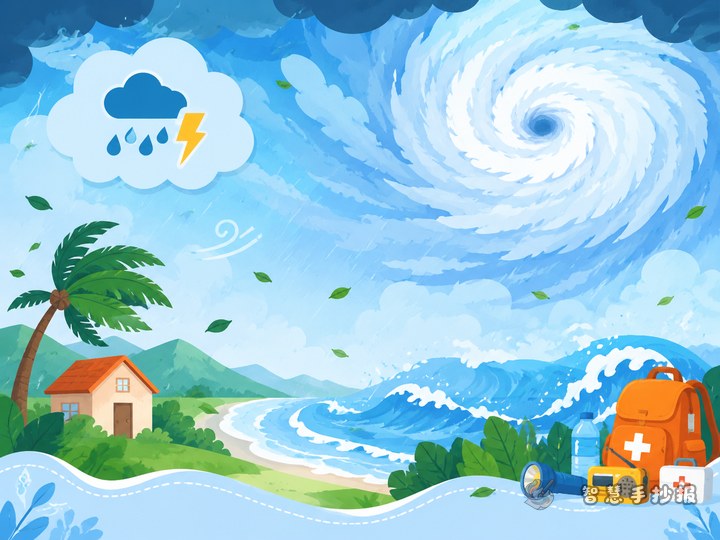
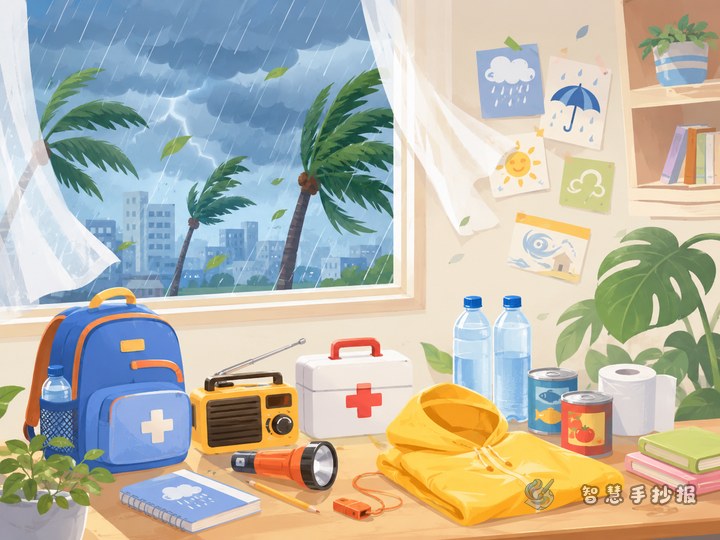
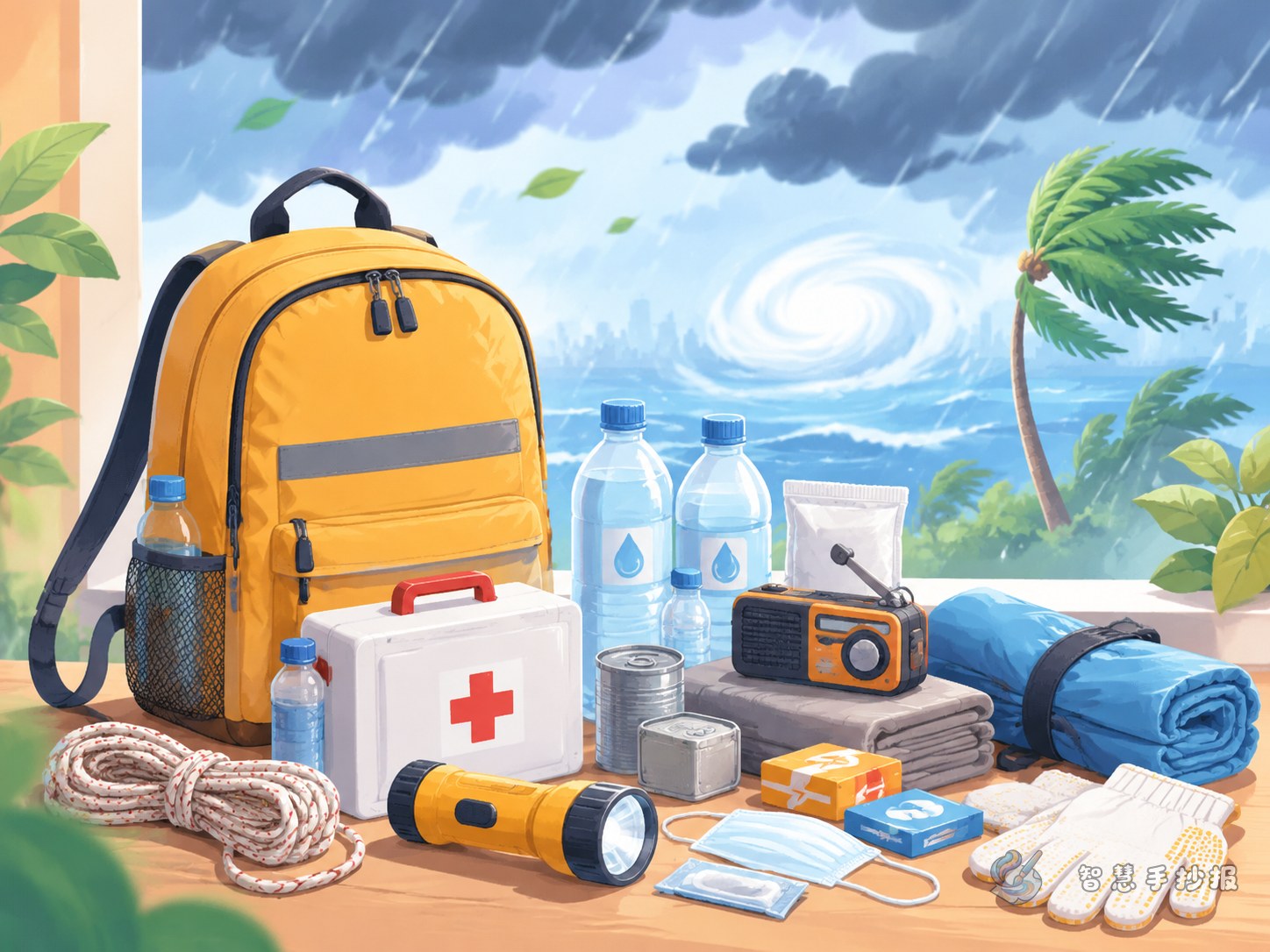
Use an open emergency backpack as the main visual in the center of the poster. Draw small cards, pockets, or arrows around it to show what belongs inside and what each item is used for. A title such as Pack Today, Stay Ready for the Storm gives the page a clear purpose.
Small raindrops, clouds, shields, and flashlights can decorate the border. Keep these details light so that the safety information remains easy to read.
What Belongs in the Kit
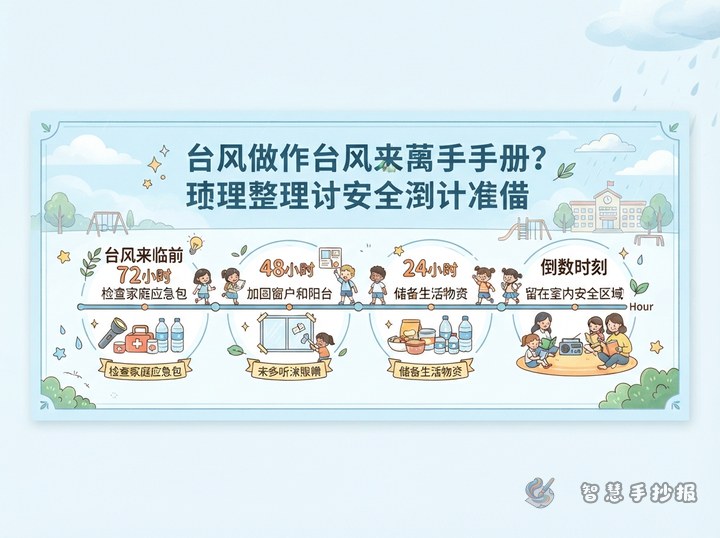
- Light and communication: a flashlight, spare batteries, a power bank, and a family contact card.
- Water and food: a suitable amount of drinking water and easy-to-store food.
- Health and hygiene: basic first-aid supplies, tissues, wet wipes, masks, and essential personal medicine.
- Rain and warmth: a lightweight raincoat, dry towel, spare clothes, and an emergency blanket.
- Important essentials: waterproof copies of necessary documents and a few basic daily supplies.
An adult should select and pack items according to the family's actual needs. Children should never handle medicine on their own. Heavy, breakable, flammable, or sharp objects should not be packed.
Three Short Text Blocks for the Page
Check Before the Storm
Before a typhoon or severe rainstorm, check the kit with an adult. Test the flashlight, charge the power bank, and review the dates on food and medicine. Replace used items and keep the bag where the family can reach it quickly.
Carry Only What Is Needed
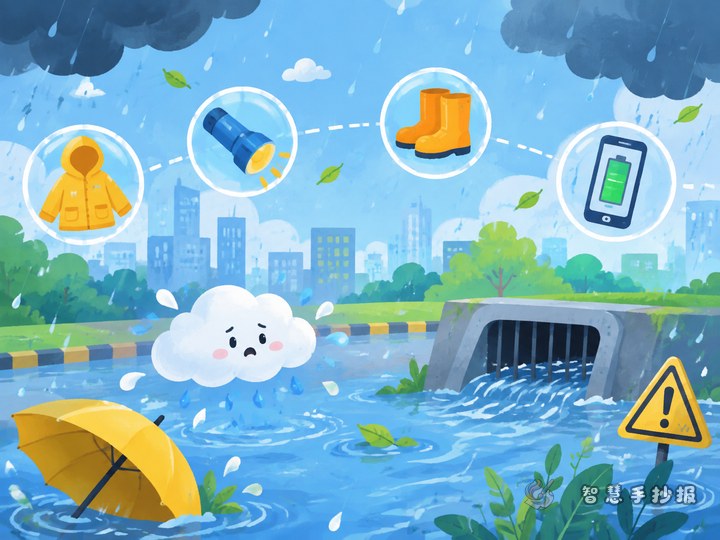
If evacuation becomes necessary, follow instructions from parents, teachers, or emergency workers. Do not delay by returning for toys, and never enter flooded roads, riverbanks, or low-lying areas alone.
Keep Contact Information Ready
A contact card can include the child's name, family phone numbers, and the agreed meeting place. If separated from family, ask a police officer, teacher, or authorized staff member for help.
Make a Pack or Do Not Pack Comparison
Divide one side of the poster into two boxes. In the first, draw useful items such as a flashlight, water, raincoat, and contact card. In the second, show glass bottles, lighters, sharp tools, and too many toys with clear cross marks. This visual comparison is easier for young readers to remember than a long paragraph.
Layout, Color, and Finishing Steps
- Sketch the sections in pencil and let the backpack fill about one-third of the page.
- Place the supply list on the left, the comparison boxes on the right, and inspection tips along the bottom.
- Use dark blue for the heading, orange or red for warnings, and black for the main text.
- Add one short purpose beside each item instead of using pictures without explanations.
- Check that the writing is clear, the sections are balanced, and every safety reminder is accurate.
To arrange the sections more easily, families and students can continue creating the poster in the Smart Handwritten Poster WeChat Mini Program and adapt the content to the child's age and household needs.