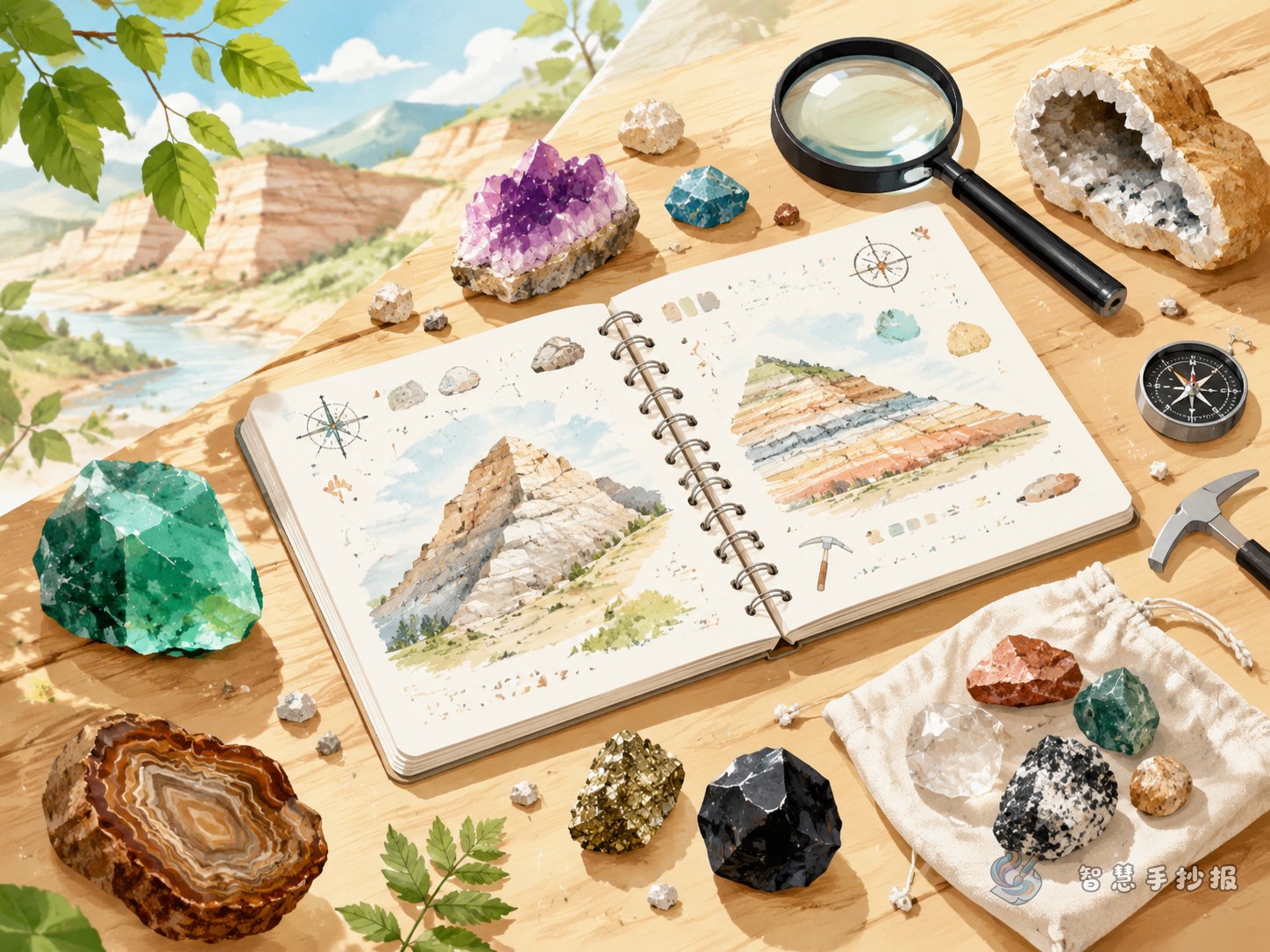
Turn the topic into a small rock-discovery field trip
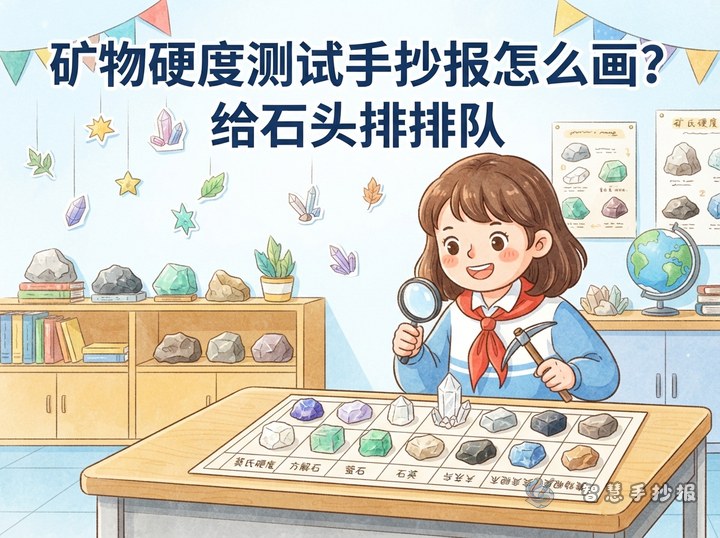
The most interesting part of this kind of handwritten newspaper is not filling it with too many facts. It should look like a real exploration. The main title can be My Mineral Specimen Observation Notes, A Small Geology Field Study, or Rocks and Minerals I Know. These titles sound natural and make the page more lively.
You can begin with a short introduction: rocks may look ordinary, but they can contain different minerals, and each specimen may show different colors, textures, luster, and hardness. This creates a smooth transition into the main sections.
Useful content sections that fit the page well
1. Features I observed
- Color: some are dark, some are light, and some have stripes or spots.
- Luster: some look shiny, while others look dull.
- Texture: the surface may feel rough, smooth, layered, or grainy.
- Hardness: some break easily, while others are very hard.
This section is perfect for simple observation language. There is no need to use difficult scientific terms.
2. Common rock and mineral cards
You can choose a few familiar examples such as granite, quartz, mica, coal, and limestone. For each small card, write one sentence about its features and one sentence about its use.
- Granite: grainy and strong, often used in buildings.
- Quartz: quite hard and common in many rocks.
- Mica: can split into thin layers and often looks shiny.
- Limestone: common in nature and useful as a building material.
3. Where minerals appear in daily life
This section connects science with everyday experience. You can mention building stone, glass, ceramics, road materials, and other things that depend on mineral resources.
Design the page like a specimen display board
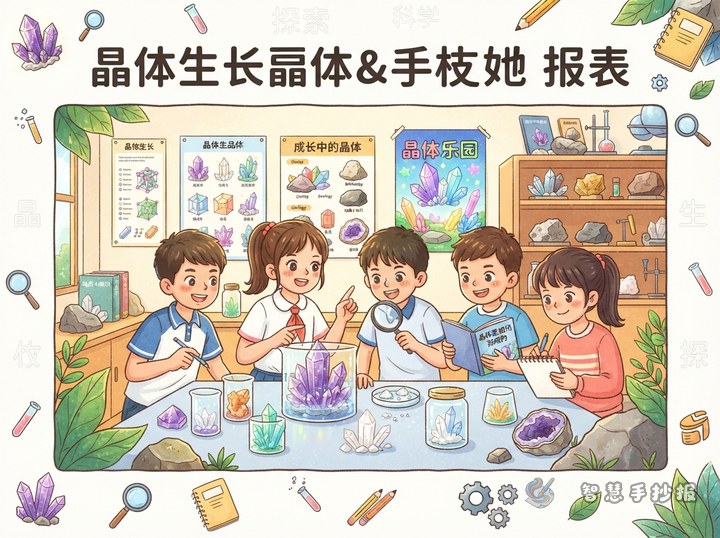
Instead of using a very traditional layout, you can make the page look like an exhibition board. Put the title in the center and arrange several “specimen labels” around it. Keep each section to three to five lines so the page stays easy to read.
- Top: title with small decorations like a hammer, magnifier, or mountain lines.
- Left side: observation features.
- Right side: common specimen cards.
- Bottom: daily uses and my discoveries.
For the border, you can draw uneven stone shapes, layers of earth, or pebble patterns. Colors such as earthy yellow, gray-blue, rock brown, and moss green work well.
Short text materials you can use directly
- Rocks do not only have different colors, but also different textures and luster.
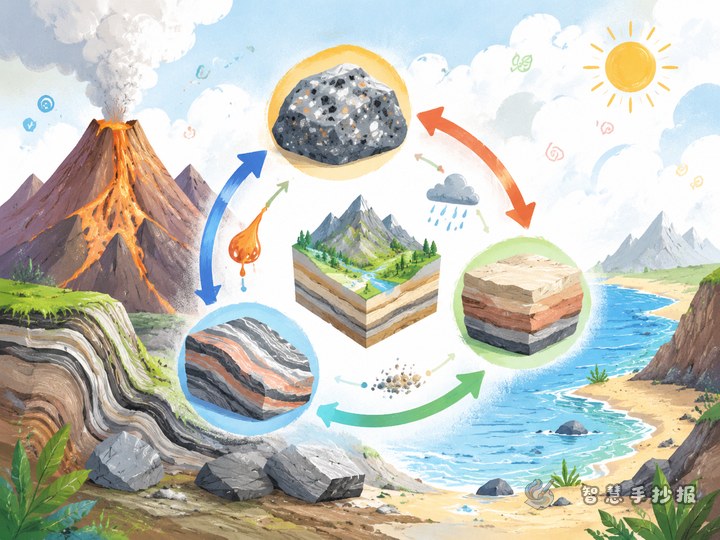
- Minerals are important materials that make up rocks, and many daily items depend on mineral resources.
- When observing stones, we can look at color, shape, hardness, and surface features.
- Learning geology is like taking a journey to explore the Earth beneath our feet.
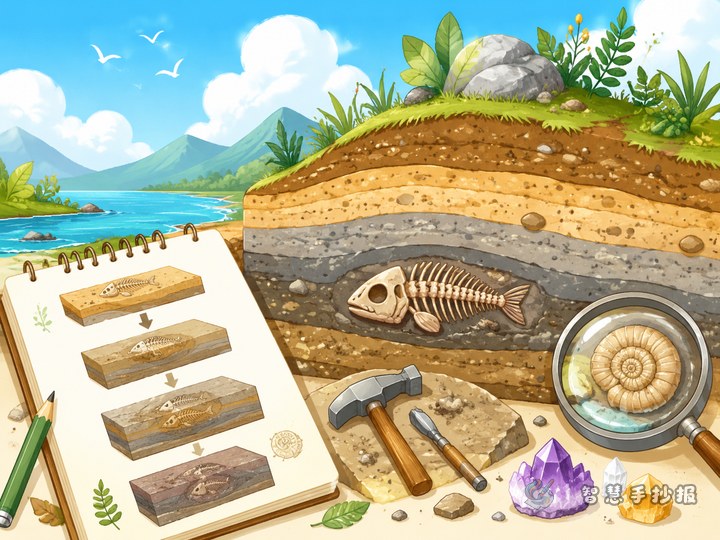
- A small stone may hide a very long story of formation.
If you still have empty space, add a short paragraph about your own thoughts, such as which specimen you like most and why. That will give the page more personality.
Small finishing tips for a cleaner result
- Do not fill the whole page with text. Leave some blank space.
- Keep section titles short and easy to spot.
- Use bullet points instead of long dense paragraphs.
- Draw simple illustrations rather than overly detailed pictures.
- If you need an ending, add a small geology quiz or a section called “What I want to study next.”
After organizing your text and sections, you can continue improving the layout, colors, and arrangement in the WeChat mini program Zhihui Shouchaobao.