Turn the Topic into a Story of Change
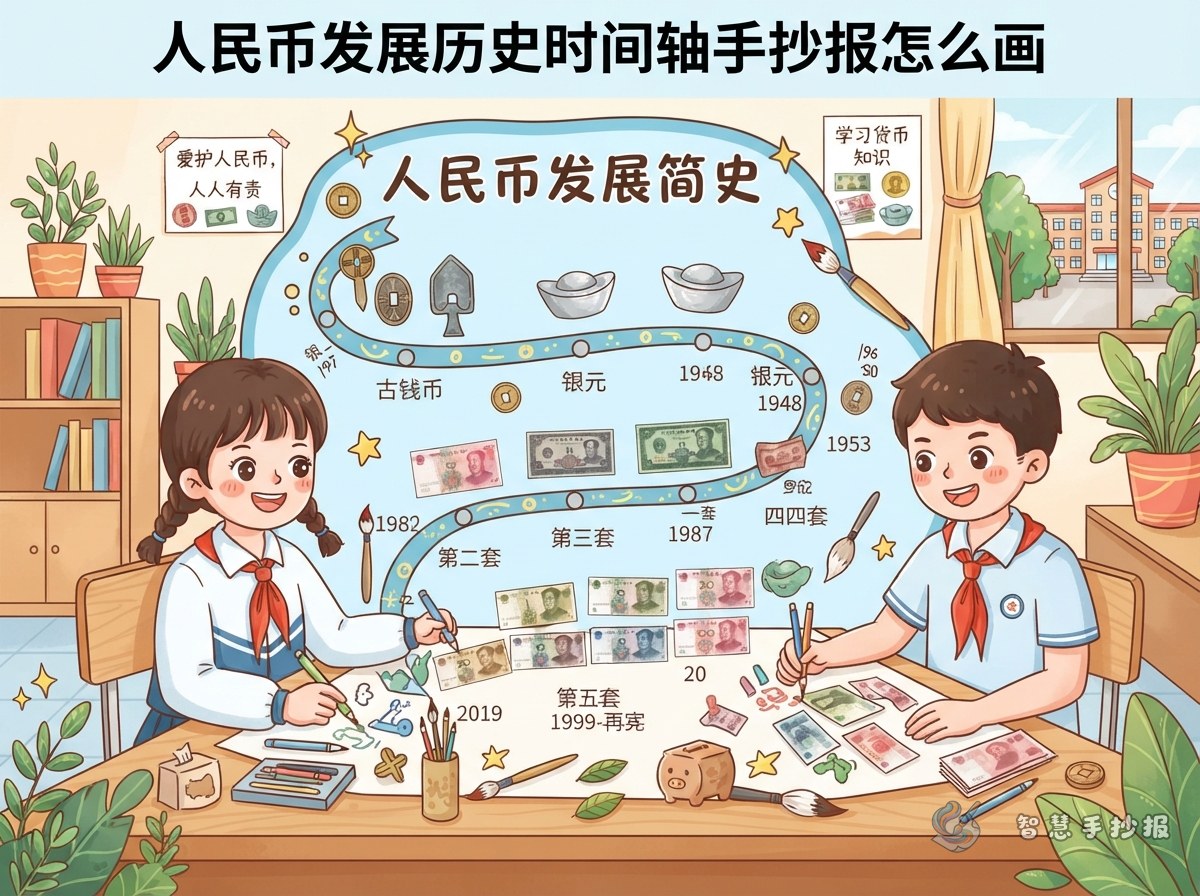
This poster focuses on the development of the Renminbi rather than simply listing denominations or banknote patterns. Build a clear timeline titled “The Growth of the Renminbi” to show how the currency was introduced, developed, and became part of everyday life. The result will help readers learn basic currency knowledge while noticing how society has changed.
Place the main title in the center or at the top, with a subtitle such as “Learn about currency history and use money with care.” Organize the page around three ideas: historical milestones, the role of money in daily life, and responsible habits.
Five Stops to Place on the Timeline
Connect the First through Fifth Series of Renminbi with a horizontal arrow or a winding path. Give each stop only two or three sentences, then add a colored card or a small icon so the page remains easy to read.
- First Series: Issued in 1948, it marked the beginning of the Renminbi in the economic life of New China. Key phrase: “A new beginning.”
- Second Series: Issued in the 1950s, it showed that denominations and banknote arrangements were becoming more organized. Key phrase: “Growing order.”
- Third Series: Issued from the 1960s, it carried the imprint of social development and everyday life at that time. Key phrase: “Supporting development.”
- Fourth Series: Issued gradually from the 1980s, it brought richer designs and reflected changing lives. Key phrase: “A new daily life.”
- Fifth Series: Issued gradually from the late 1990s, it has continued to be improved as daily needs have changed. Key phrase: “Modern life.”
If a class assignment requires exact years, check the textbook or the teacher’s materials before writing them. For a general handwritten poster, the series, a period keyword, and a short explanation are enough.
Short Copy You Can Use
Opening paragraph
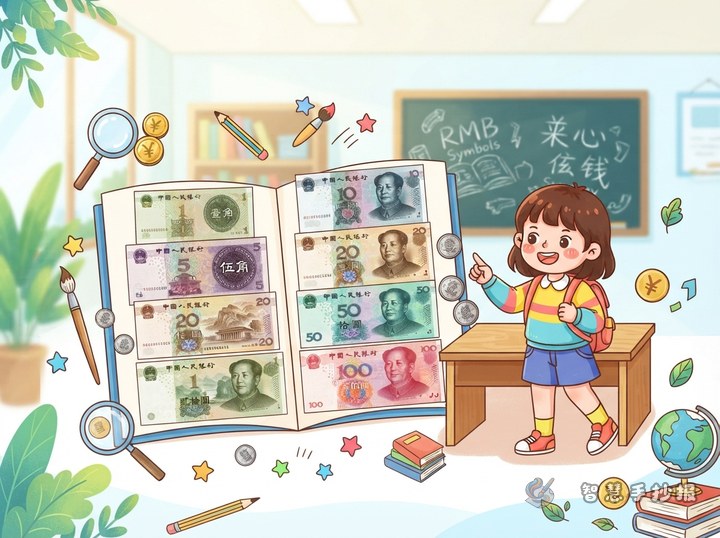
The Renminbi is the legal currency of China and a familiar part of everyday life. From the First Series to the Fifth Series, changes in the banknotes reflect social development and improvements in people’s lives. Learning the history of the Renminbi helps us understand the connection between currency and daily life.
Small lines for the timeline
- Each series of Renminbi keeps a memory of its time.
- Money is not only used for shopping; it also records social progress.
- Learning about the Renminbi begins with observing, identifying, and using it correctly.
Closing reminder
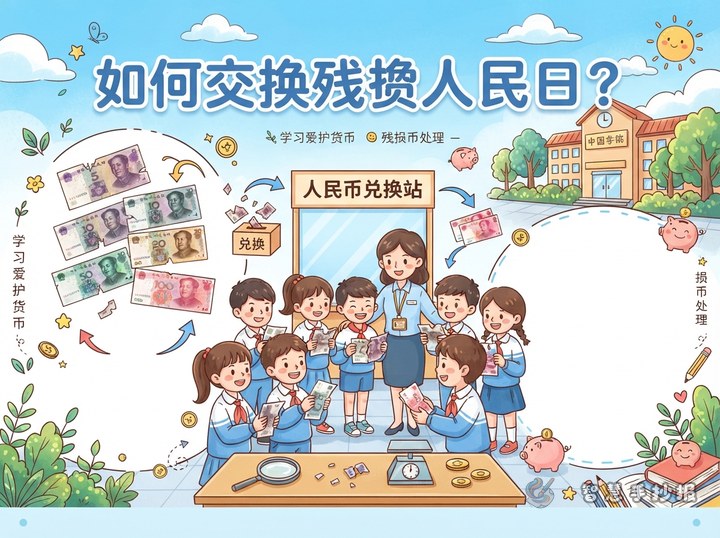
Care for the Renminbi in simple ways: do not write or draw on banknotes, do not crumple or tear them, keep your hands and money clean, and store them properly after use. Keeping banknotes clean and complete is a small sign of responsible behavior.
Build the Layout with Timeline Cards
Try a layout with a central timeline, knowledge cards on both sides, and a responsible-use pledge at the bottom. Leave about one quarter of the top area for the title and opening paragraph. A medium-width colored line can connect the five historical stops.
- Draw the five stops as station signs, bookmarks, or circles with similar sizes.
- Put only the series name, a period keyword, and a short note on each card.
- Use arrows, stars, pencils, or a small wallet as simple decorations to guide the eye.
- Do not copy a complete real banknote design. Abstract lines, color blocks, and symbolic icons are enough.
Color Choices and Final Checks
Red, gold, and blue can be used as the main colors, with pale yellow or light green for background sections. Use a consistent color for each type of information. Make the title bold, keep body lines short, and make the years and series names more noticeable than the explanations.
Before finishing, check four things: Is the historical order correct? Is the wording easy for children to understand? Is there enough empty space? Are the caring-for-currency suggestions specific? To try different timeline arrangements, continue designing in the Wisdom Handwritten Poster WeChat Mini Program and adjust the text and decorations to fit your paper.