Choose One Clear Focus: Self-Rescue and Asking for Help
Many drowning-prevention posters end up repeating the same list of things you must not do. Try a different focus: what I can do if I fall into water, and what people on shore can do. This gives you specific details, and your poster will not look like everyone else's.
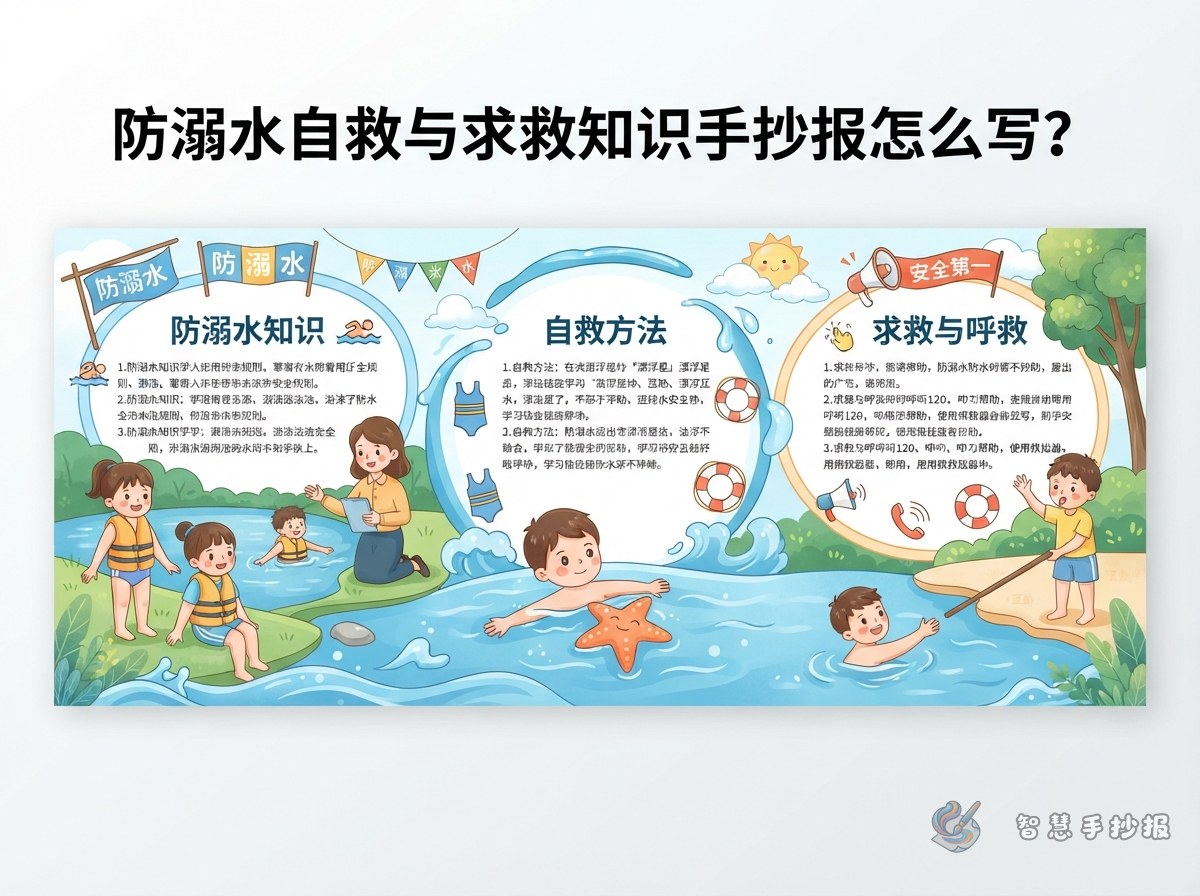
If space is tight, place three blocks side by side: self-rescue, calling for help, and rescue actions that are too dangerous to try.
Three Columns and What Goes Inside Them
Column One: Right After Falling Into Water
- Stay calm. Do not slap or grab at the water, because thrashing makes you sink faster.
- Try to float on your back with your nose and mouth above the surface, breathing in lightly and out slowly.
- Shout for help and wave your arms, but do not keep your hands above water the whole time.
- If your leg cramps, pull your toes toward you and stretch the muscle slowly.
Column Two: How People on Shore Can Help
- Shout for nearby adults to come quickly.
- Call the emergency number and explain where you are and what is happening.
- Throw a life ring, an empty plastic bottle, or any floating object so the person can grab it.
- Reach with a bamboo pole, branch, rope, or long clothing while crouching low on shore.
Column Three: Rescue Moves That Are Never Safe
- Do not jump into the water to pull someone out.
- Do not join hands and walk into the water as a chain.
- Do not play near rivers, reservoirs, or unknown water without an adult watching.
Short Lines You Can Copy onto the Poster
Poster text works best when it is short and easy to say. You can copy these lines or change them into your own words:
- Stay calm, float on your back; splash and grab, and you sink fast.
- If someone falls in, call an adult first, look for a tool, and never go in alone.
- One pole from the shore is worth more than ten brave words in the water.
- Being able to swim is not the same as being able to rescue.
- Stay away from unknown water, and do not let fun turn into danger.
For the calling-for-help part, make a small box with four short steps: shout loudly, find an adult, make the call, throw something floatable.
Drawings That Show Someone Asking for Help
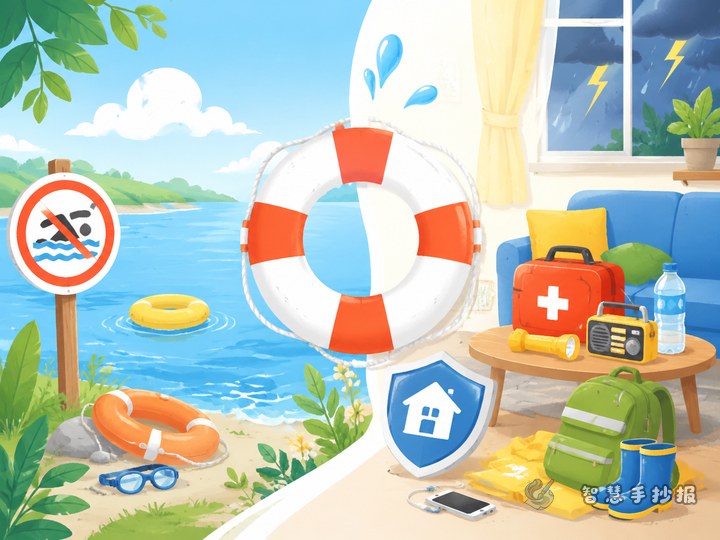
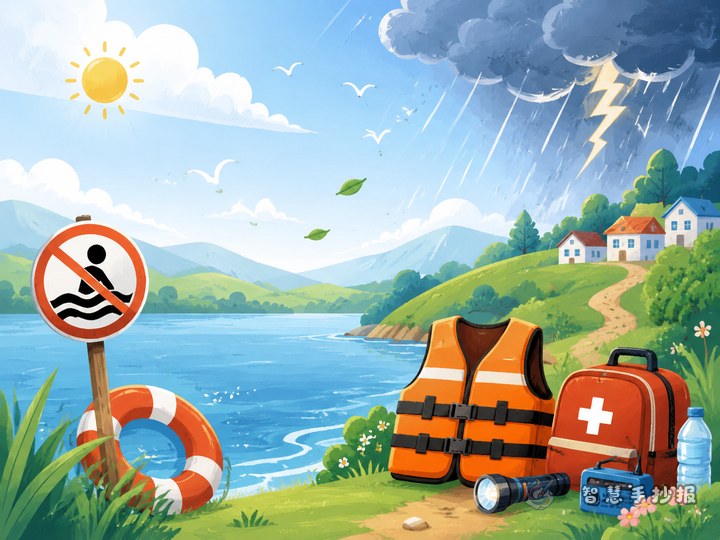
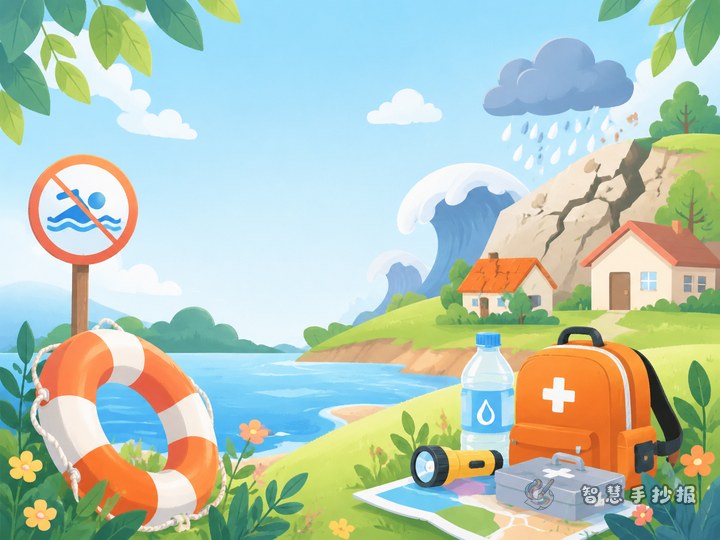
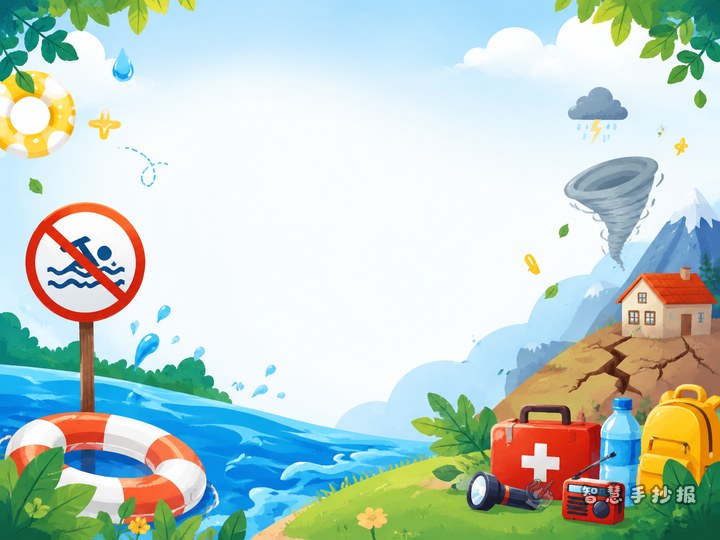
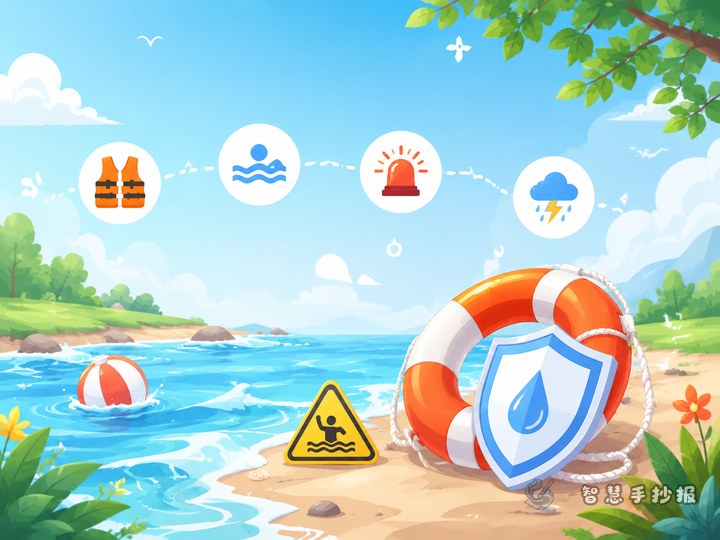
- Draw a row of small icons — a life ring, whistle, pole, and empty bottle — and use them as a border.
- Add wave lines along the bottom of the paper to suggest water, and place the big title above the waves.
- Use an open hand shape as a reminder symbol that means “stop, do not go in.”
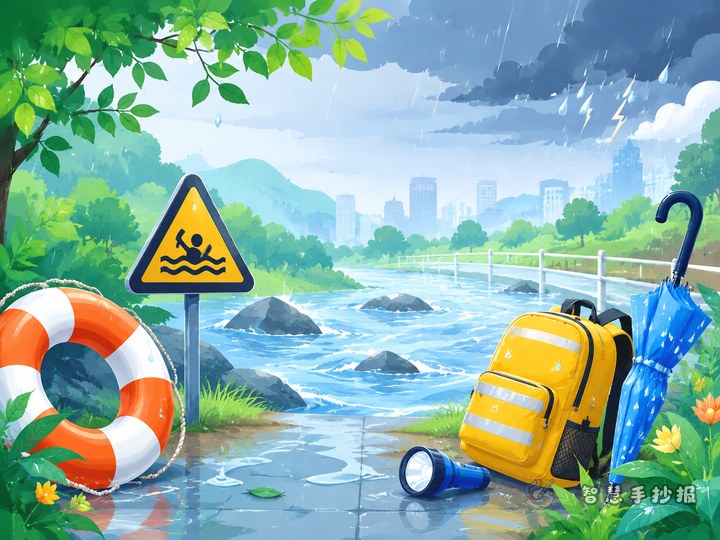
- Put key words inside a triangular warning sign, such as “unknown water” or “no adult nearby.”
- Write the phone number inside a phone or mobile-phone drawing so it stands out.
Blue-green works well for water, while orange-red draws attention. Alternating the two colors gives the page more depth.
Write First, Decorate Later — and Link It to Disaster Safety
- List your short lines on scrap paper, keeping each column to five lines or fewer.
- Draw light pencil lines to mark the title area, drawing area, and text areas.
- Copy the lines into the columns and leave space for illustrations.
- Outline and color everything at the end, then add the big title and your name.
Self-rescue and calling for help are useful beyond drowning prevention. In a fire, an earthquake, or another emergency, you also protect yourself first and then ask an adult for help, so this poster can be a general exercise in staying safe.
If your layout is still unclear, open Smart Handwritten Newspaper in WeChat Mini Program, choose a safety-themed layout, place your written lines into it, and then copy the style by hand.