Start with the idea of a city built around an axis
A poster about ancient Beijing should not simply say that the city has a long history. A clearer idea is to focus on the Central Axis, which helps students understand the order, symmetry, and ceremonial feeling of the old capital.
Good title choices include “Ancient Beijing on the Central Axis,” “Reading Beijing through the Forbidden City,” or “A Line That Connects the Old Capital.” These titles are specific and easy for classmates and teachers to understand.
Short text materials for the poster
Ancient capital profile
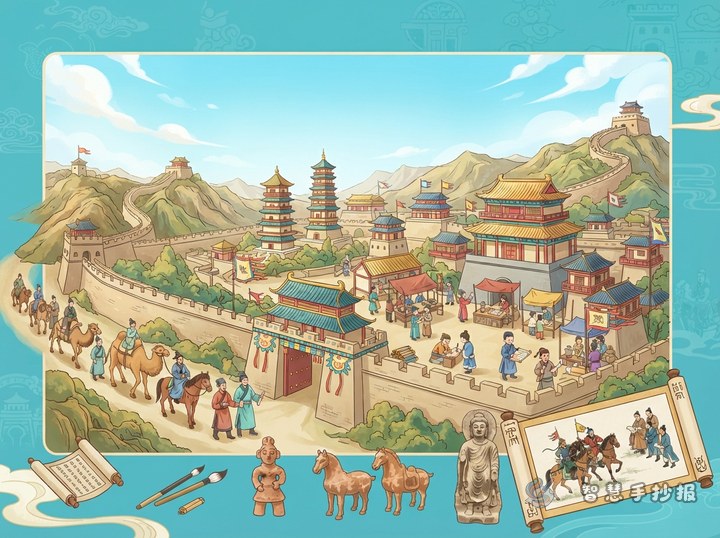
Beijing is one of China’s famous ancient capitals. Its palaces, temples, city gates, hutongs, and courtyard houses show the wisdom of traditional city planning and the beauty of historical culture.
The Forbidden City
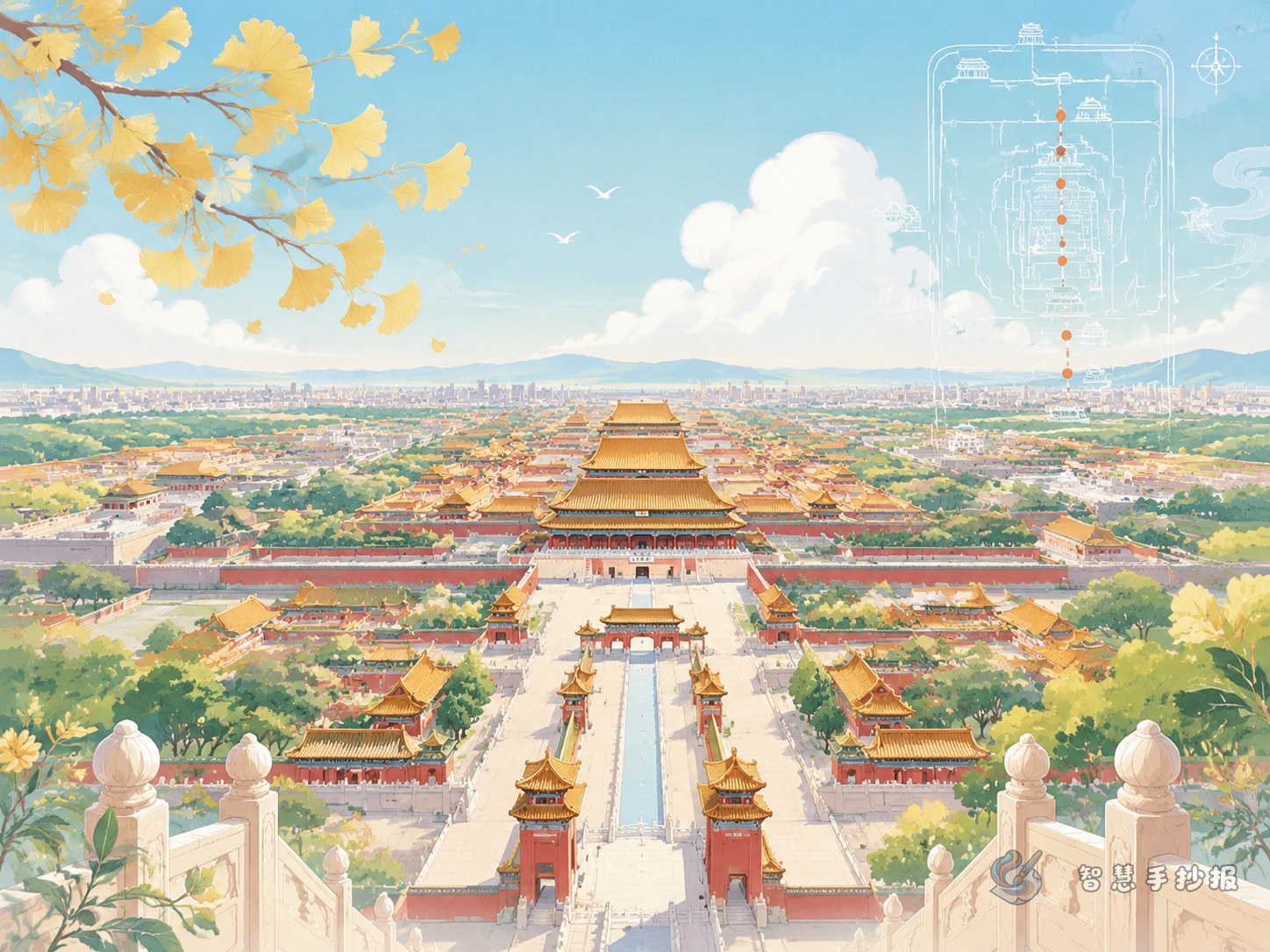
The Forbidden City stands on Beijing’s Central Axis and was an important palace complex in the Ming and Qing dynasties. Its red walls, yellow roofs, grand gates, and layered courtyards give the city a solemn and impressive character.
Life in the hutongs
Beijing is not only about grand palaces. Hutongs and courtyard houses show the everyday life of the old city. They make the ancient capital feel warmer and closer to ordinary people.
Section ideas that make the poster richer
- Central Axis Guide: Use one vertical line to connect landmarks such as the Drum and Bell Towers, the Forbidden City, Tiananmen, and the Temple of Heaven.
- Buildings That Tell Stories: Explain red walls, yellow roofs, gates, eaves, and stone lions in simple words.
- Question Corner: Add questions such as “Why are red and yellow common in palace buildings?” or “What does the Central Axis show?”
- My Impression of Beijing: Write two or three personal sentences, such as “Ancient Beijing feels grand, orderly, and friendly.”
Layout tips for a clear handmade design
A three-part layout works well. Put the big title at the top with a simple gate tower, cloud pattern, or lantern. Draw the Central Axis in the middle and arrange landmarks along the line. Place text boxes on the left and right sides.
Use red, gold, and blue-gray as the main colors. Red can represent palace walls, gold can suggest glazed roof tiles, and blue-gray can show hutongs and old bricks. Leave enough blank space so the poster looks clean.
Small details that make the work stand out
- Add a simple gate tower beside the title to make the theme clear.
- Draw buildings with three key features: red walls, yellow roofs, and symmetrical shapes.
- Keep each text box short, with only three or four lines if possible.
- Add a small “Old Capital Dictionary” to explain words such as Central Axis, palace gate, hutong, and courtyard house.
If you want help organizing sections and materials, you can continue in the 智慧手抄报 WeChat mini program and adjust the poster according to your grade level and paper size.