Pick One Clear Idea: Fluoride and Your Teeth
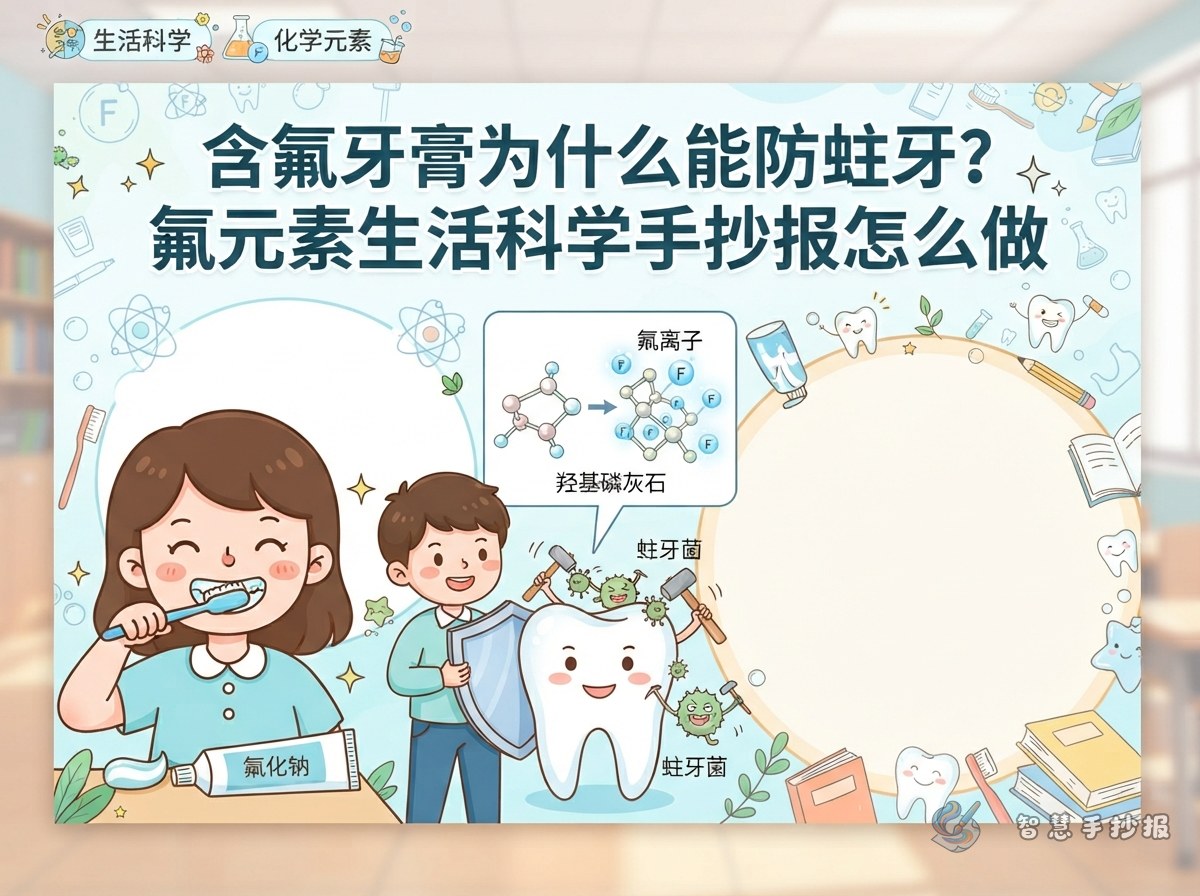
A chemistry poster does not have to start with a periodic table. Fluorine is hiding in the toothpaste tube on the bathroom shelf. Write the main idea in one sentence: teeth are damaged by acid, and fluoride helps them resist it.
Turn that sentence into a chain of arrows: sweet food → bacteria break down sugar → acid appears → the tooth surface weakens → fluoride helps protect it. You do not need long formulas for this page.
Four Boxes That Give the Page a Job
Box 1: Fluorine Fact Card
Add the element name, the symbol F, and where it appears in daily life, such as fluoride toothpaste and dental care products. Draw a small tooth beside the card.
Box 2: How Acid Attacks a Tooth
Draw three small panels: eating sweets, bacteria breaking down sugar, and acid softening the tooth surface. Add a short reminder to rinse after eating.
Box 3: Daily Tooth-Care Tips
List brushing carefully, eating fewer sticky sweets and having regular dental check-ups. Link each tip back to the fluorine idea.
Box 4: What I Noticed
Leave a small space for your own observation, such as the ingredients list on a toothpaste box or a family conversation about choosing toothpaste.
Short Lines You Can Copy by Hand
- Fluorine hides in toothpaste and helps teeth fight off acid.
- Enamel is hard, but acid can still wear it down over time.
- More toothpaste is not better; careful brushing is what counts.
- Sweets are fine, but rinse or brush afterwards.
Add a short chant: Brush in the morning, brush at night, rinse after sweets, smile bright.
Layout and Color: Keep It Bright and Simple
- Place a large title across the top of the page in blue-green or sky blue.
- Use teeth, water drops, bubbles and a toothpaste tube as border decorations, but leave space for words.
- Try three box shapes: a cloud for fun facts, a rounded rectangle for paragraphs, and a label strip for small headings.
- Keep to four colors at most: light blue, white, pale green and a little warm yellow.
Before You Pick Up the Pen
- Sketch the title, boxes and drawings lightly in pencil first, then go over them with color.
- Write neatly and leave a little space at the end of each line so teachers can read it easily.
- If the layout feels hard, open the WeChat mini program "智慧手抄报", choose a science template, drop your text into the boxes, and copy the arrangement by hand.