Why classic lantern riddles work so well on a tabloid
Classic lantern riddles are a great fit because they combine fun, interaction, and traditional culture. Readers naturally want to pause and guess, which makes the handwritten newspaper more lively than a page filled only with festival facts. For children, short word riddles and daily-life riddles are easier to understand and easier to present clearly.
If you want a stronger festive feeling, connect the riddles with lanterns, reunion, the Lantern Festival, and holiday customs so the page feels bright and meaningful.
A practical set of sections for the page
- Mini Riddle Lesson: Explain what lantern riddles are and when people usually enjoy them.
- Guess First: Show 3 to 6 classic riddles without answers.
- Answer Reveal: List the answers together with one-line explanations.
- Guessing Tips: Introduce simple methods such as looking at word shape, meaning, and sound.
- Festival Corner: Add short notes about lantern viewing and holiday customs.
This structure makes the page easy to read and gives students, parents, and teachers a clear focus.
Ready-to-use riddle material
Short examples for a student-friendly page
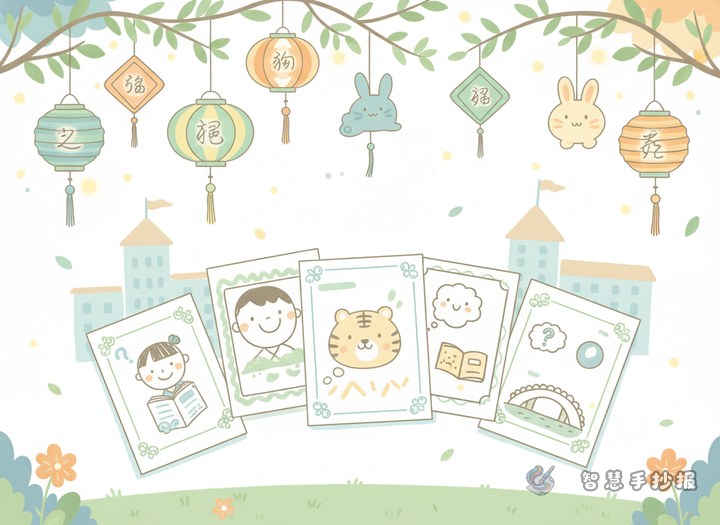
- Riddle: Bite off the tail of an ox. Answer: Gao. Explanation: It is based on changing and combining parts of a Chinese character.
- Riddle: Fifteen days. Answer: Pang. Explanation: It comes from combining parts of a character.
- Riddle: Upper and lower become one. Answer: Ka. Explanation: This is guessed from character structure.
- Riddle: After the Lantern Festival. Answer: Wan. Explanation: It suggests the idea of completion and can be explained through meaning.
When choosing examples, keep them short, clear, and easy to explain. That makes them more suitable for primary school handwritten newspapers.
What to add besides the riddles
If the page feels too empty with only riddles, add short supporting text:
- Lantern riddles are a traditional activity often seen during the Lantern Festival.
- Guessing riddles can improve observation, imagination, and language understanding.
- Some riddles ask readers to guess characters, objects, or idioms.
- In the past, people wrote riddles on lanterns so everyone could enjoy guessing while admiring the lights.
These short notes work well in side columns or introduction boxes and make the page feel complete.
How to arrange the layout
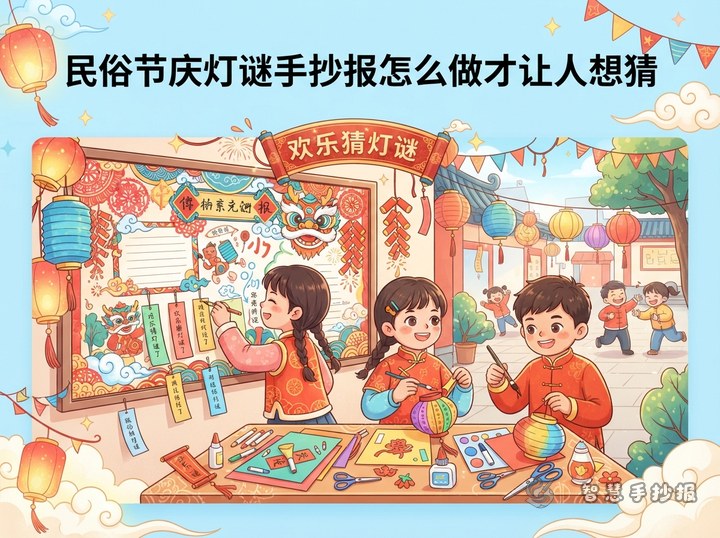
A strong design choice is a central title with lantern-shaped sections around it. Put the main title in the middle, then place small content boxes on the sides or in the corners. The riddle area can be colorful, while the answer section can sit at the bottom to create a guess-first reading flow.
Warm colors such as red, orange, and gold fit the festival mood. You can also add light blue or cream as background colors. Decorations do not need to be crowded. Lanterns, clouds, paper-cut patterns, and the full moon are enough to build the atmosphere.
One extra idea to make it more interactive
Add a small Challenge Corner with one or two riddles that have no answers on the page. This turns the handwritten newspaper into an activity for classmates instead of just a display. It is especially useful for class presentations and festival boards.
Once your title, sections, and riddle text are ready, you can continue arranging them in the Zhihui Shouchaobao WeChat mini program to finish a cleaner and more polished layout.