Shift the focus from jobs to the meaning of work
To make this kind of handwritten newspaper truly fit labor education, do not stop at naming a profession. The better approach is to show what the work involves, how it serves others, and what qualities it requires. A theme such as “What I learned from a job experience” or “The value of work in different professions” works better than a simple dream-job topic.
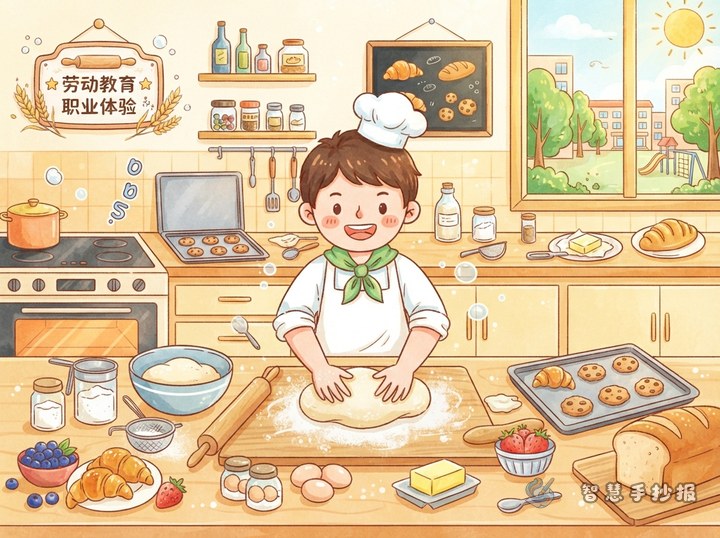
For younger students, it is best to choose familiar occupations such as teacher, doctor, cook, delivery worker, sanitation worker, farmer, firefighter, or librarian. The key is to explain what they do every day, what tools they use, and why their work deserves respect.
A practical layout: center theme with side sections
You do not need to divide the page evenly. A clearer design is to place the title and main drawing in the center, with two side columns and a short reflection area at the bottom.
- Center area: Put the main title and a simple drawing of a work scene.
- Left column: Add sections like “About the job,” “A typical workday,” and “Tools used at work.”
- Right column: Use “Skills and qualities,” “What I learned,” and “Work I can do myself.”
- Bottom area: Write a short conclusion or personal promise about respecting labor.
Use two or three main colors only, such as blue, green, and orange. Small icons like helmets, books, brooms, stethoscopes, or wheat can make the page more vivid.
Ready-to-use writing materials
What this job does
Every profession contributes to society through work. Teachers help students learn. Doctors protect people’s health. Sanitation workers keep the city clean. Delivery workers bring items to people on time. Different jobs have different duties, but all honest work deserves respect.
What skills are needed
A job is not only about wearing a uniform. It also requires real abilities and good habits. A cook needs patience and care. A firefighter needs courage and discipline. A doctor must be responsible and precise. A farmer needs hard work and persistence. No matter the profession, focus, cooperation, and responsibility are always important.
What I learned from the experience
After learning about or trying a job, I understood that work is not always easy. Behind every task are effort and dedication. We should respect workers and begin with small actions in daily life, such as organizing our schoolbag, cleaning our desk, and helping our family with simple chores.
My labor promise
I will start with small tasks, value the results of others’ work, finish my own duties carefully, and build good habits of diligence, responsibility, and teamwork.
How to make the report feel more real
If the student has joined a school activity, the content can follow three simple steps: what I saw, what I did, and what I learned.
- What I saw: Workers had clear responsibilities and took each task seriously.
- What I did: I tried sorting items, recording information, or doing simple simulated tasks and found that every step required care.
- What I learned: Work needs not only effort, but also knowledge, rules, and cooperation.
This kind of writing feels more specific and meaningful than empty slogans.
Final touches for a better handwritten newspaper
Draw simple work tools and job scenes to match the theme. Keep the title larger than the body text, and use short sentences so the page does not look crowded. Before finishing, check three points: Does the content focus on labor? Are the sections clear? Is the reflection genuine?
If you want to keep improving the layout, replace job sections, or try different styles, you can continue designing in the Zhihui Shouchaobao WeChat mini program.