Start with a real school scene
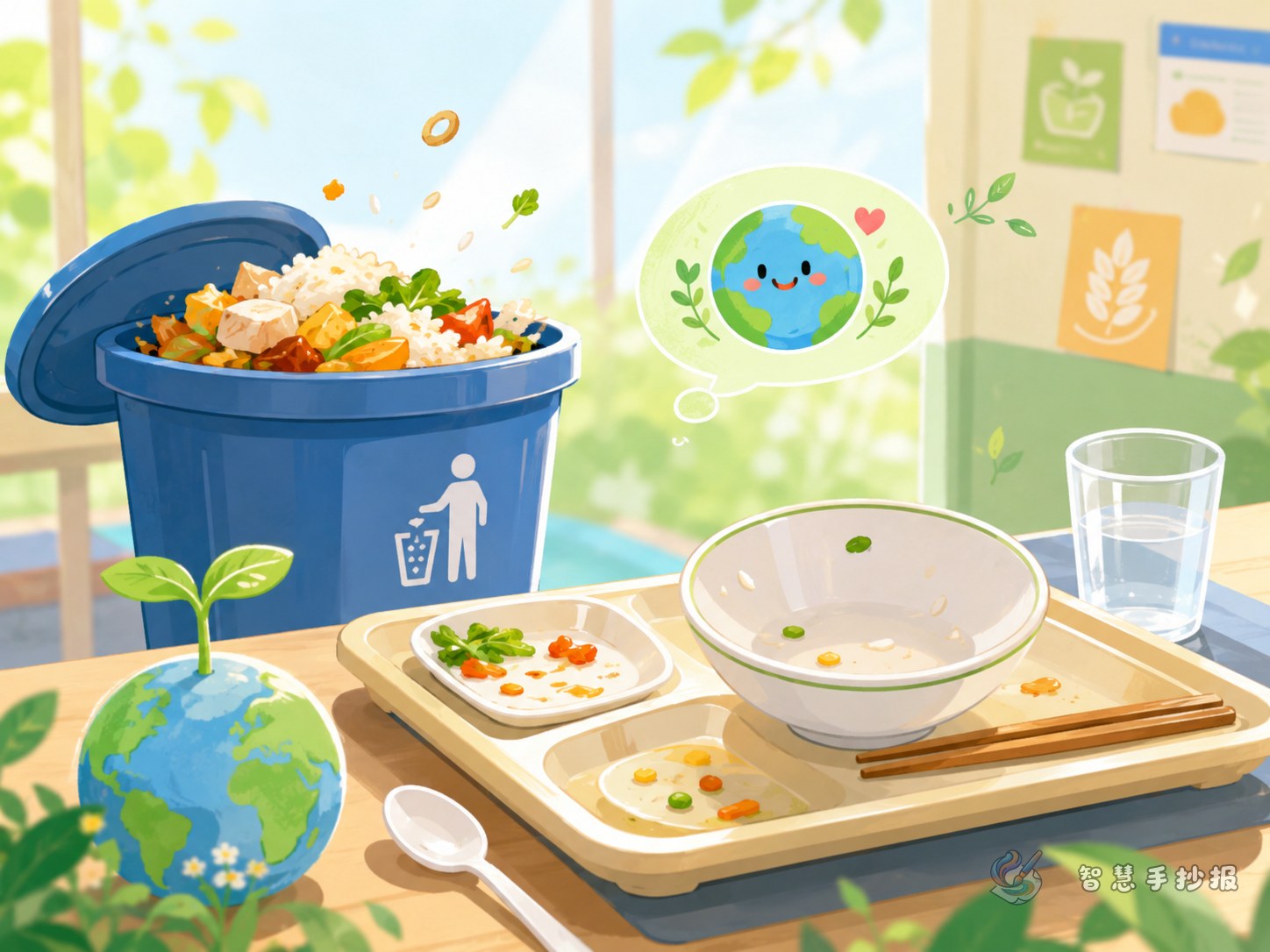
Many food-saving posters feel too general because they only repeat phrases like saving food or avoiding waste. If you focus on cafeteria leftovers, the topic immediately becomes more vivid and believable. Students can connect it to lunch lines, trays, unfinished rice, and vegetables left behind after meals.
This approach makes the handwritten newspaper feel like an observation from school life rather than copied information. It is easier for readers to understand and easier for teachers to see the theme clearly.
Sections you can directly use
Section 1: Waste I see in the cafeteria
- Some students take too much food and cannot finish it.
- Some only want meat and leave vegetables untouched.
- Some follow others and add extra food they do not really need.
- Rice, soup, and side dishes can all be wasted if taken without thinking.
Section 2: Why the clean plate campaign matters
- Every grain of rice comes from hard work in planting, growing, and harvesting.
- Wasting food is not only a loss, it also weakens good habits.
- School is a great place to build habits that can continue at home.
Section 3: What I can do
- Take only as much as I can finish.
- Try a small amount first instead of rejecting food quickly.
- Remind classmates gently when I notice waste.
- Respect every meal and avoid throwing food away.
Section 4: A short pledge
You can write: “Let an empty plate become a habit, and let saving food become a school value.”
Or: “Less leftover food, more respect for every meal.”
Short writing materials for students
If you still have space, add brief lines that are easy to copy and remember:
- Every meal deserves respect.
- Save food, starting from one plate at a time.
- A clean plate is action, not just a slogan.
- No leftovers, no picky eating, more gratitude.
- Waste less today, value more tomorrow.
These lines work well beside drawings, in side boxes, or under the main title. They make the page fuller without becoming too crowded.
Keep the layout clear, not just full
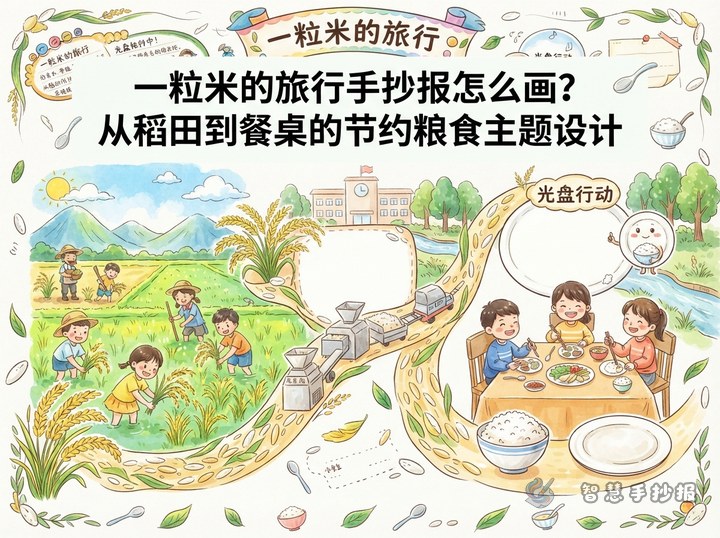
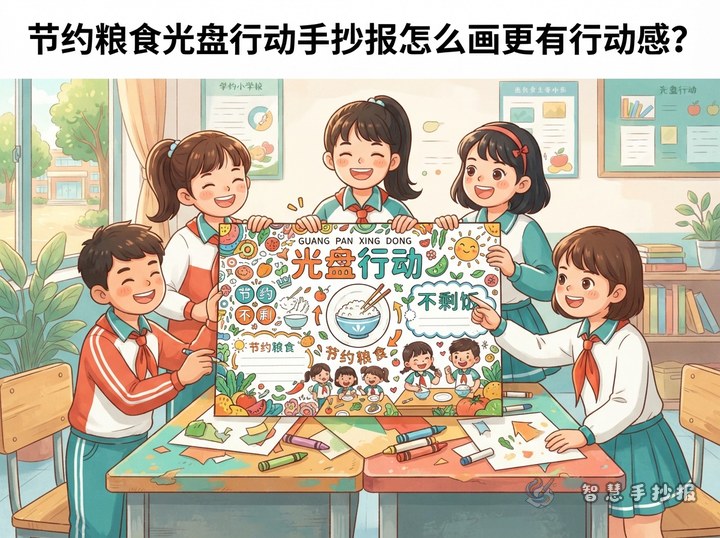
A plate-style layout fits this topic especially well. Put the main title in the center and place content around it like sections on a tray. You can also use a four-part grid with waste, reasons, actions, and pledge as separate blocks.
- Choose green, yellow, or orange for a fresh school look.
- Decorate with rice grains, wheat, plates, spoons, or lunch boxes.
- Keep section titles short and easy to read.
- Limit each text block to a few sentences for better clarity.
End with action, not only a slogan
Instead of ending with a simple sentence like I will save food, turn the ending into a message for classmates. For example: starting today, take food as needed, finish each meal carefully, and make clean plates a normal part of campus life.
If you already have your topic but want to keep refining the title, content blocks, and overall page design, you can continue creating in the Zhihui Shouchaobao WeChat mini program.