Make the theme about learning to identify insects
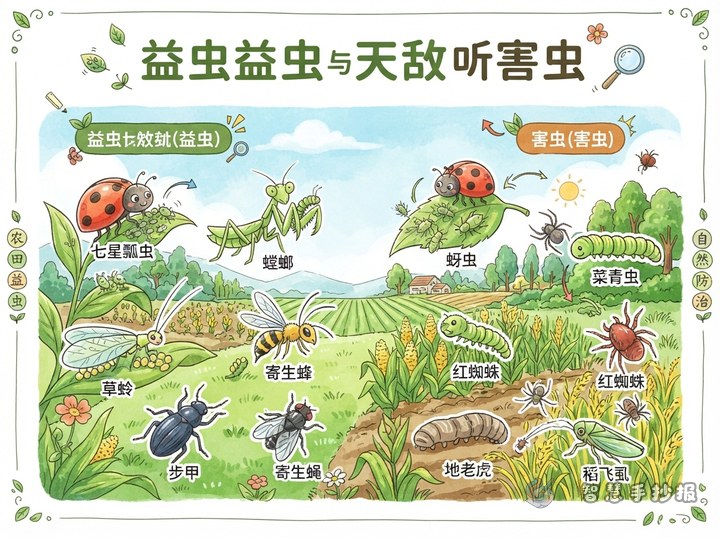
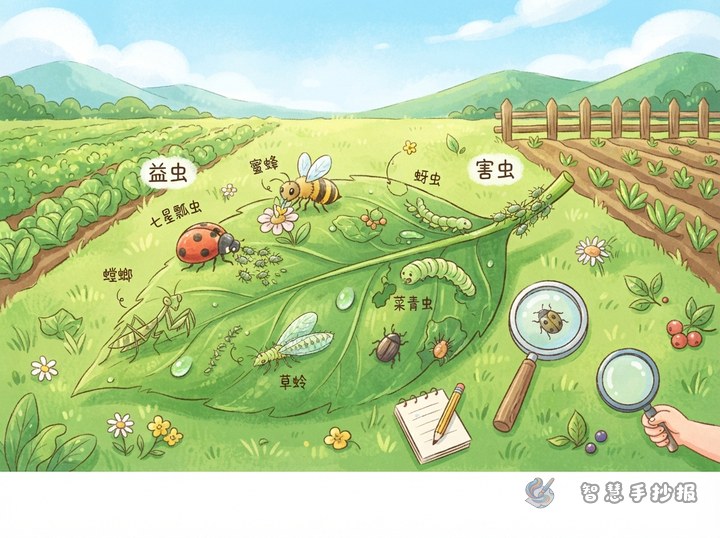
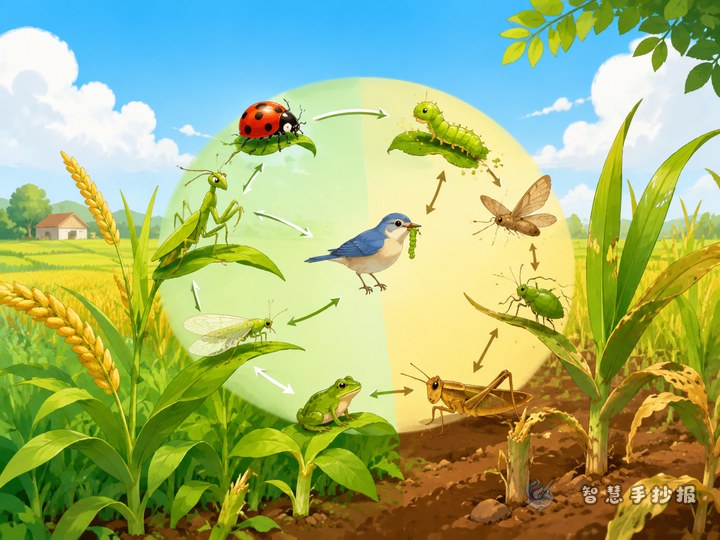
This kind of handwritten report does not need to include every farm insect. It works better if students choose a few common and easy-to-compare examples. A strong theme is learning to identify common farm insects and telling beneficial insects from pests.
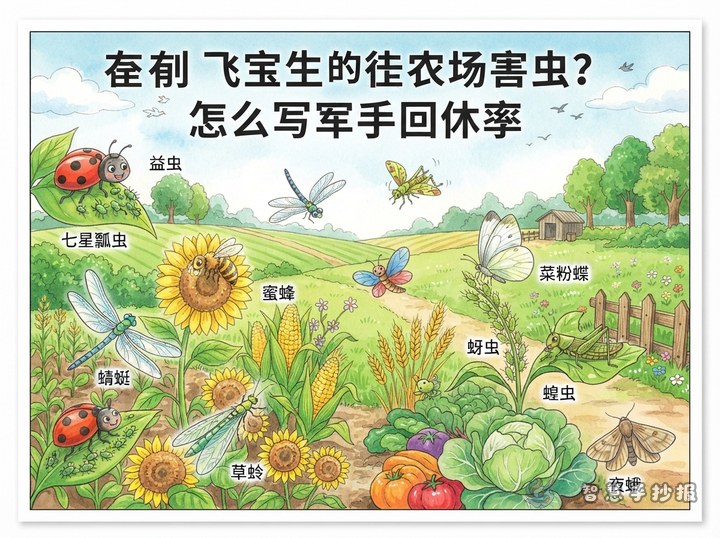
Three to six insects are enough for one page. Ladybugs, aphids, and locusts are a strong combination because they create a clear contrast between one helpful insect and two harmful ones.
Short insect facts students can use
Ladybug
Ladybugs often have a round body with red or orange wing covers and black spots. They eat aphids, so they are helpful in farmland and gardens. They are a common beneficial insect.
Aphid
Aphids are tiny insects that often gather on young leaves, buds, and stems. They feed by sucking plant sap. When crops are attacked by aphids, leaves may curl or weaken, so aphids are usually listed as pests.
Locust
Locusts have strong hind legs for jumping and can also fly. They chew leaves and may damage crops, so they are considered pests. Students can describe them as leaf-eating jumpers.
Bee or dragonfly
If more space is available, students can add bees or dragonflies. Bees help with pollination, and dragonflies catch small insects, so both can be introduced as beneficial insects in the farm environment.
Turn beneficial insects and pests into a comparison section
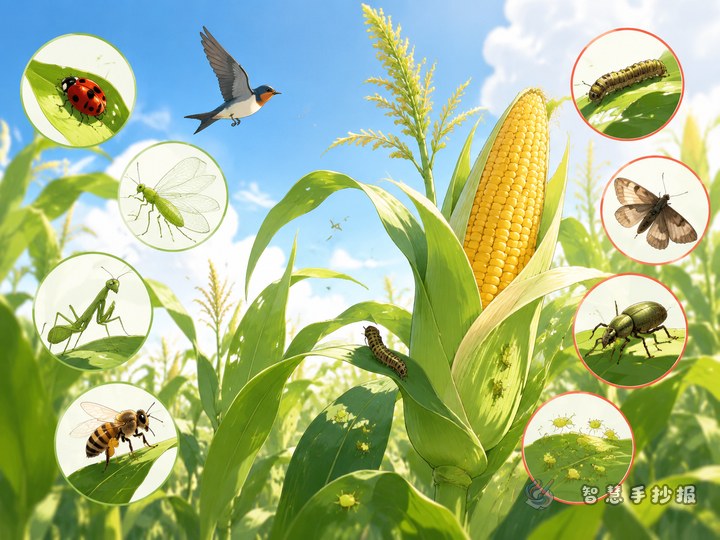
A comparison block makes the page easier to understand. Students can write short points like these:
- Beneficial insects: help pollination, eat pests, support balance in nature.
- Pest insects: chew leaves, suck plant sap, harm crop growth.
- How to observe: look at what the insect eats, where it stays, and whether it appears alone or in groups.
A good side note is: Do not judge every insect the same way. Learn first, then protect farmland wisely.
A page design that looks neat and lively
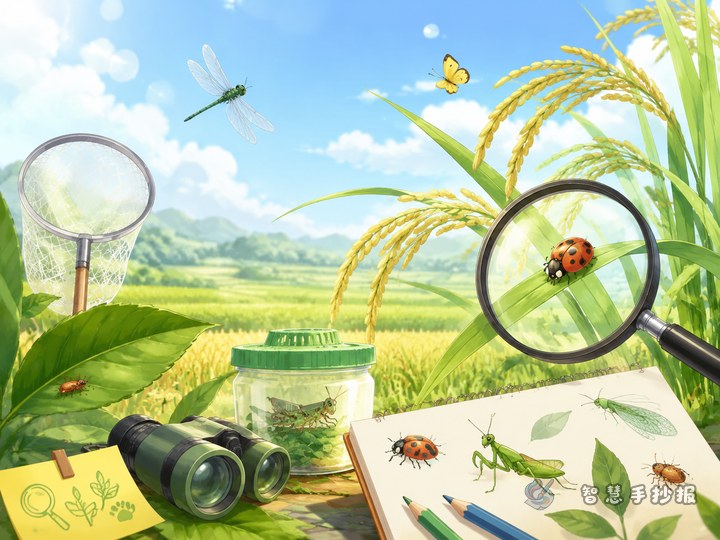
A useful layout is a center title with classified sections on both sides and action tips at the bottom. Students can decorate the page with rice stalks, leaves, magnifying glasses, or small insect sketches.
- Place the main title at the top, such as “Let’s Identify Farm Insects”.
- Use the left side for beneficial insects like ladybugs and bees.
- Use the right side for pest profiles like aphids and locusts.
- Add an observation note or farmland protection ideas at the bottom.
Green, yellow, and light blue work well as main colors because they match the farmland theme and make insect drawings stand out.
A simple ending students can copy
Keep the ending short and clear. For example: There are many small insects in farmland. Some help crops grow, while others harm plants. We should observe carefully, learn to recognize them, protect beneficial insects, and prevent pests in the right way.
If students want to keep improving titles, borders, and page arrangement, they can also continue planning their work in the Zhihui Shouchaobao WeChat mini program.