Turn the topic into real tasks, not empty slogans
A kitchen labor practice handout works best when it shows what a student actually did. Instead of writing only about how important labor is, focus on concrete tasks such as washing vegetables, setting the table, sorting utensils, or cleaning up after a meal. A clear title can be My Kitchen Labor Practice, What I Learned in the Kitchen, or From Washing Vegetables to Cleaning the Table.
If the page feels too simple, break one kitchen activity into stages: preparation, action, cleanup, and reflection. This gives the handout a natural structure and makes the content feel more complete.
Useful sections for the handout
- My kitchen task list: list the jobs you completed, such as washing fruit, picking vegetables, setting bowls and chopsticks, or wiping the table.
- Step-by-step record: explain what you did first, next, and last.
- Safety reminders: mention careful use of knives, staying away from hot pots, and drying wet floors.
- What I noticed: write small discoveries, like how vegetables should be cleaned or how tableware is easier to organize by type.
- What I gained: include responsibility, patience, gratitude, and understanding family effort.
You do not need too many sections. Three or four clear blocks are enough for a neat and readable student poster.
Ready-to-use writing material
Opening lines
This weekend, I joined a kitchen labor activity at home. From preparing food to cleaning the table, I learned that every small step takes care and patience. A simple meal is supported by a lot of real work.
Process writing
First, I picked and washed the vegetables carefully. Then I placed the clean vegetables in a basket and helped set the bowls and chopsticks on the table. After the meal, I wiped the table and put the used tableware away in order.
Reflection
This labor practice taught me that the kitchen is also a place to learn life skills. Only after doing the work myself did I understand that every meal takes time and effort. I want to keep helping with jobs I can do at home.
How to arrange the page nicely
A practical layout is a center title with four surrounding sections. Put the main title in the middle, then place the task list, process record, safety tips, and gains in different corners. This makes the page look balanced and easy to read.
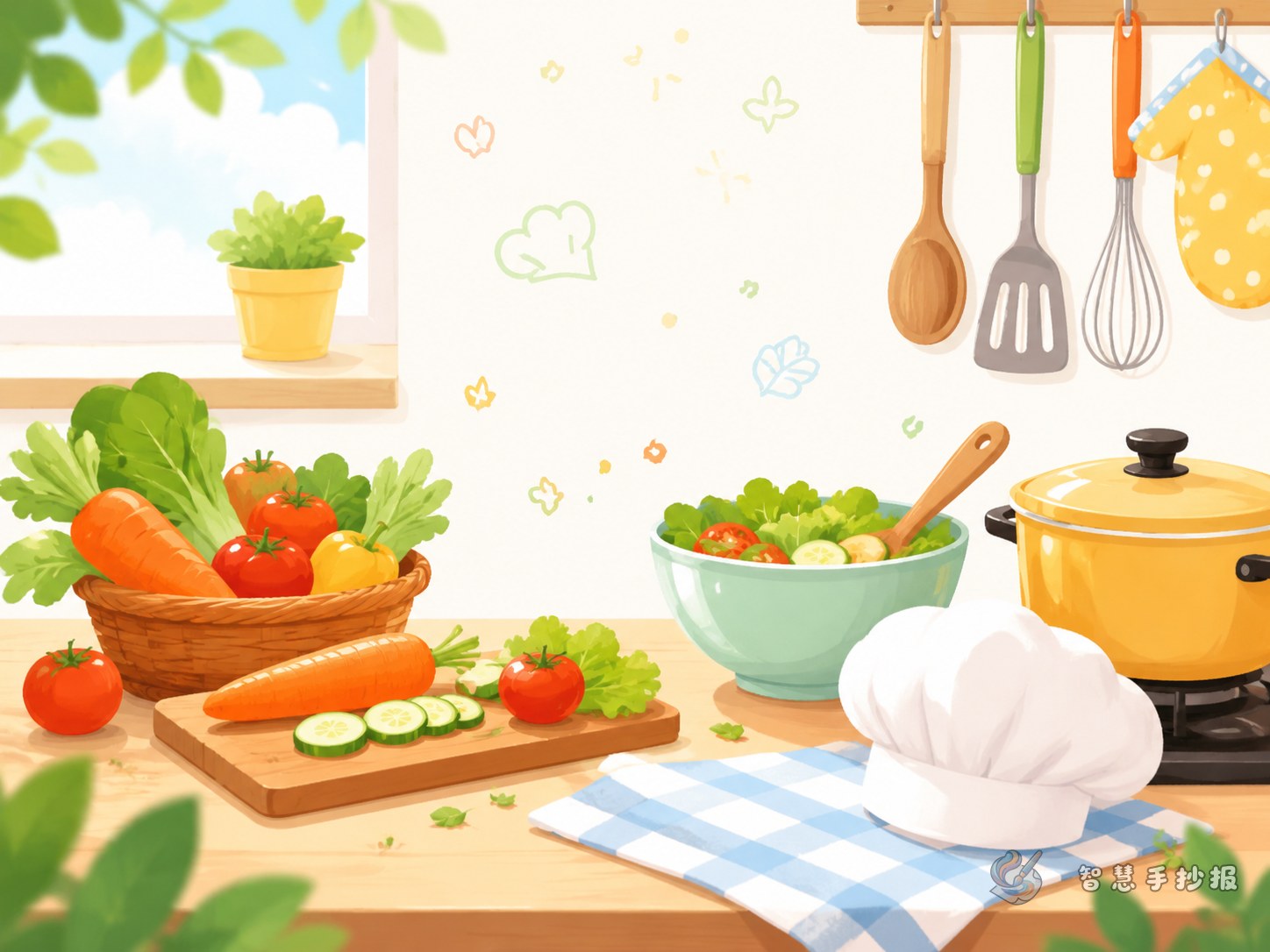
Warm colors such as orange, green, and light yellow match the kitchen theme well. Small decorations can include aprons, vegetables, spoons, plates, or water drops. Keep the drawings simple so the writing remains the focus.
How to avoid vague writing
First, write less about general slogans and more about what you really did. Second, use action verbs like wash, sort, place, wipe, clean, and organize. Third, mention one or two small difficulties, such as slippery bowls or vegetables that take time to prepare. These details make the handout feel honest and lively.
If you want to keep improving the title, layout, or decorative ideas, you can also continue your design in the WeChat mini program of Zhihui Shouchaobao for a more complete handout plan.