Start with one real upcycling project
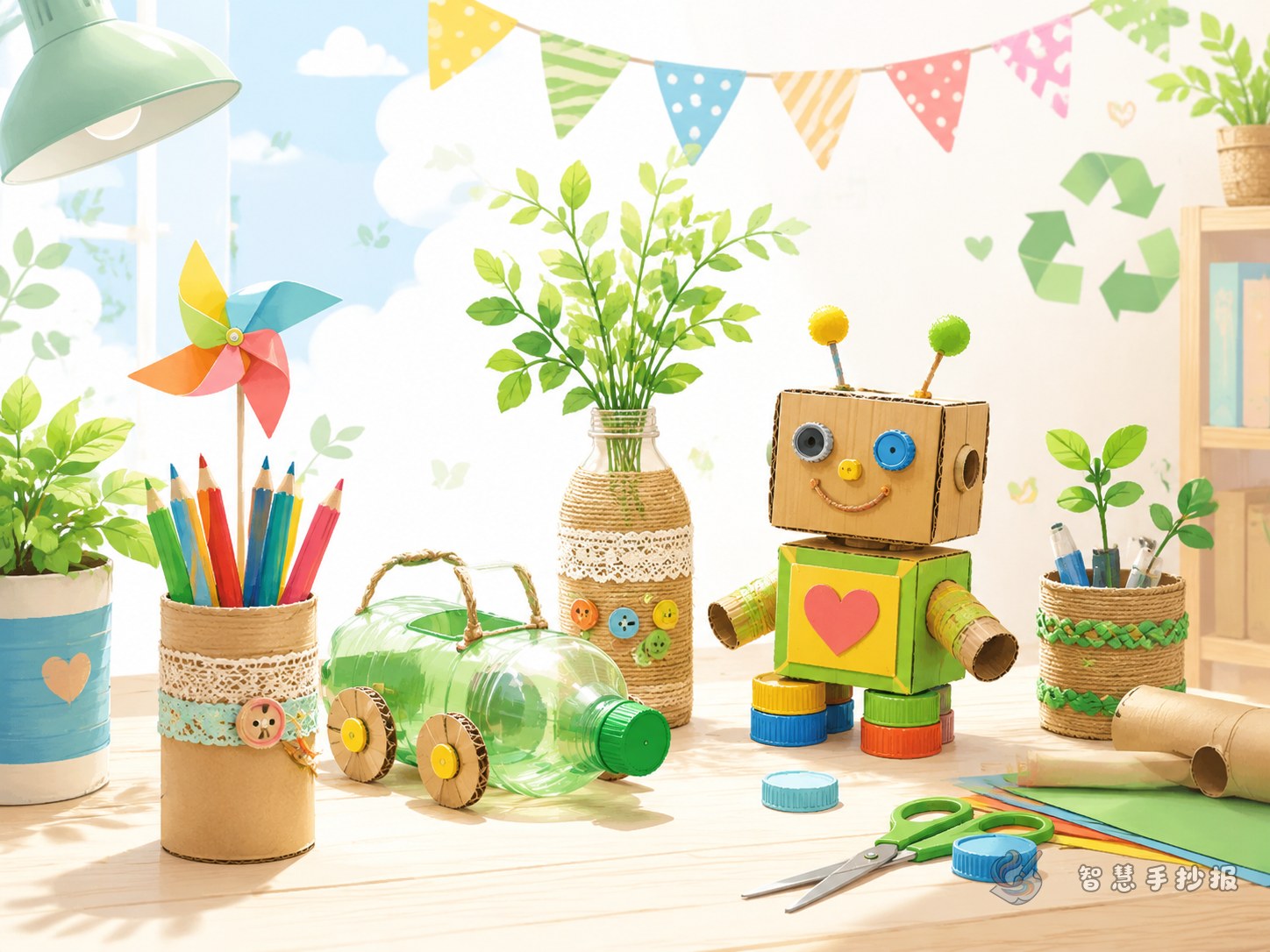
The best way to plan this topic is to choose one item you truly transformed. It could be a cardboard box turned into a desk organizer, a plastic bottle turned into a flowerpot, a gift box turned into a stationery case, or old fabric turned into a cleaning cloth. A specific project makes the whole handwritten newspaper easier to write and more vivid.
If you are still choosing, pick something simple, safe, and useful. That will help you show both hands-on labor and the idea of saving resources.
Useful sections to include on the page
1. What I changed
Explain what the old item was, why you decided to remake it, and what it became after the transformation.
2. My making steps
- Prepare old materials and tools
- Clean or sort the item
- Cut, join, and decorate
- Check whether it is safe and useful
Keep each step short and clear. A simple sequence is often better than a long paragraph.
3. Problems during labor
This part makes the page feel real. For example, you can write that the box was too soft, so you added another layer of cardboard, or that an edge was uneven, so an adult helped with trimming. Real details make the work stronger.
4. What I learned
- Do not waste useful things casually
- Enjoy the process of making something by hand
- Understand that labor can improve daily life
- See the value of environmental protection and saving resources
Short text materials you can adapt
Try writing in a simple and personal way. For example:
- “I turned an old paper box into a desk organizer for pens and rulers.”
- “Before the makeover, it was almost thrown away. After the makeover, it became useful every day.”
- “Labor is not only cleaning. Remaking old things is also meaningful practice.”
- “Upcycling taught me that many old items can have a new life if we use our hands and ideas.”
You can also add a short eco message, such as saving resources and caring for the results of labor.
A layout idea that highlights change
This topic looks especially good with a comparison-style layout. Put the main title in the center, place “before” on one side and “after” on the other, and add making steps plus reflections below. The page will feel organized and story-based.
- Title area: decorate with tools, leaves, or recycling arrows
- Comparison area: show the old and new form clearly
- Steps area: mark the order with numbers
- Reflection area: write labor gains and environmental meaning
Fresh colors such as green, blue, and orange can make the page lively and suitable for a school labor theme.
How to make it feel like a student work
Do not make the page sound too formal. Add real feelings like “My first cut was not neat” or “I felt proud when I finished it.” These details make the handwritten newspaper warm and believable.
You can also end with a short message: “Start with one old item, and use labor to make life better.” After finishing your text, you can continue polishing the layout and colors in the Smart Handwritten Newspaper WeChat mini program.