Turn the Four Examinations into a Health Observation Journey
Build the newspaper around one clear question: how does a traditional Chinese medicine practitioner gather information about a person's condition? Present observation, listening and smelling, questioning, and pulse-taking as connected steps. Explain at the beginning that trained practitioners consider all four kinds of information together, so one sign alone should never be used for self-diagnosis.
Explain Each Step in Child-Friendly Language
Observation: Looking Carefully
Observation may include a person's general appearance, complexion, posture, and level of alertness. A useful caption is “look at the whole picture, then notice details.” Avoid claims that a disease can be identified from complexion alone.
Listening and Smelling: More Than Odor
This examination includes listening to speech, breathing, or coughing as well as noticing odors. An ear, a nose, and simple sound-wave decorations can make this idea easy to remember.
Questioning: Understanding the Full Story
A practitioner may ask where discomfort occurs, when it started, how long it has lasted, and how eating or sleeping has changed. Three speech bubbles labeled “When did it begin?”, “How does it feel?”, and “What has changed?” create an engaging section.
Palpation: Gathering Information Through Touch
Palpation is often associated with feeling the pulse at the wrist. Pulse interpretation requires professional training and experience. Remind readers that pulse speed alone cannot confirm an illness.
Connect the Page with a Four-Stop Route
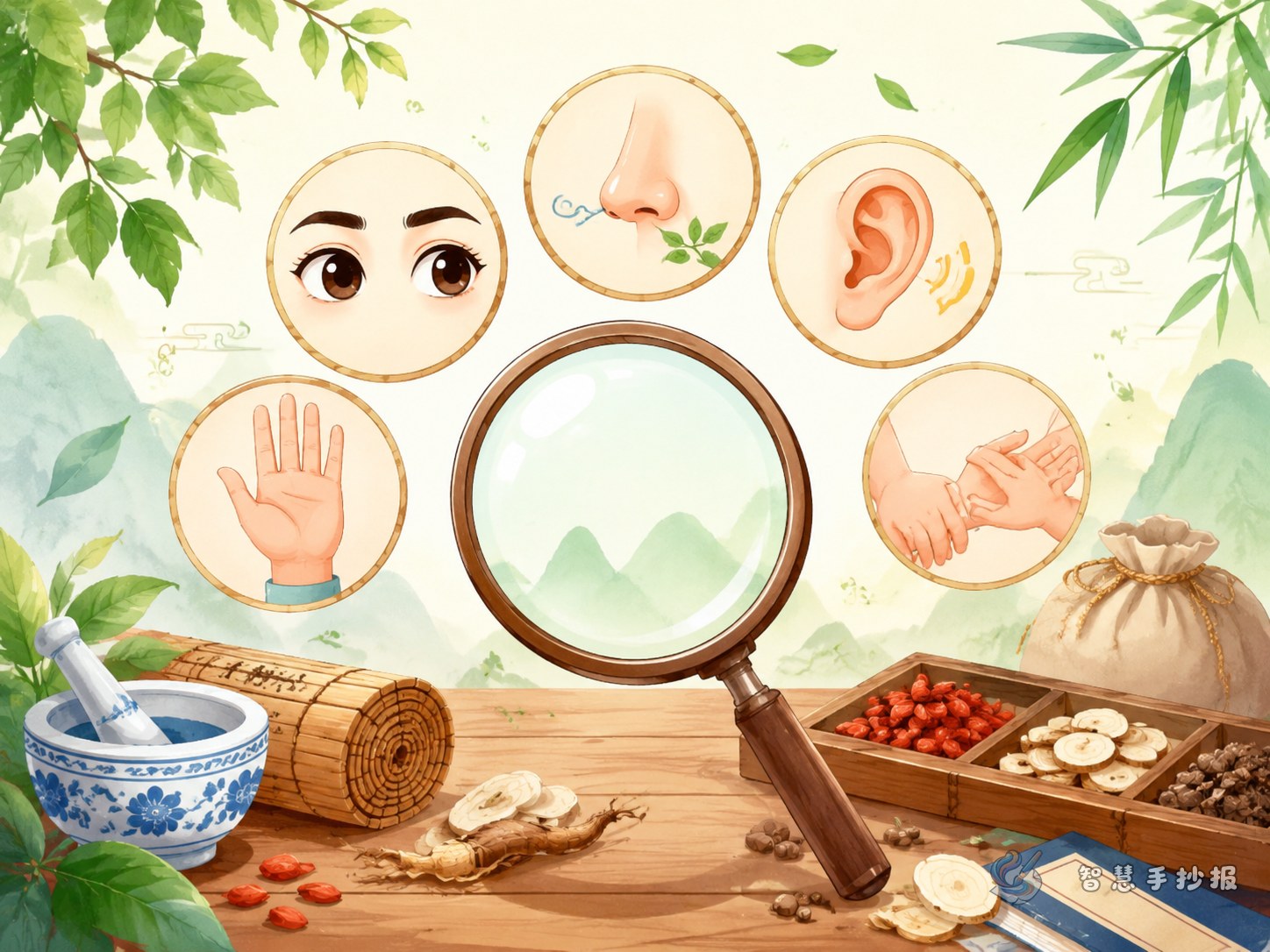
- Stop one: Use an eye icon for observation.
- Stop two: Add ear and nose icons for listening and smelling.
- Stop three: Use speech bubbles for questioning.
- Stop four: Draw fingers resting on a wrist for palpation.
Link the four stops with a dotted path and reserve a visible space in the center for an important health note. A horizontal four-column layout works well, while a clockwise circular layout gives the page a lively reading flow.
Keep the Information Accurate
- Use short explanations and limit each section to a few lines.
- Include memorable facts, such as “listening and smelling involves both sounds and odors.”
- Explain that the four examinations are considered together.
- Advise children to tell a parent about ongoing discomfort and seek care from a qualified medical professional.
Finish the Title, Colors, and Details
Possible headings include “Discover the Four TCM Examinations” and “A Simple Guide to TCM Diagnosis.” Use herb green, warm red, and soft white, with a few botanical leaves, medicine-cabinet patterns, or gourd motifs around the edges. Keep decorations away from the text. After drafting the content, students and parents can open the Smart Handwritten Newspaper WeChat Mini Program to select a template, arrange the sections, and complete the design.