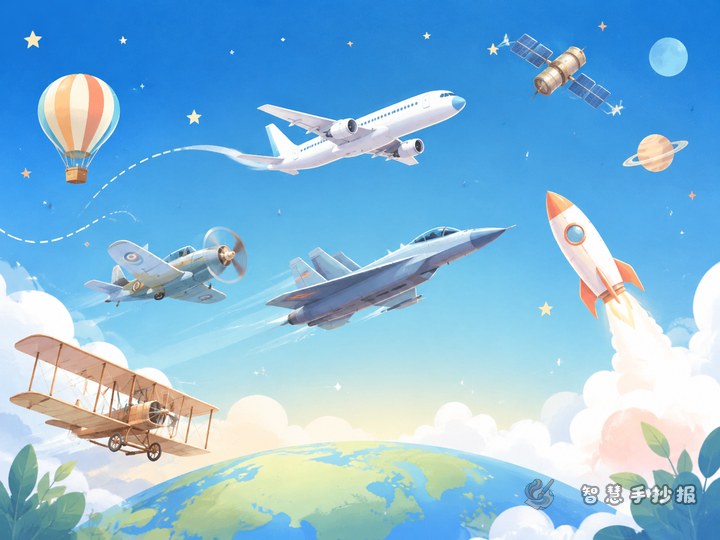
Choose a focused angle first
If you want to make a handwritten newspaper about “What is the difference between rockets and airplanes?”, the best idea is to keep the topic clear and narrow. Instead of trying to include every fact about aviation and space, focus on where they fly, how they move, what they are used for, and what they look like. This makes the page easy to read and helps students show the difference between flying in the sky and traveling into space.
You can use titles like “Rocket vs Airplane,” “From the Sky to Space,” or “How Are Rockets Different from Airplanes?” A short subtitle can help explain the theme in a simple way.
A layout that makes the comparison easy to see
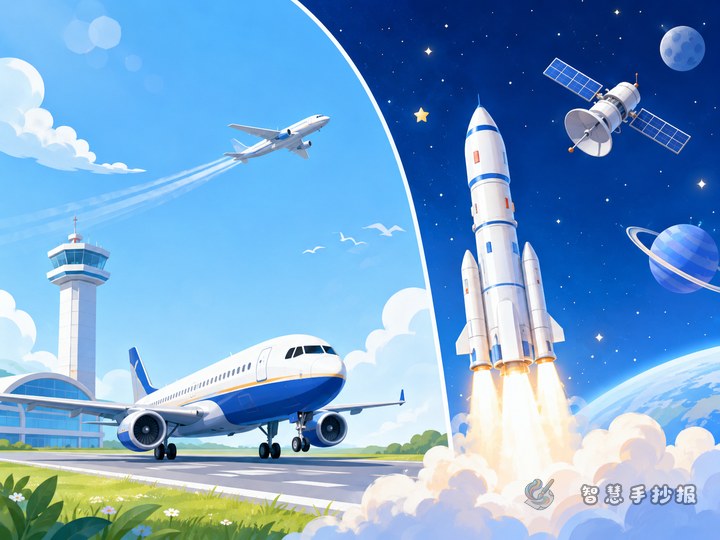
A side-by-side layout works especially well for this topic. Put airplane content on the left and rocket content on the right, then use clouds, stars, arrows, or an Earth-to-space path in the middle to connect the two parts.
- Main title area: Place it at the top with light blue and dark blue for a sky-and-space feeling.
- Comparison area: Organize key points such as where they fly, what gives them power, how high they go, and what jobs they do.
- Mini fact boxes: Add one small section for aviation facts and one for space facts.
- Dream message corner: Write a short sentence about your own dream of the sky or space.
If there is extra room, decorate the corners with runways, satellites, the moon, wings, or rocket flames. These details make the page feel lively without being too crowded.
Ready-to-use writing materials
Simple comparison text
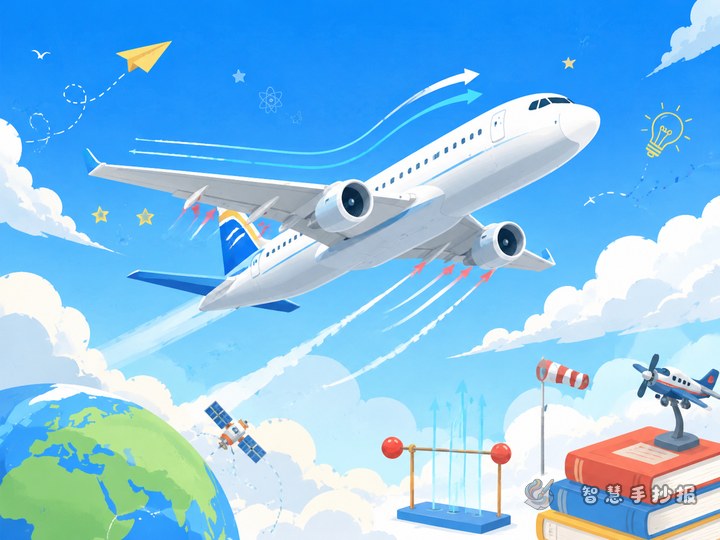
Airplanes usually fly inside Earth’s atmosphere. They rely on wings to create lift and use aircraft engines to move forward. Common uses include travel, transport, rescue, and patrol. Rockets are mainly used to send satellites, spacecraft, or probes into space. They move upward by producing strong thrust from high-speed exhaust gases and do not depend on wings like airplanes do.
In simple words, airplanes are good at flying through the sky for a long time, while rockets are good at breaking through the atmosphere and reaching space. One helps people travel across places on Earth, and the other helps humans explore the universe.
Aviation facts
- Airplanes need a runway to gain speed before takeoff.
- The shape of wings helps create lift.
- Passenger planes, helicopters, and gliders are all part of aviation.
Space facts
- Rockets produce huge thrust during launch.
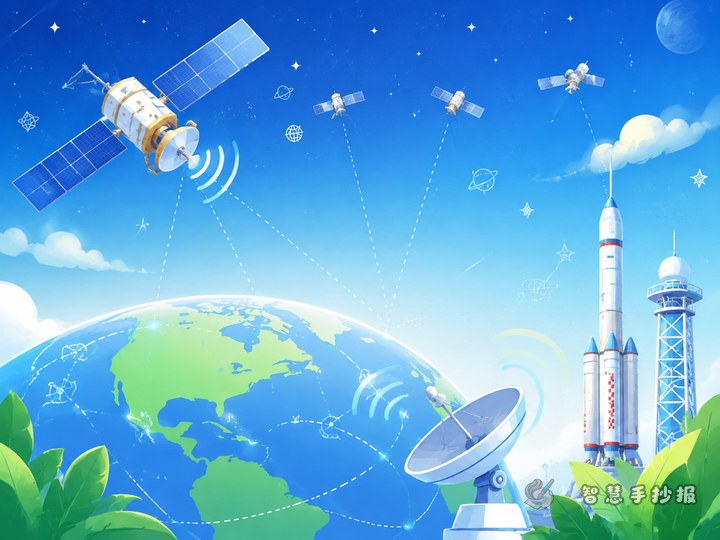
- Satellites in orbit help with communication, navigation, and weather observation.
- Astronauts experience weightlessness in space.
Keep the colors clean and match the theme
Use two to four main colors such as light blue, white, dark blue, and silver gray. The airplane side can use bright sky colors, while the rocket side can use deep blue or silver to show outer space. This creates a natural transition from the daytime sky to the universe.
The drawings do not need to be too detailed. Focus on the most recognizable shapes: wings and tail for the airplane, the pointed top and flame for the rocket. Add stars, clouds, Earth, or the moon in the background. A neat and unified page always looks better than one filled with too many tiny details.
How to finish the page well
Instead of ending with a vague slogan, write a short conclusion that shows what you learned. For example: aviation helps us fly faster and farther in the sky, while space technology helps us explore the universe. By learning the difference between airplanes and rockets, I understand more about science and the dream of flight.
If you want more layout ideas, writing materials, or another style for this theme, you can continue creating in the Zhihui Shouchao Bao WeChat mini program.