Start by deciding what your poster should show
For a school plant observation and planting record poster, the best approach is to focus on a real growth story. Instead of filling the page with general plant facts, show what was planted, where it was observed, and how it changed over time. This makes the work feel more personal and more suitable for a classroom assignment.
You can choose easy subjects such as mung beans, sunflowers, mint, scallions, succulents, or flowers found on campus. A practical title can sound like a real question or record, such as “How long does a seed take to sprout at school?” or “My school plant growth record.”
Use a timeline as the center of the layout
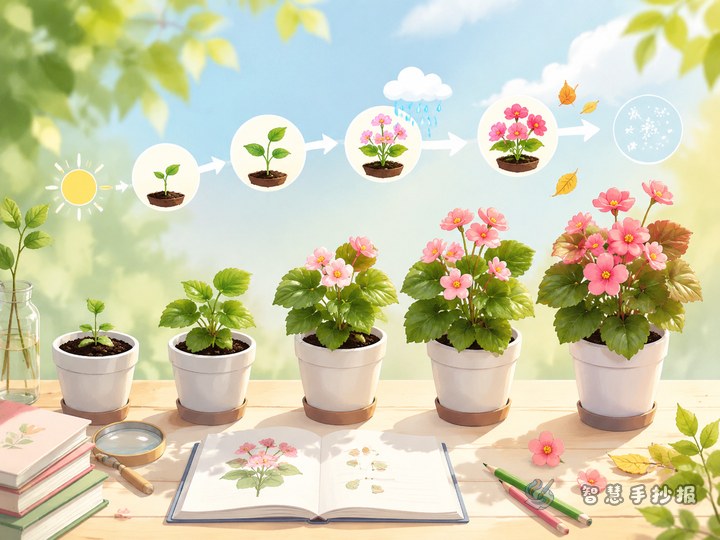
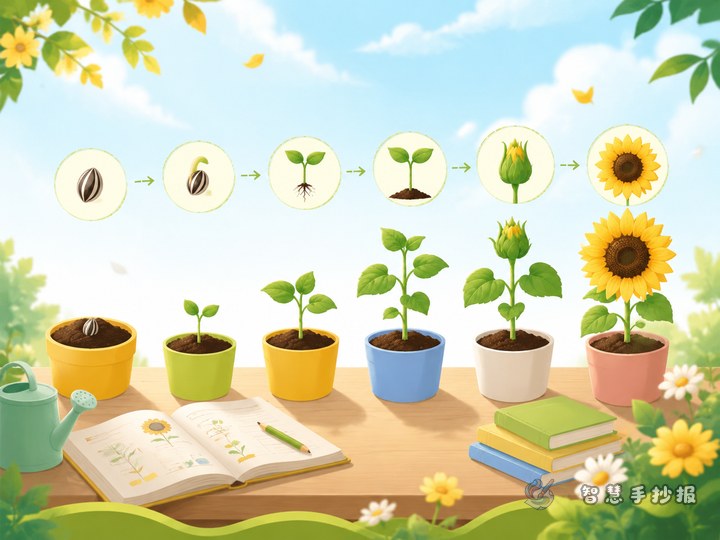
This theme works especially well with a timeline design. Put the main title at the top, a small plant profile on one side, the growth record in the center, and your reflections at the bottom. The middle section can be arranged by days, such as Day 1, Day 3, Day 5, and Day 7, so readers can clearly see the changes.
- Plant profile: name, color, smell, height, leaf shape
- Planting record: sowing date, watering routine, sunlight condition
- Growth changes: sprouting, new leaves, taller stems, flowering
- My discoveries: which day changed most, what helped it grow better
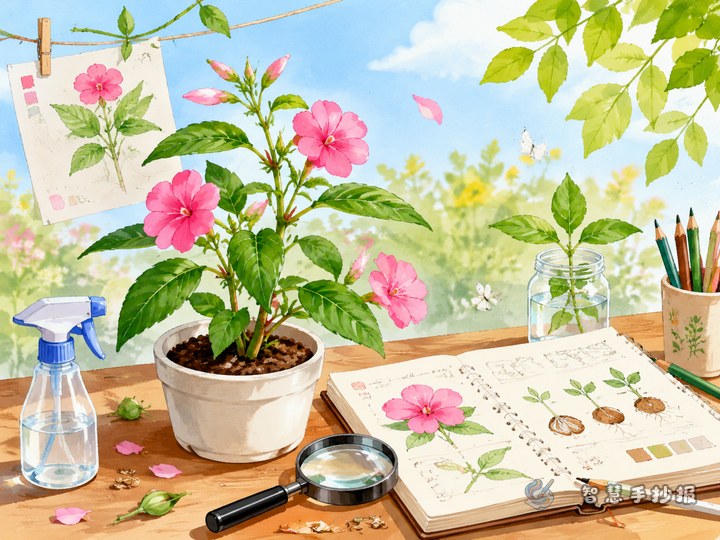
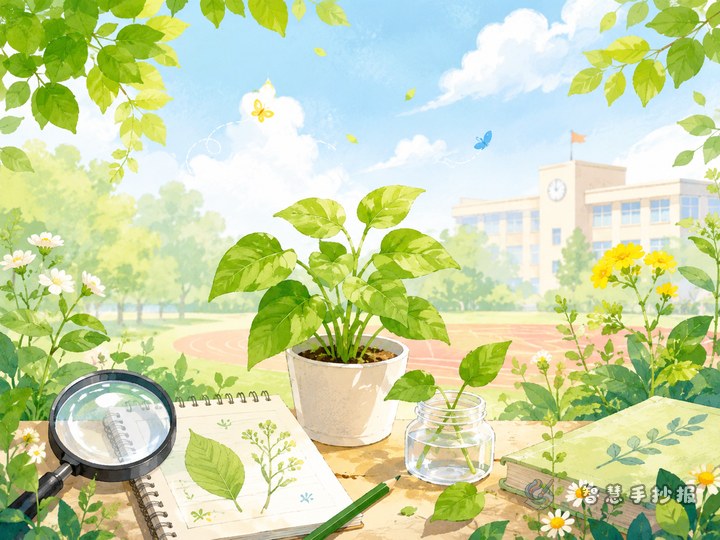
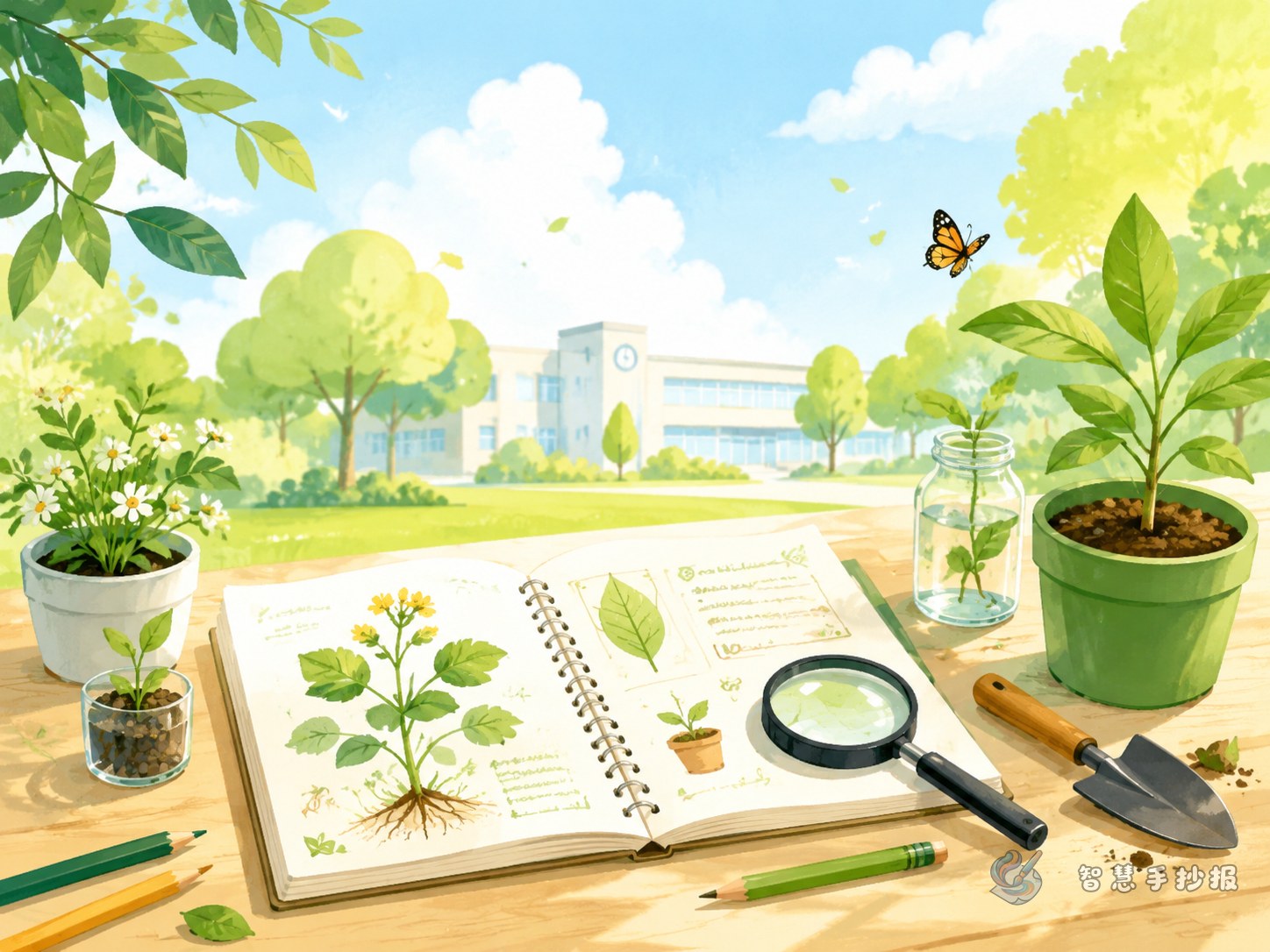
Decorations can include leaves, vines, water drops, flowerpots, or small gardening tools. Keep them light so the writing stays easy to read.
Ready-to-use writing ideas for the poster
Plant observation note
In spring, plants on campus grow quickly. I chose a small pot of mung beans as my observation subject. At first, the seeds rested quietly in the soil and nothing seemed to change. A few days later, tiny green sprouts appeared. After that, the stems slowly grew taller and the leaves opened one by one. Watching this process helped me feel the power of life and growth.
Simple planting process
First, I prepared a flowerpot, soil, and seeds. I gently placed the seeds into the soil and watered them with a small amount of water. Then I put the pot in a bright and airy place. Each day, I checked whether the soil was too dry, whether the leaves had changed, and I wrote down what I saw.
Useful plant facts
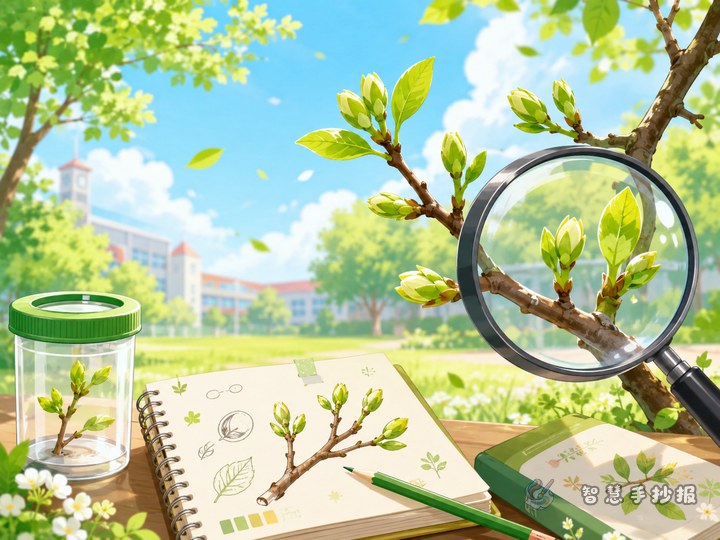
Plants need sunlight, water, air, and soil to grow. Different plants prefer different conditions. Some need full sun, while others do better in partial shade. When observing a plant, we should notice not only its height, but also leaf color, stem thickness, and overall health.
What I learned
Through this plant observation activity, I learned that plants need patient care and that careful recording is important. Daily changes may seem small, but when put together, they show an amazing growth journey. In the future, I would like to observe more plants on campus and learn more about nature.
Make the poster feel like a real observation record
If you want the poster to look authentic, add specific details. For example, write “On Day 3, the soil cracked slightly,” “On Day 5, two small leaves appeared,” or “By Day 7, it was shorter than a pencil.” These details are much stronger than simply saying “the plant grew.”
- Show changes across several days, not just the final result
- Use short and clear language suitable for children
- Mention weather, sunlight, or watering when helpful
- Write your own feelings instead of copying textbook definitions
If there is still space, add a small section such as “My favorite plant on campus” or “How plants make our school beautiful.”
Color and handwriting tips
Fresh colors like green, light yellow, sky blue, and soft pink match this theme well. A dark green title can stand out nicely, while section headings can be placed in light-colored boxes. Keep the writing in short paragraphs, and highlight words like “sprout,” “water,” “sunlight,” and “growth.” A clean and well-organized page matters more than writing too much.
If you already have your plant and section ideas, you can also continue planning your work in the Zhihui Shouchaobao WeChat mini program to refine the layout and expand your content more easily.