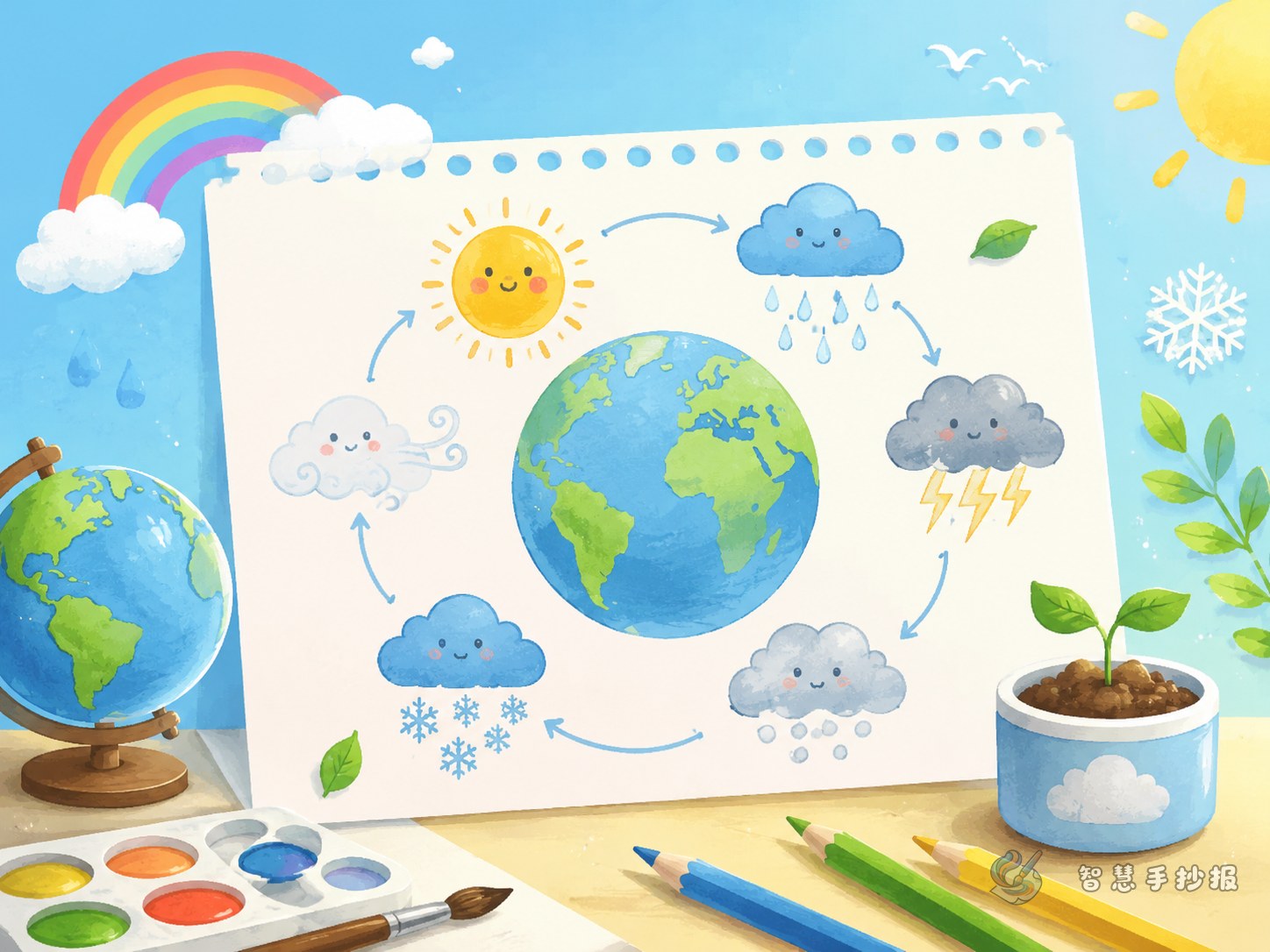
Start with a clear focus: explain how weather changes
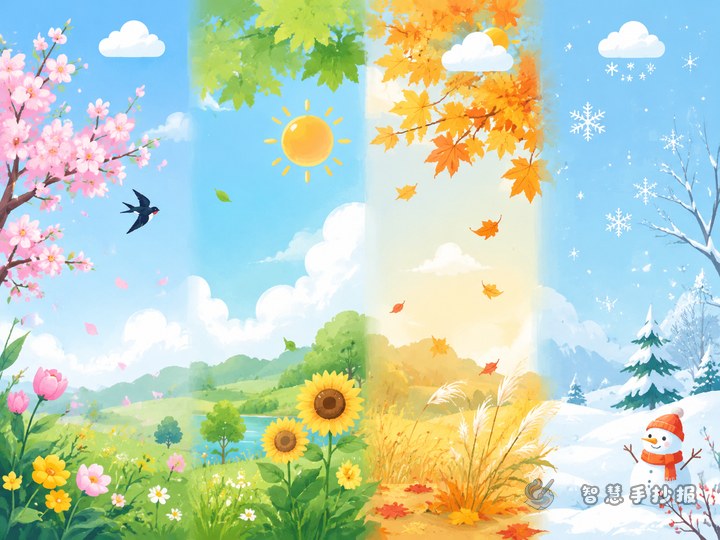
This kind of poster works best when it centers on one simple idea: how weather changes. There is no need to include every meteorology fact. A good main title could be “How Does Weather Change?” or “Simple Facts About Changing Weather.” Start from what children see every day, such as sunny days, cloudy skies, wind, rain, and sudden cooling. That makes the poster easy to understand and easy to decorate.
For a school assignment, the content can follow three directions: observing weather, understanding weather, and staying safe in different weather conditions. This gives the poster both science value and practical meaning.
A simple layout that feels organized
You can divide the page into four clear sections so the poster is easy to read.
- What is weather change? Briefly explain that weather can change with time and surroundings, such as temperature rising, clouds increasing, or wind becoming stronger.
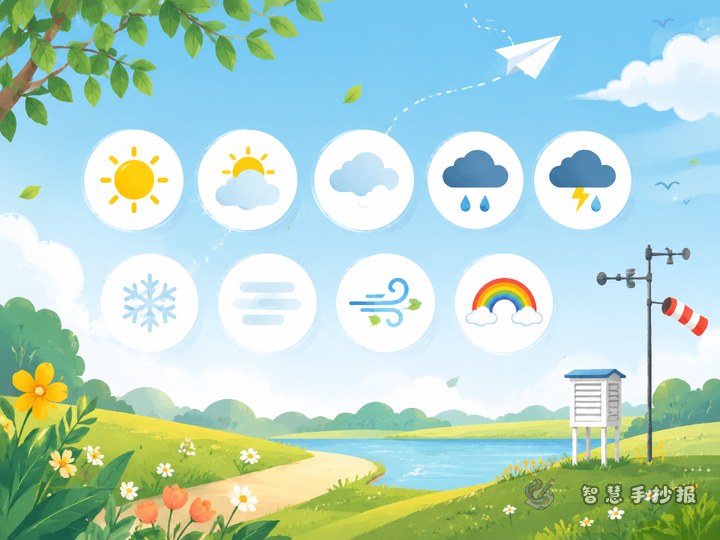
- Common weather types: Include sunny, cloudy, rainy, snowy, foggy, and stormy weather with short descriptions.
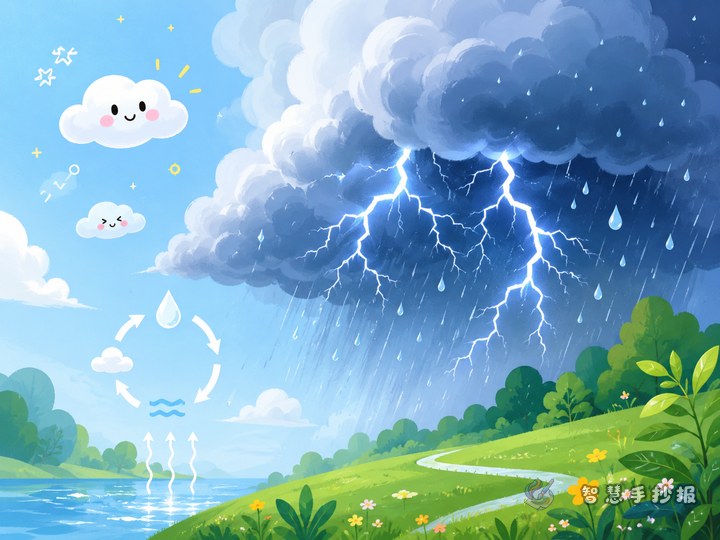
- Why weather changes: Use child-friendly language to explain moving air, water vapor, and warm and cold air meeting.
- Safety reminders: Add tips for heavy rain, strong wind, thunderstorms, and hot weather.
If there is still space, add a small section called “Today’s Weather Record” to make the poster more interactive.
Ready-to-use writing material
Short introduction
The weather changes quietly every day. When we look at the sky, feel the wind, and watch the shape of clouds, we can discover signs from nature. Learning about weather helps us gain knowledge and also helps us plan our daily life better.
Easy weather facts
- When the sun shines, the ground warms up and the temperature often rises.
- When clouds become thick, the sky looks darker and it may rain.
- Wind is made by moving air, and strong wind means we should be more careful outdoors.
- Before rain, the air often feels damp and the sky may turn gray.
- When cold air arrives, the weather becomes cooler and sometimes windy.
Safety lines
- Do not stand under a big tree during a thunderstorm.
- Drink more water and avoid strong sunshine in hot weather.
- Close doors and windows on windy days and stay safe outside.
- Walk carefully on wet roads after rain.
Design ideas beyond clouds and raindrops
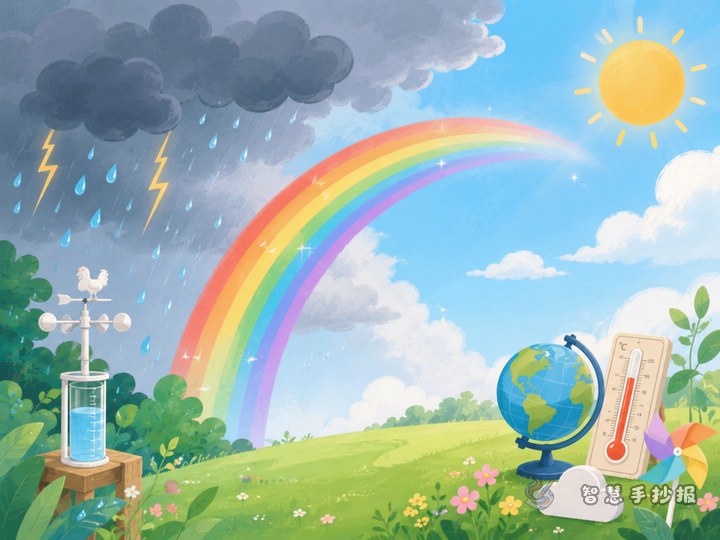
Many students only draw the sun, clouds, and raindrops for a weather poster, but the page can be more interesting. Try a “sky zone” design: place the title at the top, weather facts on one side, safety reminders on the other, and a weather record section at the bottom. Use lightning, wind lines, rain drops, snowflakes, and rainbows as small decorations.
For colors, blue, white, and yellow work well, with some gray to show cloudy or rainy weather. Make the title larger than the body text, and highlight key words such as “cooling,” “thunderstorm,” “strong wind,” and “safety.”
Easy tips for making the poster well
- Draw the section lines first, then add the title and text.
- Keep each paragraph short, about two to four lines.
- Simple weather symbols are enough to make the theme clear.
- You can include your own weekly weather observations.
- Before finishing, check whether the title is clear, the sections are complete, and the handwriting is neat.
If you want more layout ideas, title styles, and poster-making inspiration, you can continue in the Zhihui Shouchaobao WeChat mini program.