Turn the Topic into a Memorable Message
Build the handwritten newspaper around the idea “Keep daily-use items close, occasional items together, and backups under control.” The page should show not only a tidy desk, but also why storage by frequency of use makes school supplies easier to find. A clear title can be “Organizing School Supplies by Use,” with the subtitle “Easy to reach, easy to put away.”
Build the Main Picture Around Three Storage Zones
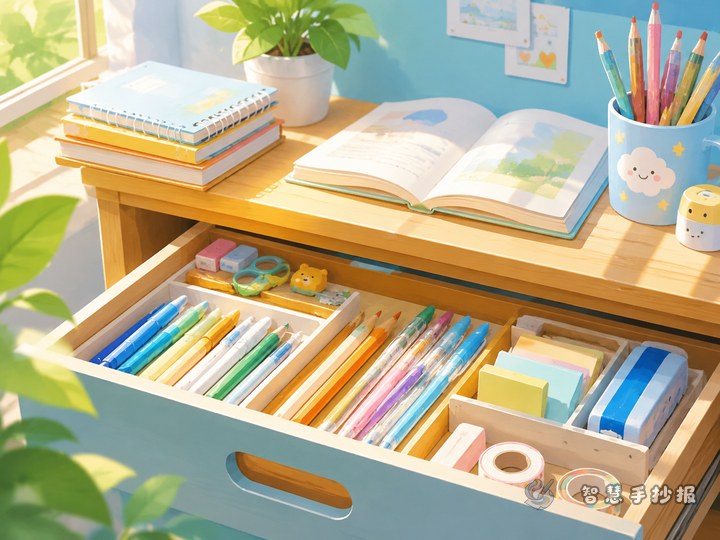
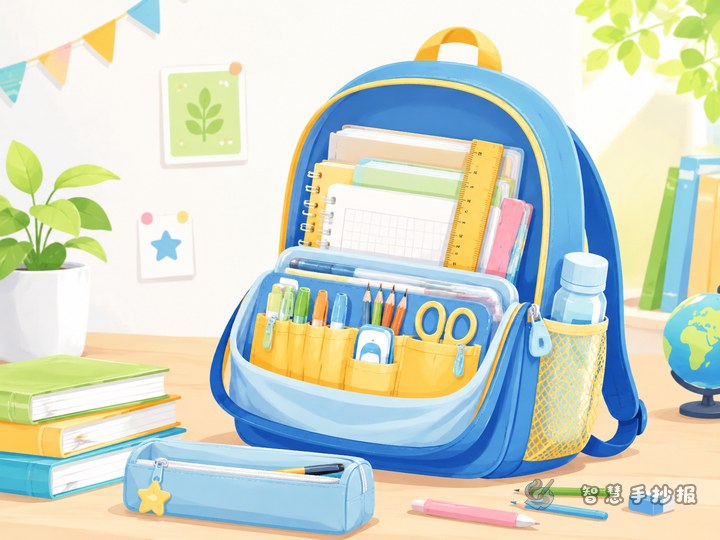
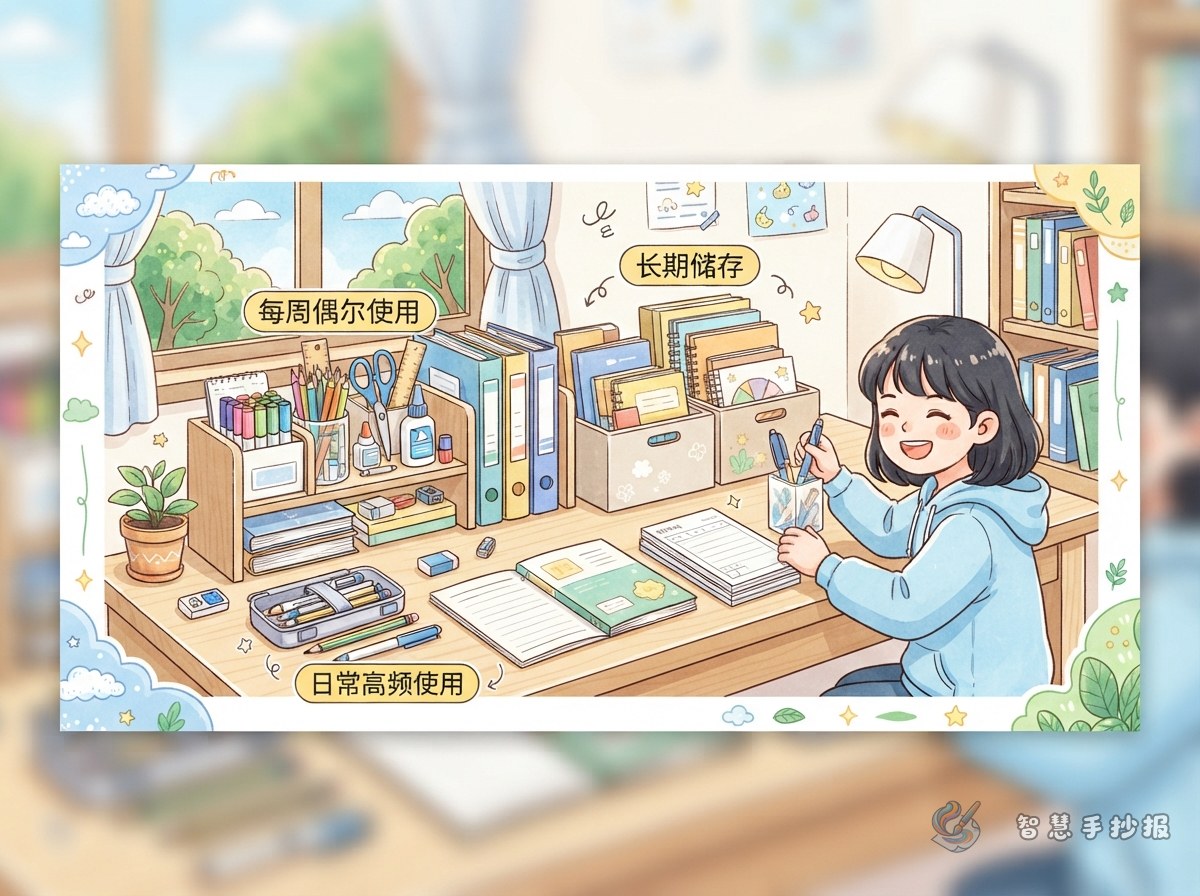
Draw a three-level storage shelf in the center of the page. Use the three levels to represent daily-use items, occasional-use items, and backup supplies. Add a few familiar stationery items to each section and explain the storage idea with short sentences.
Daily-use zone
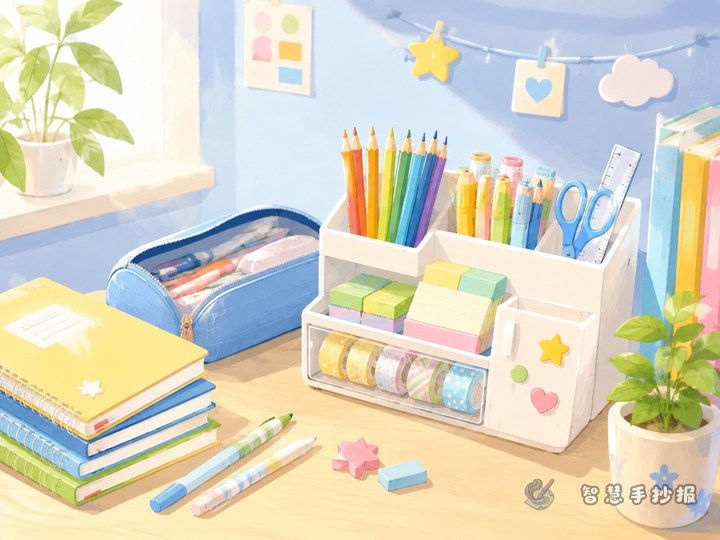
Pencils, erasers, rulers, and the colored pens being used now should stay within easy reach. A suitable sentence is: “Keep everyday supplies close and return them after use.”
Occasional-use zone
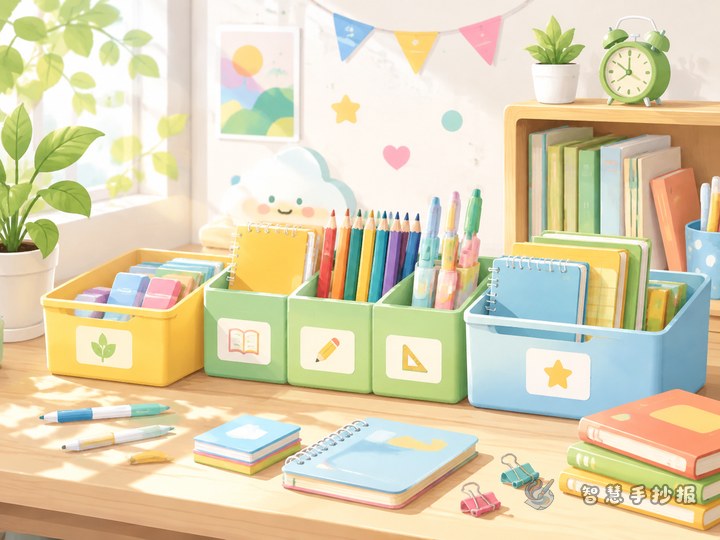
Scissors, glue sticks, colored paper, and protractors do not need to be taken out every day. Place them together in a fixed box or drawer. You can write: “Store occasional supplies together so they are easy to find.”
Backup zone
Extra pencil leads, replacement erasers, and unopened notebooks can be kept in a separate place. Remind readers not to save too many extras with the sentence: “Plan your backups and avoid filling the desk.”
Add a Four-Step Organizing Corner
- Take all the school supplies off the desk and identify the items used every day.
- Sort everything into daily-use, occasional-use, and backup groups.
- Choose a nearby place, a fixed place, and a storage place for the three groups.
- Return each item after using it, and replace supplies only when something is missing or damaged.
This section works well on one side of the page. Draw arrows, a storage box, and a small hand icon beside it to make the steps more lively. A small box titled “My Storage Reminder” can include the phrase “Sort it, fix its place, return it, and avoid overstocking.”
Show the Route from Taking to Returning
Place the main title at the top, the three-level shelf in the middle, the four organizing steps on the left, and a short list of the three supply groups on the right. Leave space at the bottom for a reminder sentence. Arrows showing “take, use, return” can help readers understand that organization is a repeated habit.
- Main focus: Make the three-level shelf large enough for the category names and stationery drawings to be seen clearly.
- Decorative details: Add books, pencils, folders, storage boxes, and stars without covering the important words.
- Border idea: Use a ruler for neat lines, or draw the border like colorful tape and stationery stickers.
Finish with Color and a Quick Check
Use yellow for the daily-use zone, blue for occasional-use items, and green for backups. The three colors make the categories easy to recognize while keeping the page fresh. Write the main text in a dark color and outline key words with colored pens. Before finishing, check that the title stands out, all three groups are clear, the steps are complete, and the decorations do not make the page hard to read.
After choosing the theme and layout, you can continue making the project in the 智慧手抄报 WeChat Mini Program, following the shelf diagram, organizing steps, and reminder box to complete a practical and cheerful handwritten newspaper.