Start with the theme: explain why earthquakes happen
This type of handwritten newspaper works best as a science-explainer project. The focus is not mainly on drills or emergency kits, but on helping students understand what causes earthquakes, what common earthquake terms mean, and why basic disaster awareness matters. A good title can center on questions such as “Why do earthquakes happen?” or “What is the difference between magnitude and intensity?”
Useful sections for the poster
- Quick Earthquake Question: Explain in one or two short sentences that an earthquake is ground shaking caused by movement in the Earth’s crust.
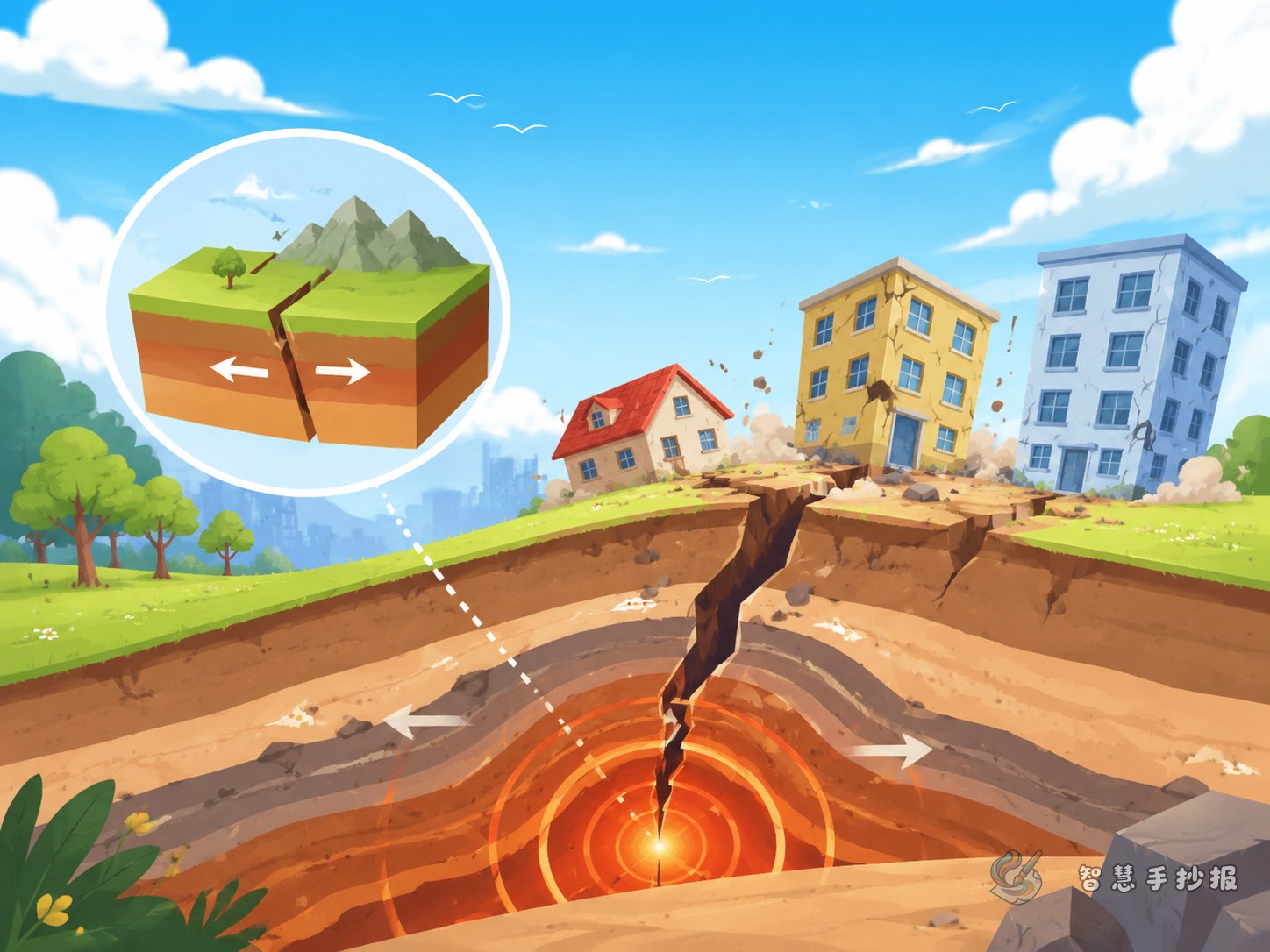
- Do tectonic plates move? Introduce the idea that Earth’s surface is made of plates that slowly shift.
- Magnitude and intensity: Clarify that magnitude describes the size of an earthquake, while intensity describes how strongly a place is affected.
- Earthquake waves: Add a simple note that shaking spreads outward in waves after an earthquake begins.
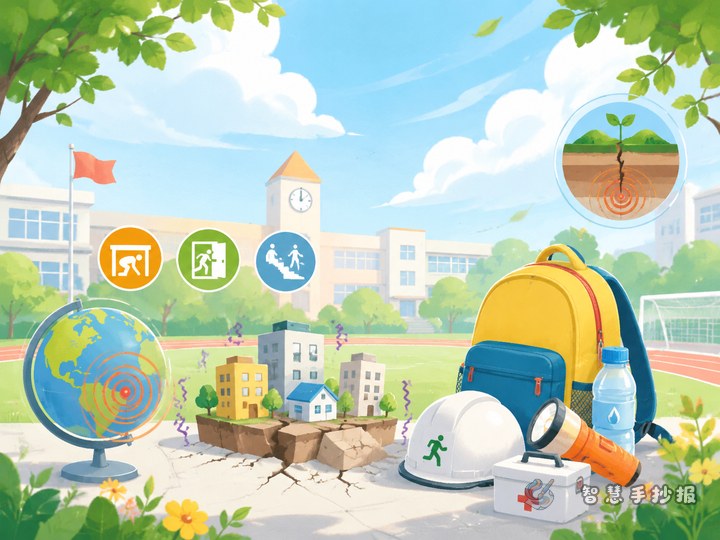
- Safety awareness: Include calm, practical reminders such as learning exits and staying calm in emergencies.
Ready-to-use writing material
An earthquake is a shaking of the ground caused by the sudden release of energy inside the Earth. The surface of the Earth is not still. It is made of tectonic plates that move slowly. When plates push, pull, or slide past each other, stress can build up. When that stress is released suddenly, an earthquake may happen. “Magnitude” is used to describe how much energy an earthquake releases, while “intensity” tells us how strongly a location feels the effects of the earthquake.
Although earthquakes cannot be completely prevented, learning scientific knowledge can help reduce danger. Knowing safe places at home and at school, protecting the head, staying away from falling objects, and avoiding panic are all important parts of earthquake preparedness. A strong poster combines science facts with calm and practical awareness.
How to arrange the layout
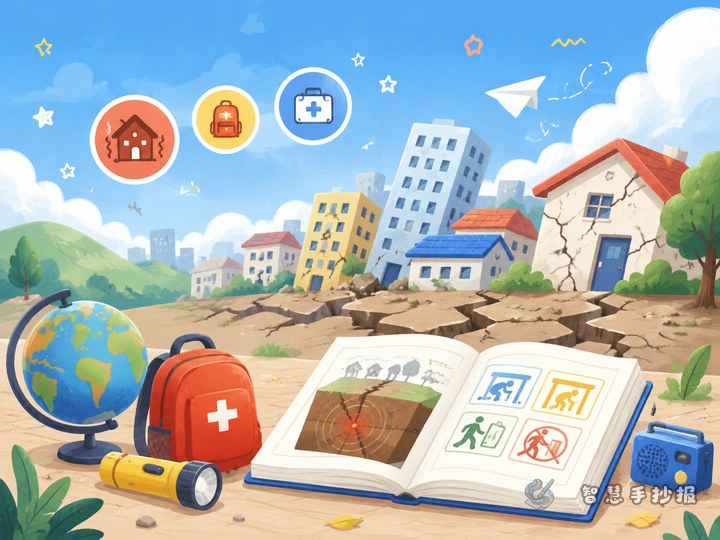
A clear layout is a big title in the center with several knowledge boxes around it. One side can explain causes, another can compare key terms, and the bottom can show short safety reminders. This makes the page easy to read and visually balanced. Small drawings such as the Earth, mountains, houses, or simple wave lines can decorate the page without making it too crowded.
For younger students, use shorter sentences and more simple illustrations. For older students, add a few extra ideas such as tectonic plate movement or wave spreading. If you want to keep polishing the design, colors, and title arrangement, you can continue in the Smart Handwritten Newspaper WeChat mini program.
Common mistakes to avoid
- Do not turn the whole page into an escape guide only, or the topic will drift away from earthquake causes.
- Do not overload the poster with difficult terms. Keep science writing short and easy to understand.
- Do not mix up magnitude and intensity. They should be explained separately.
- Do not fill every space with text. Clear section titles make the poster more readable.
A simple closing idea
You can end with a message like this: Earthquake knowledge may seem distant, but it is closely connected to everyone’s safety. Learning earthquake science is not about fear. It is about staying calm, thinking clearly, and protecting ourselves and others in a more scientific way.