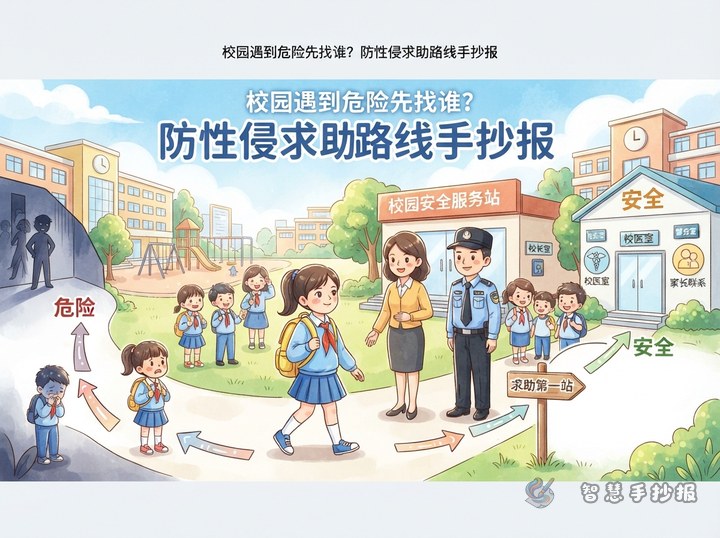
Start with a clear and caring theme
A campus self-protection handwritten newspaper should present safety knowledge in a calm, age-appropriate, and respectful way. The main idea can focus on knowing body boundaries, learning to say no, seeking help quickly, and remembering that safety is never the child's fault. Use warm but serious language so the page feels protective rather than frightening.
Helpful sections to include
- What is personal boundary? Explain that private body parts should be respected and not touched casually.
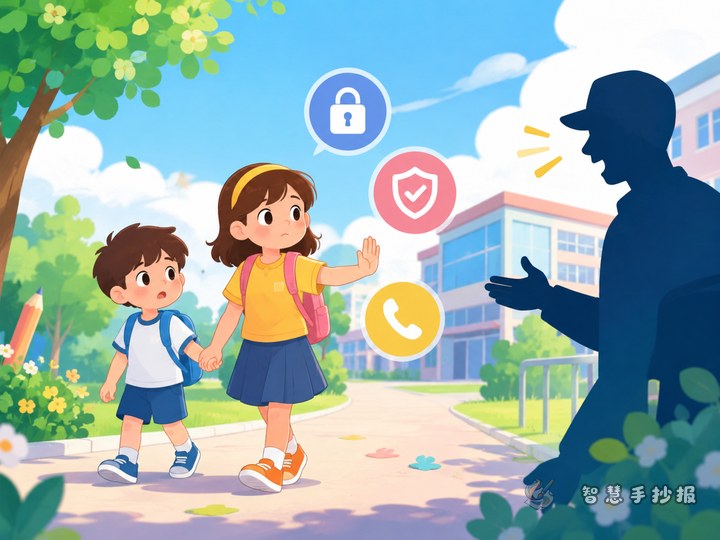
- Three safety actions: refuse, leave, and tell a trusted adult right away.
- Who can help? Parents, teachers, school counselors, and other trusted guardians.
- Safe places on campus: classrooms, teacher offices, the school gate, and places with many people.
Short writing materials for the page
You can write brief lines such as: “My body belongs to me.” “If something feels wrong, I can say no loudly.” “Leave unsafe situations quickly.” “Tell a trusted adult as soon as possible.” “Keeping a secret that hurts me is not a good secret.” These sentences are simple and suitable for a school-themed page.
Layout ideas that work well
Divide the page into three areas: a headline area, a knowledge area, and a help-and-reminder area. Put the title at the top center. Use one side for short rules and the other side for action steps. At the bottom, add a small checklist with reminders like “stay in bright places,” “avoid going alone to hidden areas,” and “ask for help when needed.”
Design tone and classroom use
Choose clean colors such as blue, green, and light yellow to keep the page readable and steady. Avoid shocking pictures. Small icons like school bags, shields, whistles, or stars can make the newspaper look friendly. If you want to turn these notes into a polished handwritten newspaper faster, you can continue arranging the page in the WeChat mini program of Smart Handwritten Newspaper.