Why a Comparison Layout Works So Well
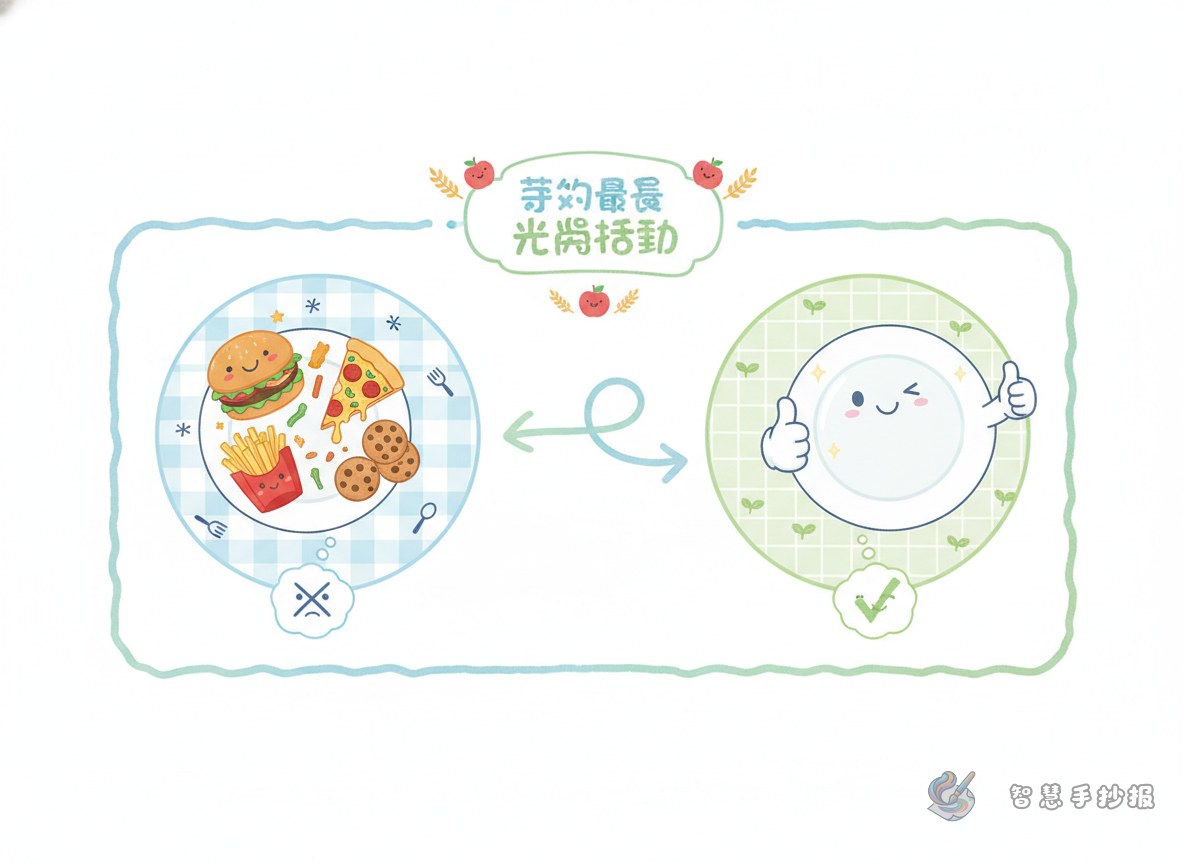
If a school food-saving handwritten newspaper only includes slogans, it may look plain. A comparison layout makes the message clearer: waste on one side, smart habits on the other. Readers can quickly see what should be avoided and what should be encouraged.
This works especially well for a clean plate campaign because the contrast between leftovers and finishing a meal is easy to understand and easy to show in both text and visuals.
Layout Ideas You Can Use Right Away
Idea 1: Two-Column Comparison
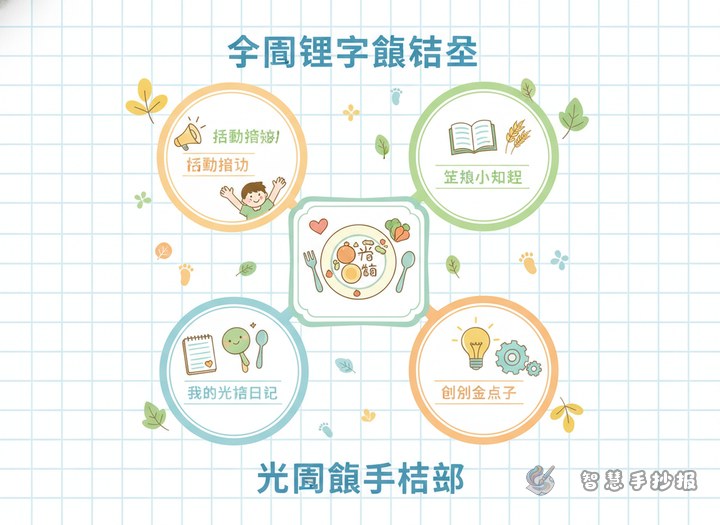
Put “Habits That Waste Food” on the left and “Better Clean Plate Actions” on the right. Place the main title in the center and decorate the page with plates, rice grains, or wheat.
Idea 2: Before and After Meal
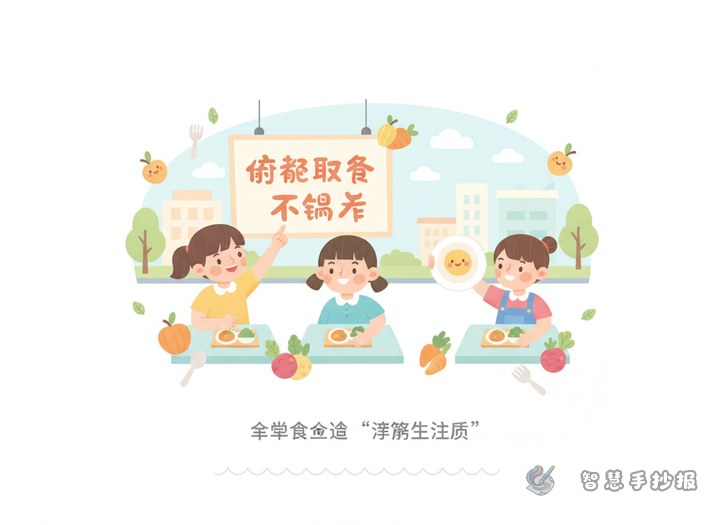
Use the top half for “Think Before You Take Food” and the bottom half for “Finish Your Meal Responsibly.” This creates a clear process from choosing food to eating without waste.
Idea 3: Problems and Solutions
List common food waste situations at school first, then give matching solutions. This style feels practical and classroom-friendly.
Text Materials for a Comparison Poster
- Wasteful habits: taking too much food, leaving vegetables uneaten, getting distracted during meals.
- Better habits: take only what you can finish, start with a small portion, respect the work behind food.
- Wrong idea: leaving a little food does not matter.
- Right idea: every grain of rice is worth cherishing.
- Uncivil behavior: making a mess at the table, throwing away leftovers casually.
- Civil behavior: eat attentively, keep the tray tidy, finish the meal.
You can also add a short box called “Five Things I Can Do Today” to make the content feel closer to daily school life.
Useful Lines and Section Titles
- Save food, starting with every school meal.
- Take what you need and finish what you take.
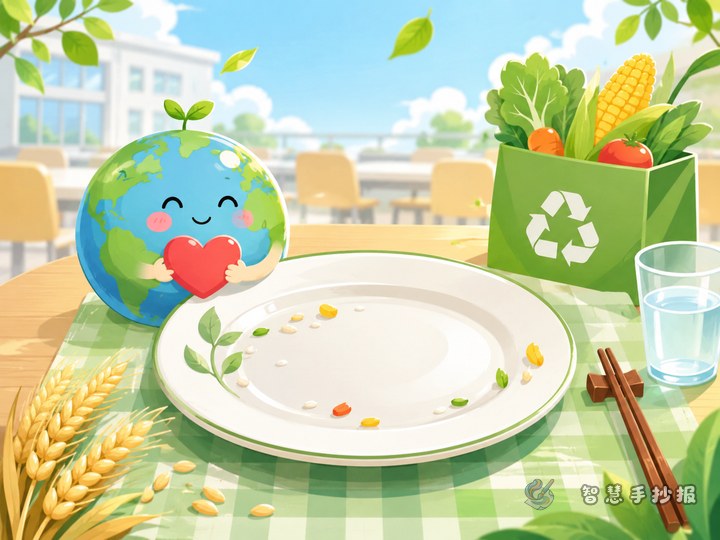
- A small plate can show a big habit.
- The clean plate campaign is not just a slogan, but a daily action.
- To cherish food is to respect labor.
Section titles can also be lively, such as “What My Plate Says,” “Did I Finish My Meal Today?” or “Waste vs. Good Habits.”
Colors and Decorations That Fit the Theme
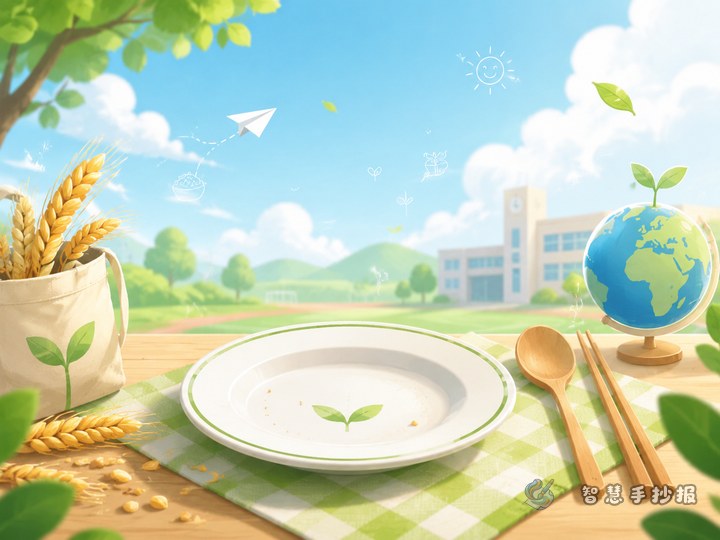
Use green, golden yellow, and orange as the main colors. These shades naturally remind people of grain, fields, and harvest. Keep the color blocks soft and simple so the page stays clean.
For decorations, draw bowls, spoons, wheat, corn, trays, or smiling rice grains. Bold the title and use short bullet points for key ideas to keep the poster neat and easy to read.
Final Check Before You Finish
- Make sure the title clearly shows the food-saving or clean plate theme.
- Check whether the comparison is obvious at first glance.
- Keep both sides balanced so one area does not look too crowded.
- Add borders, icons, and short slogans to complete the page.
If you already have your topic and text but want to keep improving the layout, sections, and color plan, you can continue your work in the Zhihui Shouchaobao WeChat mini program for a smoother making process.