Keep It Simple: Fewer Elements Look Better
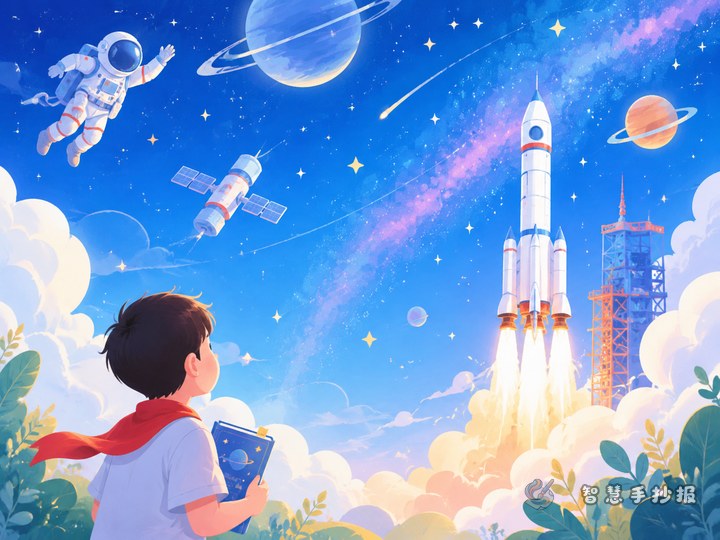
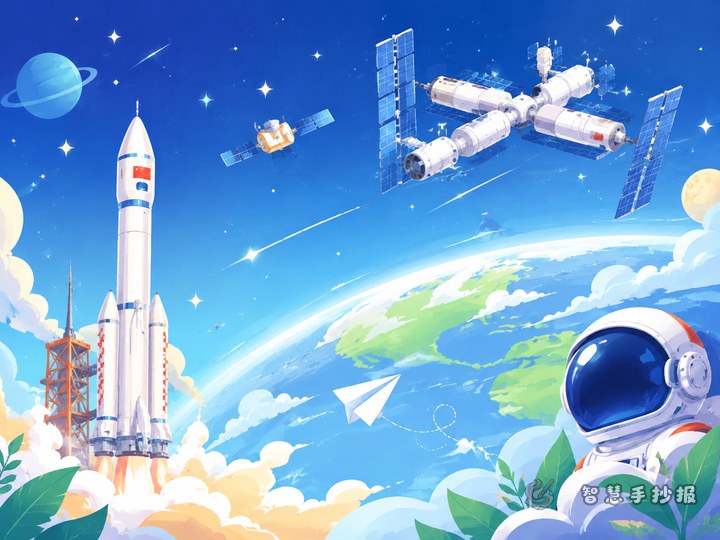
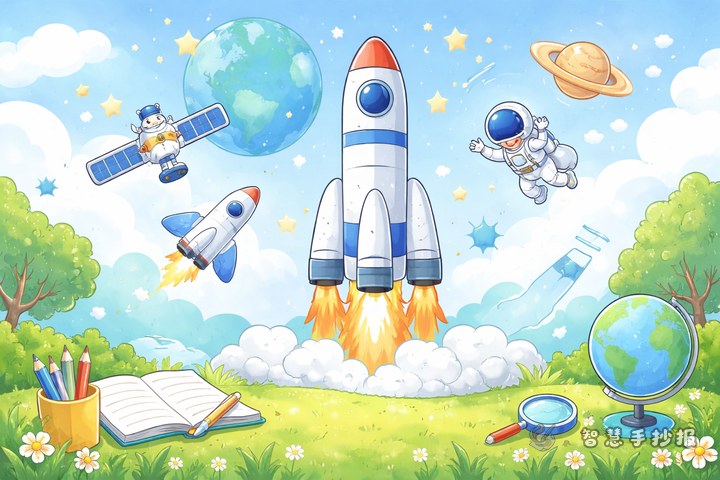
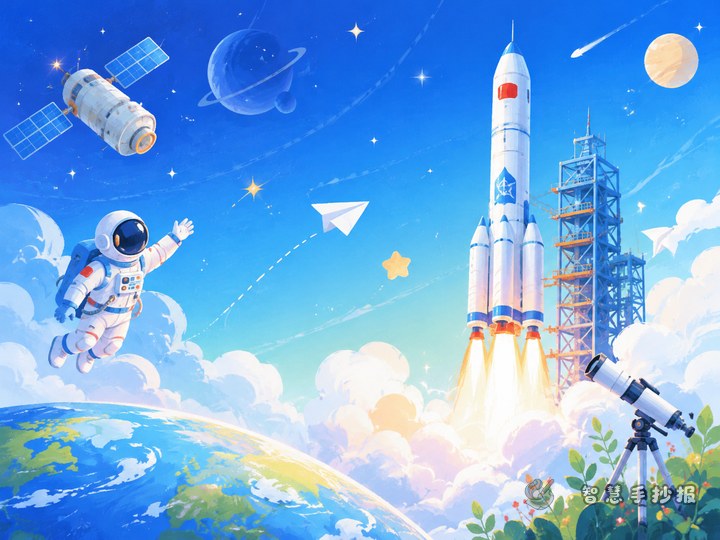
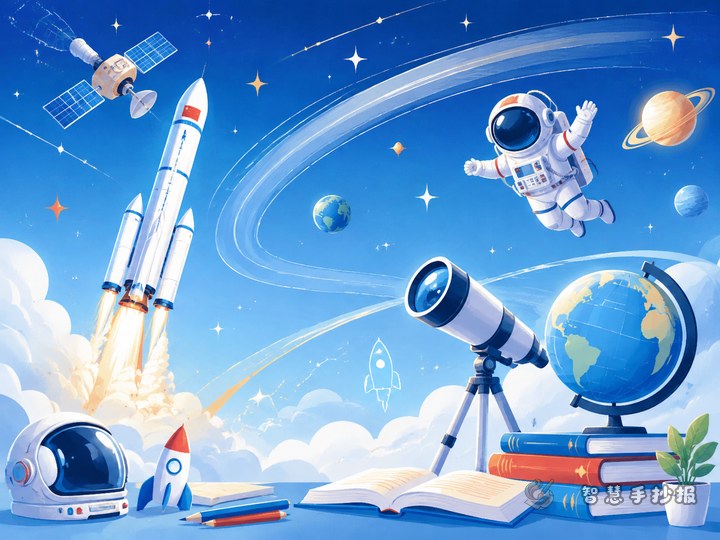
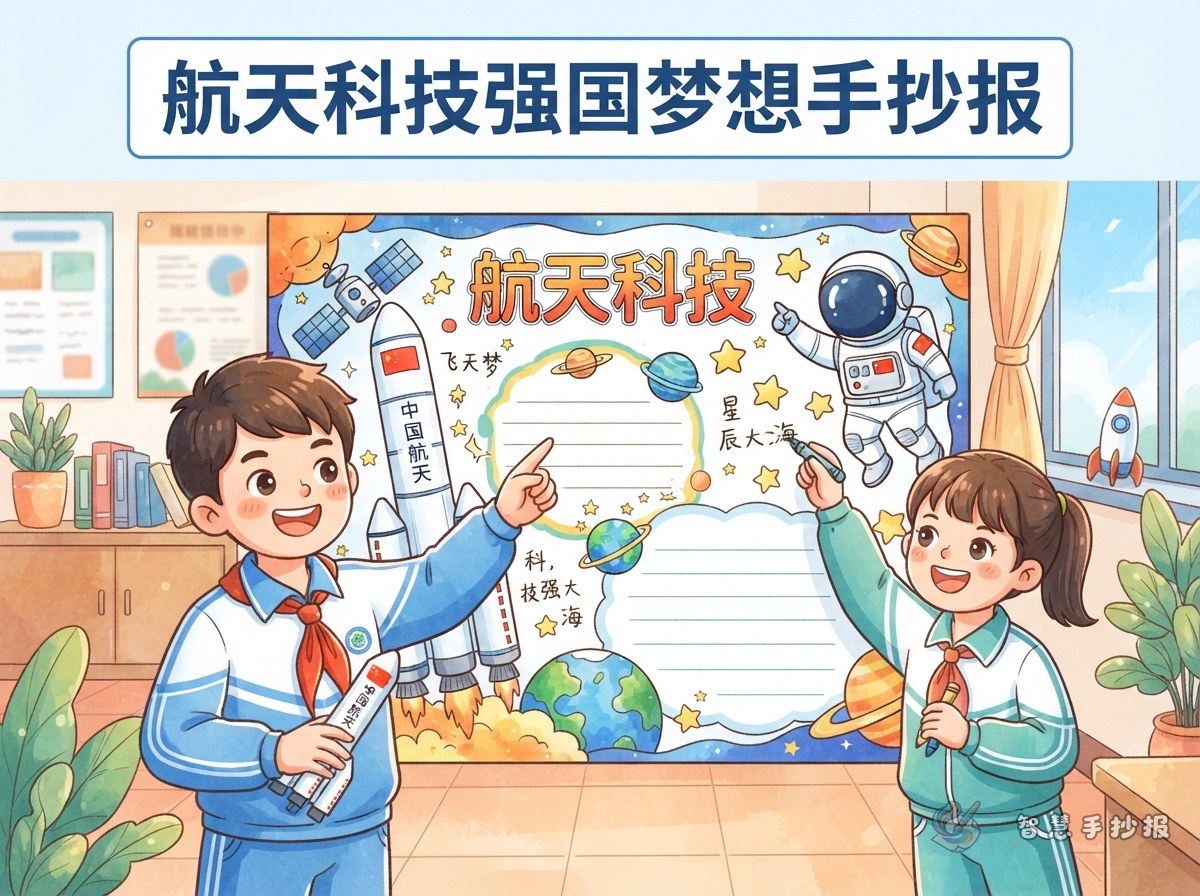
Children in grades 1 and 2 are still developing hand strength, so fine lines and long paragraphs are hard for them. Choose one main image, such as a rocket or an astronaut, and let the title and text take the rest of the space.
- The title takes the top third of the page and should be written large.
- The middle holds one big picture, not several small ones.
- The text fills only one or two small sections, with three to five sentences.
- The bottom strip carries a short slogan.
With this plan, your child writes less and the page still looks full and lively.
A Three-Part Layout with Only Four Pencil Lines
Use a pencil and ruler to draw light guide lines, then erase them at the end.
- Draw a horizontal line to mark the top third for the title.
- Draw one vertical line through the lower part, splitting it into two blocks.
- Draw one more horizontal line near the bottom for a narrow slogan strip.
- Put the picture on one side and the text on the other, switching sides if you like.
Do not press hard with the pencil. Once the writing and coloring are finished, rub the guide lines away and the page instantly looks clean. If you want one more small section, divide the text block with a single short line rather than adding more boxes.
Short Lines Children Can Copy Right Away
Short sentences are easier to fit into a neat column. These are ready to use, and children can also rewrite them in their own words:
- My dream is to become an astronaut.
- A small child can have a big space dream.
- Go, China space program!
- The sea of stars starts right here.
- When I grow up, I want to build rockets.
- Look up at the stars, keep both feet on the ground.
If the teacher asks for a space facts section, simple ideas work well: a rocket needs enormous power to leave the ground, astronauts float in space, and China has its own space station. No numbers or dates are needed.
Drawing a Rocket, Planets and an Astronaut
Rocket
A triangle on top, a rectangle for the body, two small trapezoids as fins, and a circle for the window. Outline with a thicker pen so the shape stands out.
Planets
Trace a small cup to get a neat circle, then draw one large planet and two smaller ones. Add a few dots for craters and they are done.
Astronaut
A round helmet, a square body and four short thick limbs are enough. A half-moon shape on the helmet becomes the visor. The astronaut can stand beside the rocket or float above a planet.
Colors and Final Touches
Space themes work best with a deep blue base and warm accents:
- Main color: deep or navy blue for the title, border and background blocks.
- Second color: white for the text area and stars.
- Accents: pale yellow or orange for planets, rocket flames and small stars.
- A little red on a flag or a rocket stripe adds brightness.
Staying within four colors keeps everything tidy. Before finishing, check three things: no spelling mistakes, no leftover pencil lines, and a title that clearly stands out as the most eye-catching part of the page.