If you want to make a school choir handwritten newspaper that looks musical and easy to understand, focus on time signatures, rhythm, and rests. This angle gives you clear content to write and makes the page more informative than drawing notes alone.
Decide the main message first
This topic works best when it says one thing clearly: choirs are not only about singing well, but also about keeping the same rhythm together. You can use a title like “Learn the Beat, Sing Together” or “Time Signatures for School Choirs” so readers know the topic at a glance.
Short phrases you can place near the title
- Time signatures guide the music’s steps
- Rests give the music space to breathe
- Steady rhythm makes choir singing stronger
Useful theory facts to include
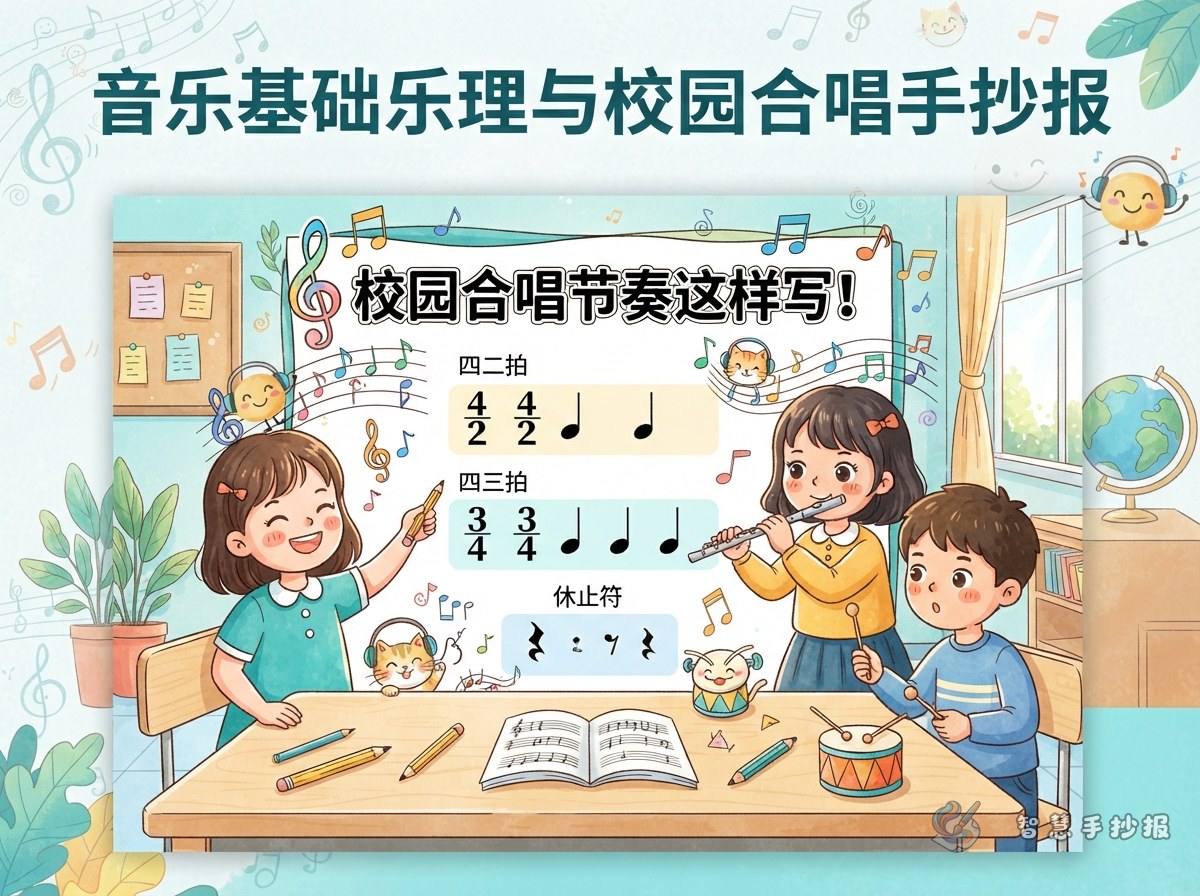
You do not need advanced theory. Choose the most common and easiest ideas: 2/4, 3/4, and 4/4 time, plus rests and a few basic note values. That gives the page both knowledge and visual material.
- 2/4 time: two beats in each measure, often light and brisk.
- 3/4 time: three beats in each measure, often smooth and flowing.
- 4/4 time: four beats in each measure, easy to use in choir practice.
- Rests: they show silence and help the music breathe.
You can also add a simple idea like: beats are the steps, rests are the pauses, and together they make a complete melody.
How to explain rests in a way children understand
Many students are unsure how to write about rests, so use everyday language. You can describe them as “the quiet space in music” or “a small pause in a phrase,” then add a tiny rest symbol to make the idea clear.
- Draw a short measure and label it “sing — pause — sing.”
- Write a short note beside the rest symbol: Stay silent here and enter again in the next phrase.
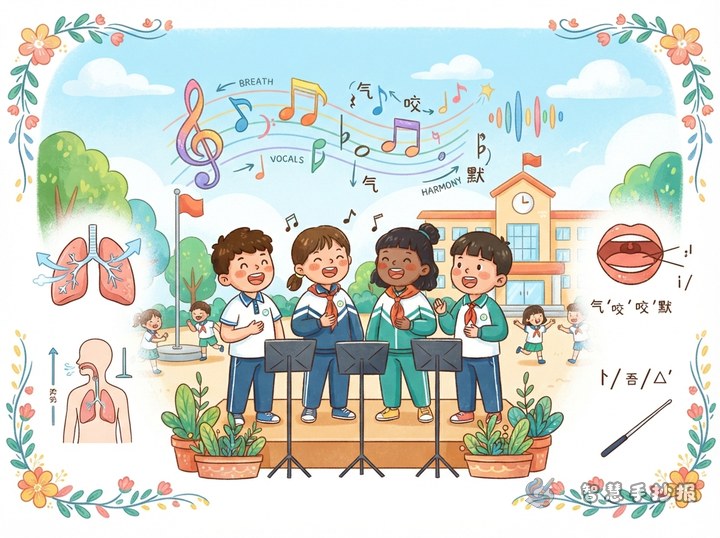
- Add a simple choir breathing sketch to show why the pause matters.
Design the layout like a complete music poster
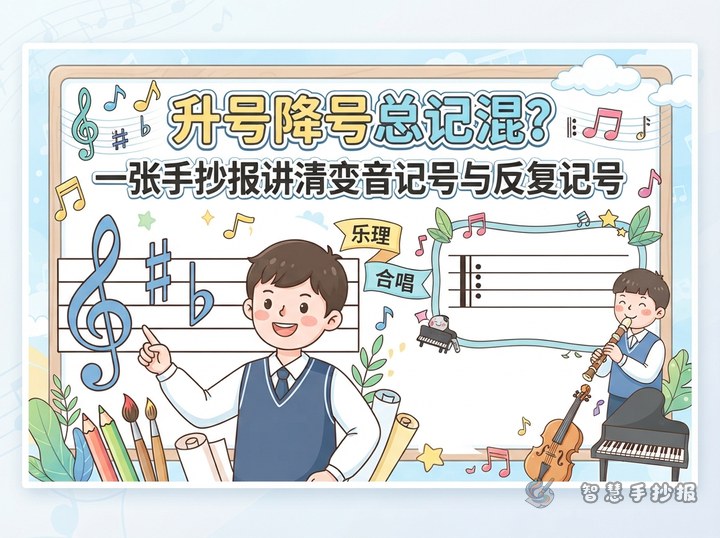
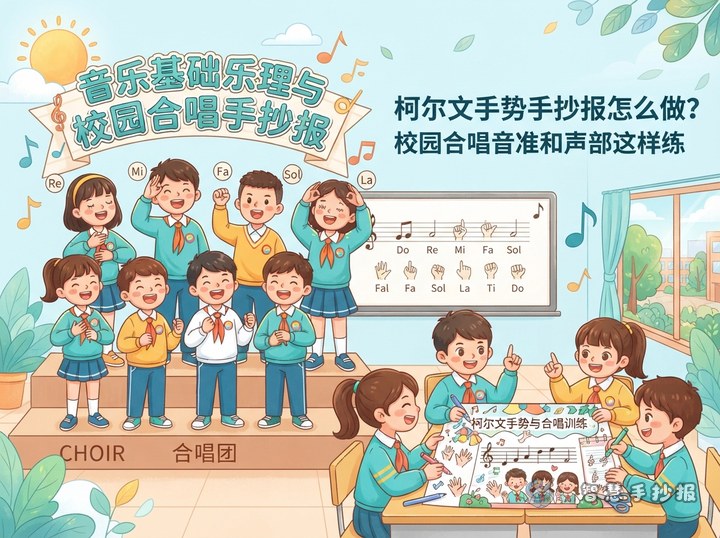
A good handwritten newspaper should have clear sections. You can split the page into four parts: knowledge corner, rhythm corner, choir corner, and creative corner. This keeps the page neat and balanced.
- Knowledge corner: definitions of time signatures and rests.
- Rhythm corner: simple beat patterns such as strong-weak patterns.
- Choir corner: reminders like “count the beat to sing together.”
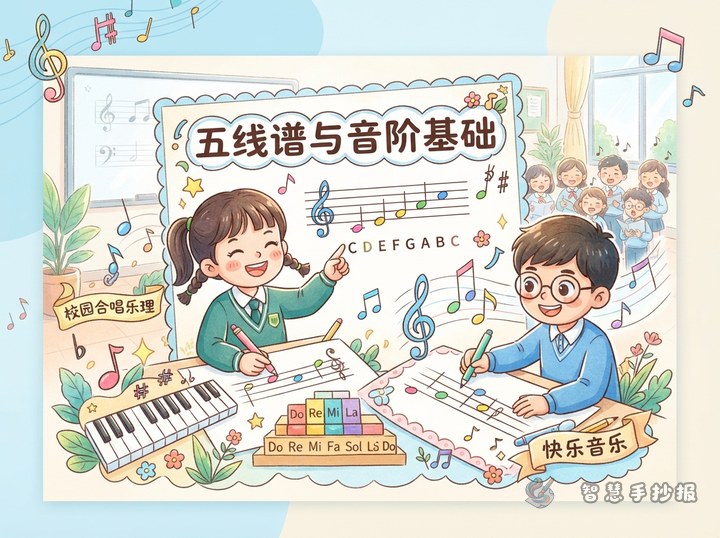
- Creative corner: note borders, bar lines, clouds, or a microphone drawing.
If the paper is small, keep the text short and let the headings do the work. That makes the page cleaner and easier to read.
Ready-to-use captions and short lines
These short sentences are perfect for corners, borders, or small note boxes:
- Beat keeps music organized.
- Rests give melody room to breathe.
- To sing together, start by counting.
- Listen for strong and weak beats.
- Every pause prepares the next line.
You can finish with a simple summary: Time signatures, notes, and rests work together to make choir singing sound unified and beautiful.
Color and decoration ideas
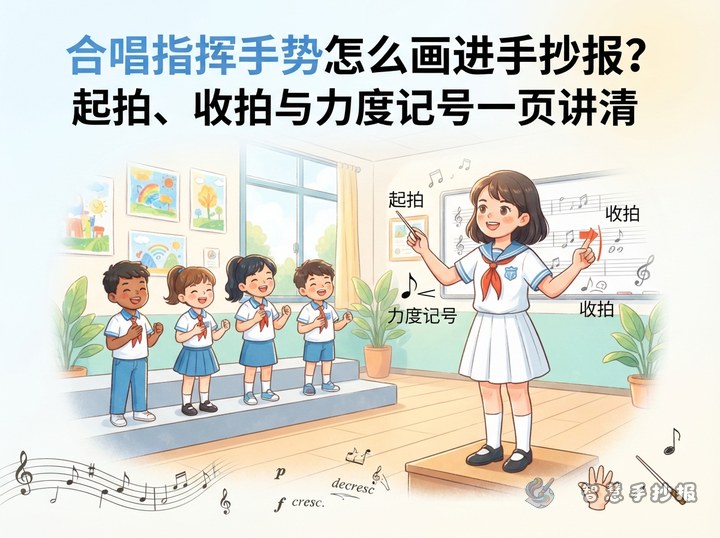
Fresh colors such as blue, yellow, and green work very well for this theme. Blue can show rhythm, yellow can highlight titles, and green can add a school feeling. Decorations can include note symbols, staff lines, choir formations, a conductor’s hand, or a classroom blackboard.
Place the main title at the top, the key knowledge in the center, and use musical borders around the page. That keeps the layout clear while matching the music-and-choir theme.
If you want to refine the layout or continue building the page, you can open the Wisdom Handwritten Newspaper WeChat mini program and turn the idea into a finished design more easily.