Start With One Word: Busy
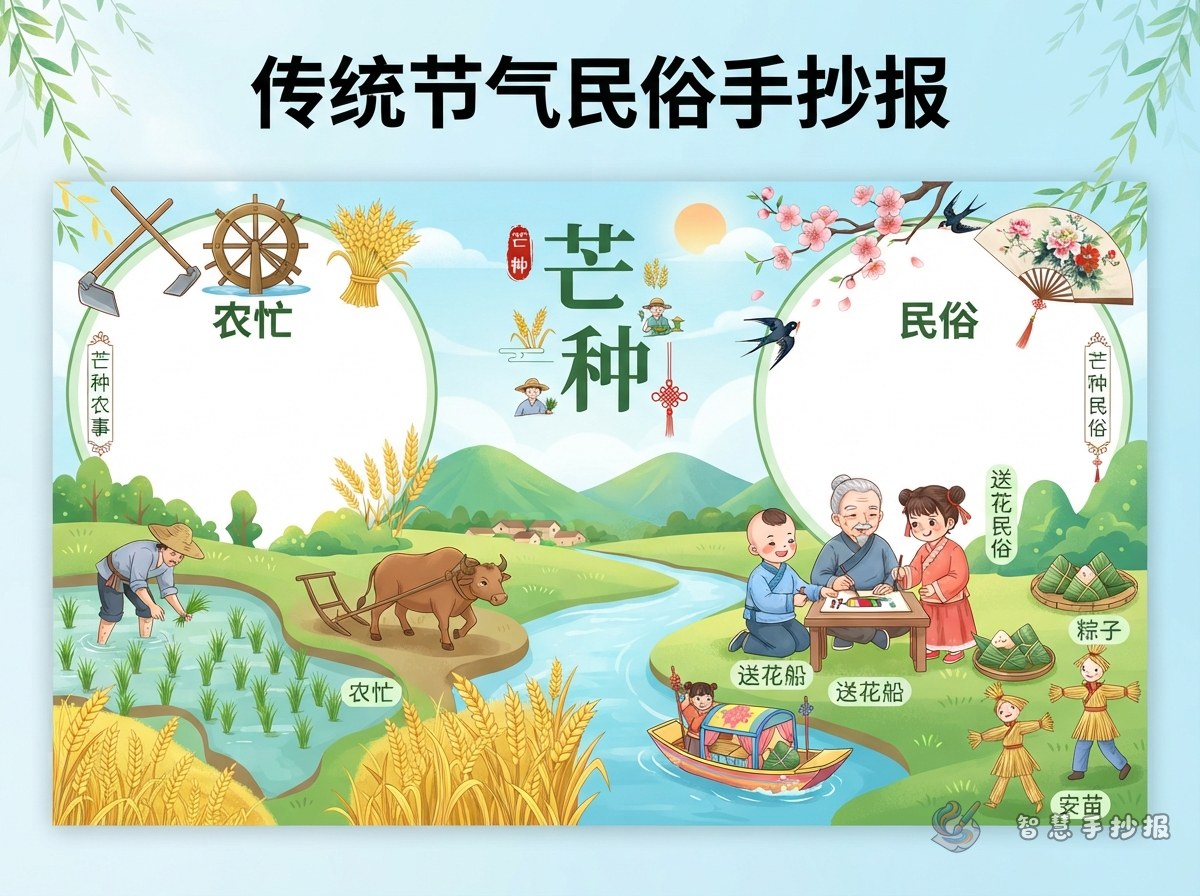
Grain in Ear marks the time when summer harvest and summer planting overlap. The word for awns refers to wheat and rice with bristles, and the word for planting means both seed and sowing. Use this busy feeling as the main thread of your page: harvesting on one side, planting on the other, and watching out for the rainy season at the same time.
Before you begin, jot down three words on scrap paper: wheat harvest, rice planting, flower god. Once you have these, you have a place for facts, farm work, and folk customs, and the rest is just filling in details.
Facts You Can Copy Straight Onto the Page
A Short Solar Term Profile
- Time: usually June 5 to 7, the third solar term of summer.
- Meaning: crops with awns are ready to harvest and new ones can be planted.
- Weather: warmer days, more rain, and the plum rain season in southern China.
The Three Pentads in One Line Each
- First pentad: mantises hatch, and the fields become lively.
- Second pentad: the shrike starts calling from the branches.
- Third pentad: the mockingbird, which mimics other birds, slowly goes quiet.
You do not need long sentences for the pentads. A small mantis and a small bird beside each line will make the section come alive.
Folk Customs With Strong Visuals
Grain in Ear has many customs, but a handwritten newspaper has limited space. It is better to explain two or three well than to list them all.
- Seeing off the flower god: people believed flowers begin to fade after Grain in Ear, so they tied colorful silk ribbons to branches to thank the flower god and wish for blossoms again next year.
- Boiling green plums: in southern China, fresh green plums are sour, so people boil them to make them easier to eat. The custom also echoes the famous story of warming wine with green plums.
- The Anmiao blessing: in some places, after rice planting, people shape new wheat dough into grains, animals, fruits, and vegetables to pray for a good autumn harvest.
- Mud fights: in certain areas, people playfully throw mud at each other during planting season, adding laughter and a strong earthy feel to the work.
Do not just write that a custom exists. Add one sentence about why people do it, such as thanking the flowers or hoping for a harvest. That makes your page read like a real newspaper instead of a dictionary entry.
Layout: Harvest on the Left, Planting on the Right
A left-right split is the safest layout for a solar term page like this.
- Give the title area the top third. Write “Grain in Ear: Busy Planting” or “Grain in Ear Season,” draw wheat ears and peach leaves beside it, and add a wavy line underneath.
- In the upper left, put the solar term profile and the three pentads as a numbered list with short lines and wide spacing.
- In the lower left, write about farm work such as harvesting wheat, planting rice, and drying grain. A small granary or tractor drawing fits here.
- Use the whole right side for folk customs, divided by three small headings: flower god, green plums, and Anmiao. Add one small picture under each heading.
- Leave a narrow strip at the bottom for a saying like “If you do not plant at Grain in Ear, planting later is useless,” or for your own short reflection.
For colors, try wheat yellow and light green as the main tones, with a little pink for the flower god and blue-green for the plums. Keep borders simple by repeating two or three line styles instead of drawing many different patterns.
Quick Checklist Before You Start
- Can readers tell at a glance that this is about Grain in Ear? Avoid a title that only says “Solar Term Newspaper.”
- Do you have facts, farm work, and folk customs, rather than one long copied introduction?
- Is there one memorable line, such as “harvesting wheat while planting rice”?
- Are your drawings placed next to the text they belong to, instead of floating in a separate corner?
If you are short on time and want to skip the layout work, you can open a solar term template in the Smart Handwritten Newspaper WeChat mini program, fill in the text above, and let your child add favorite drawings and decorations. Writing, coloring, and drawing borders are the most enjoyable parts, so it is best to leave those to the child.