Build the Theme Around Peonies at Grain Rain
Grain Rain falls near the end of spring, when rainfall increases and plants grow quickly. Peonies often bloom around this time, and viewing them during the season is a long-standing custom. A newspaper titled Peonies and the Signs of Grain Rain can connect flowers with seasonal change instead of treating the peony as decoration alone.
Choose Four Useful Content Blocks
- Seasonal fact box: Explain that Grain Rain is the final solar term of spring and that its Chinese name reflects the importance of rain for crops.
- A flower for late spring: Describe how peonies blooming in late spring help people notice changes in nature.
- Poetry corner: Add a child-friendly line from a classical peony poem and explain its colors, shapes, or spring imagery in simple words.
- Respect the flowers: Include reminders to observe carefully, avoid picking blossoms, and protect plants in public spaces.
Ready-to-Use Writing Material
Grain Rain and Peonies
As Grain Rain arrives, spring deepens and plants thrive with more moisture. Peonies commonly unfold their layered, colorful petals in late spring. Viewing peonies around Grain Rain is more than enjoying beautiful flowers. It is also a way to observe the season and understand the connection between traditional solar terms and everyday nature.
Every Flower Has Its Season
A flower blooms in response to sunlight, temperature, and rain. Drawing peonies in a Grain Rain newspaper reminds us to respect natural rhythms and treasure spring scenery. Quiet observation and careful notes preserve the experience better than picking a flower.
Make One Peony the Visual Focus
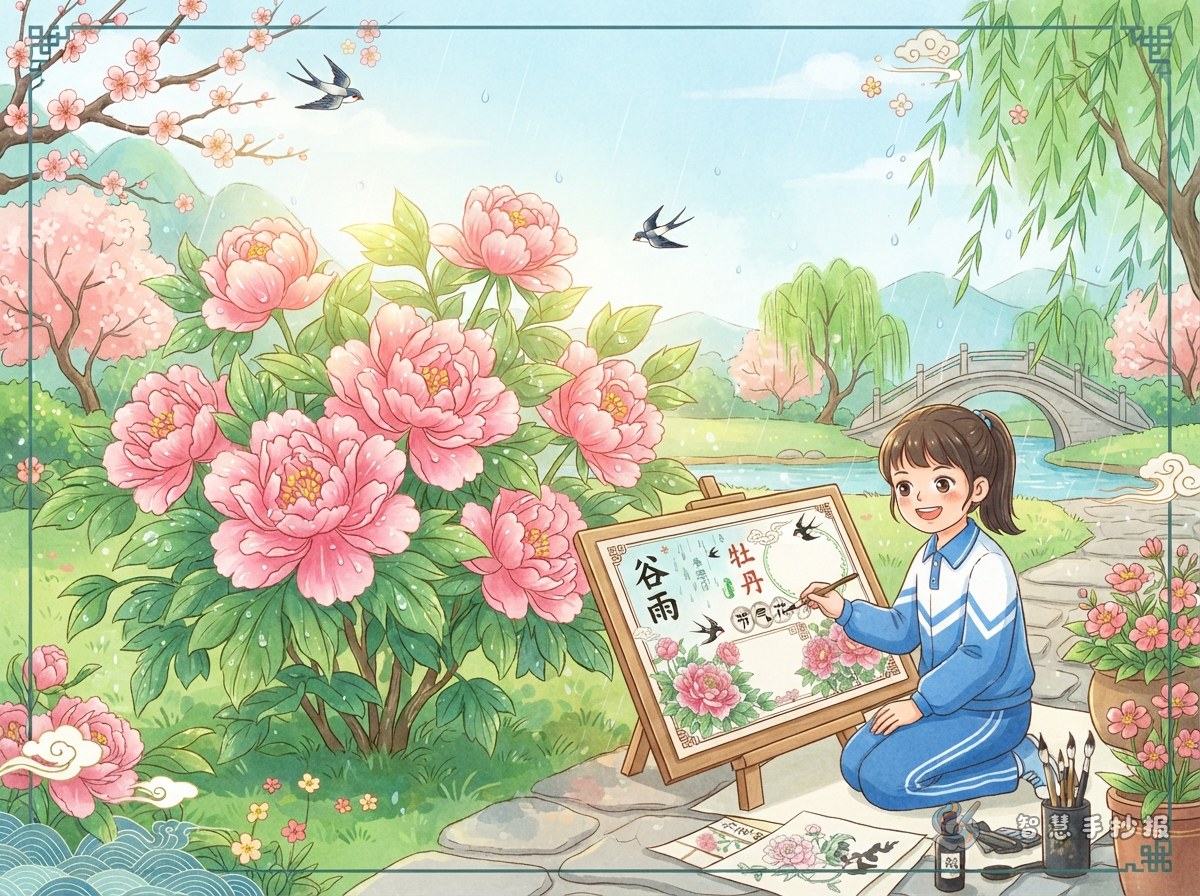
Place one large peony in the lower-right corner and extend curved stems and leaves toward the center. Put the title in the upper-left area, then arrange three or four text sections around the main flower. Red or deep pink works well for the title, while pale green and soft yellow keep the writing areas clear.
- Mark the title, illustration, and writing areas lightly in pencil.
- Draw overlapping curved petals in several sizes, then add leaves and raindrops.
- Decorate section borders with grain, shoots, or small drops to reinforce the seasonal idea.
- Add the text last and preserve enough blank space for easy reading.
Check the Seasonal Connection
A finished newspaper should include Grain Rain facts, peony culture, readable text, and a message about responsible flower viewing. If floral decoration crowds the page, remove a few small blossoms and give the writing more room. For additional layouts and editable sections, continue the project in the Smart Handwritten Newspaper WeChat Mini Program.