Decide What the Poster Must Explain
"How does rain form" sounds simple, but it is easy to end up with scattered sentences and no clear point. Before writing, settle on one idea: rain is water from the ground coming back home after a long trip through the sky. With that thread, gathering facts, choosing columns and arranging the page all become easier.
Write as if you are talking to a classmate. A friendly "Did you know?" opening feels warmer than copying a textbook paragraph.
The Three-Step Story of Rain
Write the water cycle as three short steps instead of one long block. One or two sentences per step, plus a small arrow, is far easier to read and copy.
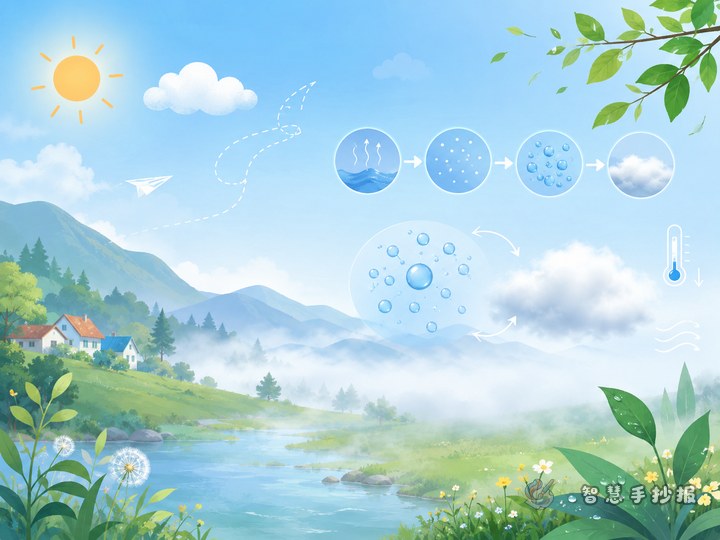
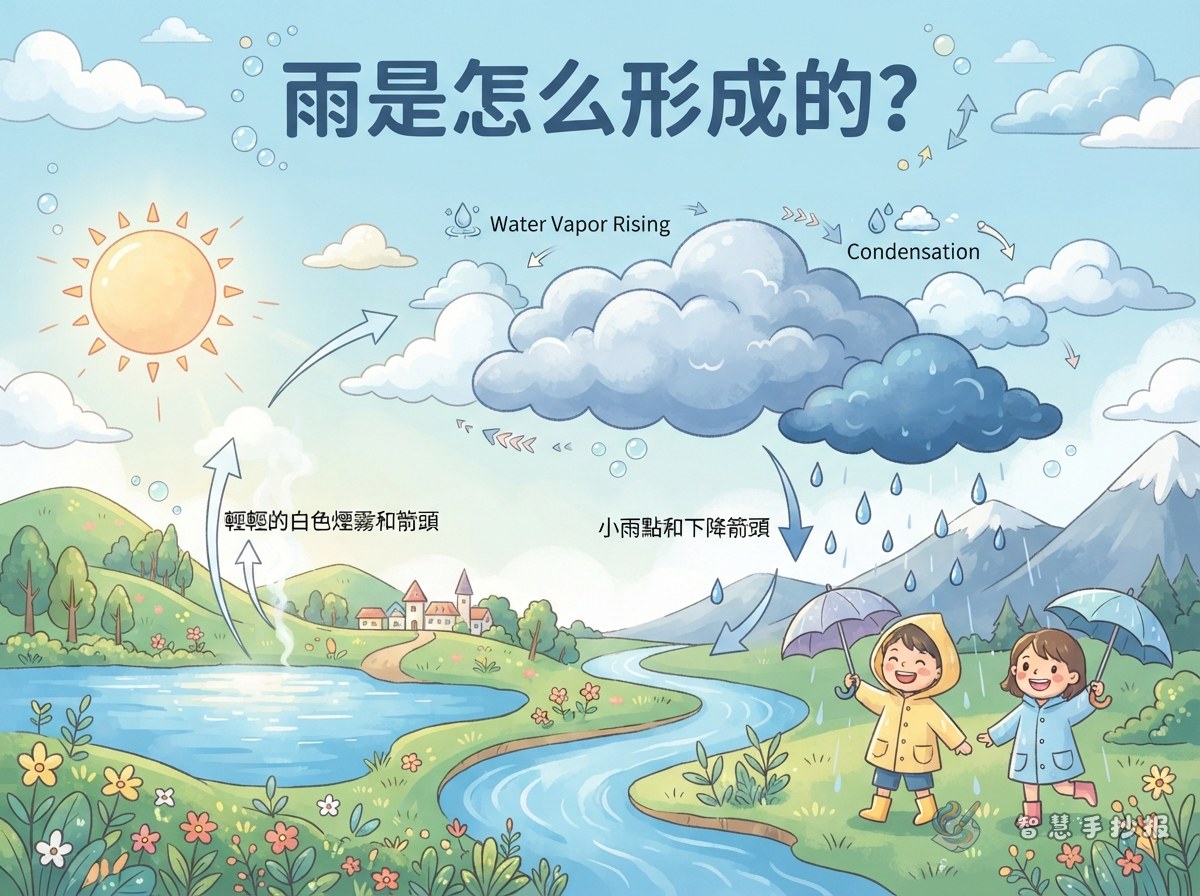
Step one: the sun warms water into vapour
Oceans, rivers, lakes and damp soil are heated by the sun. The water inside them turns into invisible vapour and floats upward. Try: "The sun warms the water, and it puts on an invisible coat and flies into the sky."
Step two: vapour cools and becomes a cloud
High above, the air is cold. The vapour condenses into tiny droplets, and millions of them crowd together to form the clouds we see. Draw one big cloud with many small dots around it to show droplets joining up.
Step three: droplets grow, then fall
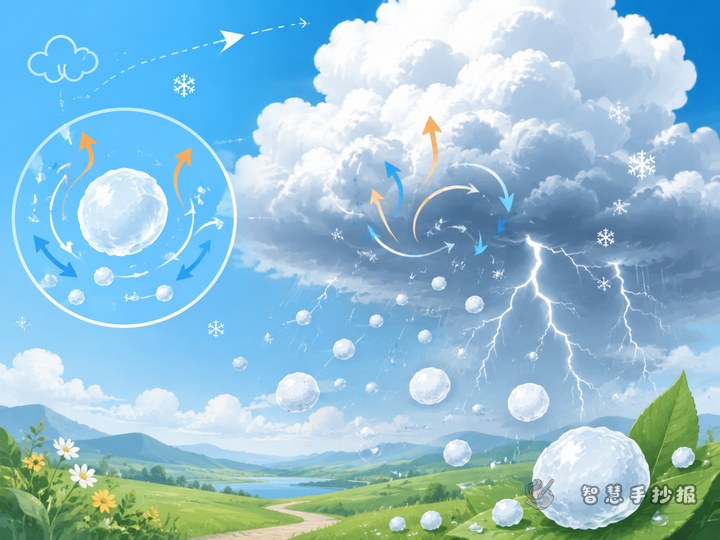
Inside a cloud, droplets drift and bump into each other, merging into bigger drops. Once they are too heavy for the air to hold, they fall. If the air stays above freezing on the way down, the drops arrive as rain.
Three Kinds of Rain for a Card Section
If there is space left, add a card row showing three rain types side by side. It looks neat and reads quickly:
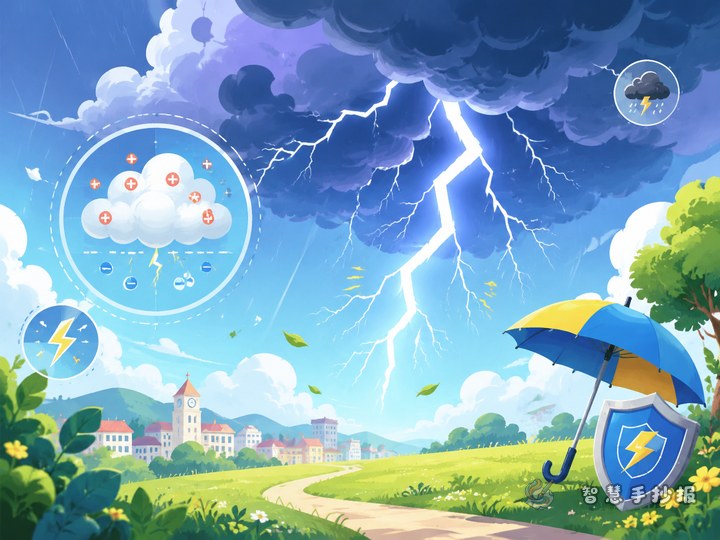
- Convectional rain: common on hot summer afternoons, when heated air rises fast and brings thunder with it. It arrives quickly and leaves quickly.
- Orographic rain: moist air is pushed up by a mountain slope and drops rain on the windward side, which is why one side of a mountain can be wetter than the other.
- Frontal rain: cold and warm air meet, warm air is lifted over the cold air, and rain falls steadily for a long time.
Keep each card to two lines, start each one the same way, and the section will read smoothly.
Layout Plan: Where Everything Goes
Blue tones suit this theme. A simple order works well:
- Leave the top third for the main title, such as "Where Rain Comes From," with two clouds and a few drops beside it.
- Put the three-step story down the left side in three rounded boxes linked by arrows.
- Place the three rain-type cards on the right, in a row, each in its own colour.
- Keep a narrow strip along the bottom for short rainy-day tips to close the page.
Fix the positions before writing, so you never run out of room halfway through a section.
Short Sentences to Copy and a Finishing Touch
These lines are easy to copy or adapt:
- "Rain is not water poured from the sky; it is water sent up from the ground."
- "A raindrop travels a long way before it lands on your umbrella."
- "A cloud is the cradle of rain, where droplets grow up slowly."
- "The air turns cooler when it rains, because the water carries heat away from the ground."
Finish by adding one real observation in a corner, such as "Yesterday the wind grew stronger just before it rained." A small personal note makes the whole poster feel alive.
To save layout time, you can bring your finished text into the ZhiHui ShouChaoBao WeChat mini program, pick a page style, and fill your sections in.