Start with a clear goal instead of filling the page with text
A cold wave handwritten newspaper should help readers understand three things quickly: what a cold wave is, what problems it may cause, and how to stay safe. If you keep the project focused on winter weather science and daily protection, the page will feel organized and useful.
For younger students, simple wording works best. Phrases like “the weather becomes much colder very fast” or “roads may turn icy” are easier to read than long technical definitions.
Best content to include in the main body
1. What is a cold wave?
A cold wave is a strong movement of cold air that often causes a clear temperature drop, strong winds, and sometimes snow, sleet, or freezing conditions. It usually arrives quickly and affects a wide area.
2. Common signs of a cold wave
- Temperatures fall quickly in a short time
- Wind becomes stronger and makes the air feel even colder
- Some places may have snow, freezing rain, or icy roads
- The difference between indoor and outdoor temperature becomes larger
3. How does it affect daily life?
- People may catch a cold more easily if they are not dressed warmly
- Walking and cycling can be dangerous on slippery roads
- Plants and crops may suffer from freezing temperatures
- Pipes and outdoor equipment may be affected by low temperatures
This section looks neat when it is arranged as short points instead of long paragraphs.
Make the safety part practical
The safety section is often the most valuable part of this kind of school project. Instead of only saying “keep warm,” try to give clear actions.
- Dress in layers: wear a hat, scarf, gloves, and warm shoes.
- Stay warm at home: close windows properly but still allow fresh air when needed.
- Travel carefully: walk slowly on snowy or icy ground and avoid rushing.
- Keep healthy: drink warm water, sleep well, and do simple exercise.
- Care for others: remind children and older family members to add warm clothing.
You can also add a line saying that checking weather forecasts helps people prepare before the cold wave arrives.
A layout idea that looks complete
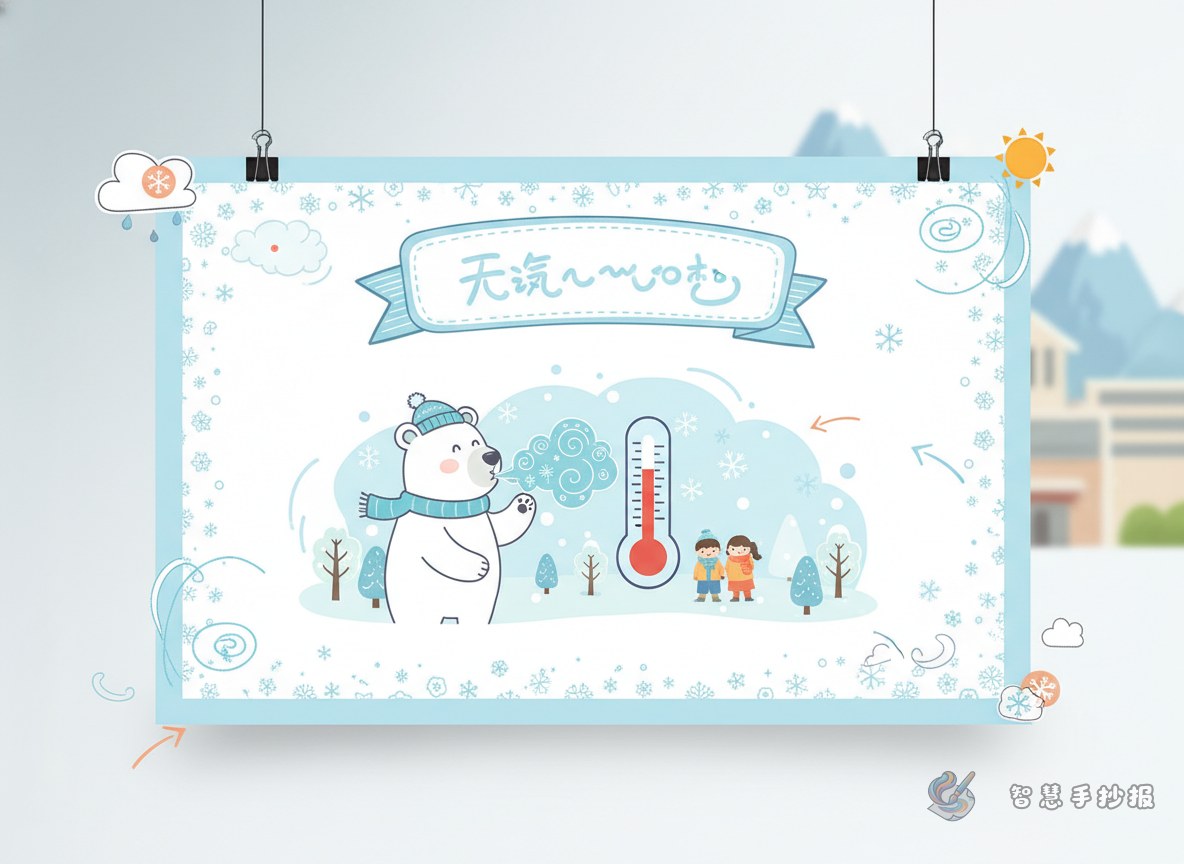
A four-part layout works very well for a cold wave handwritten newspaper. Put the title in the center or top area, and place small sections around it.
- Title area: use a phrase like “Understanding Cold Waves” or “Cold Wave Safety Guide.”
- Top left: a short introduction to the topic.
- Top right: warning signs and weather icons.
- Bottom left: warm clothing and home protection tips.
- Bottom right: travel safety and a short conclusion.
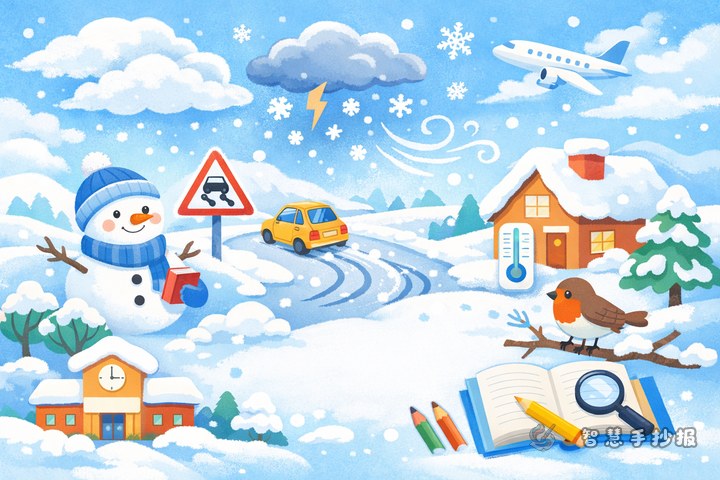
Good decorations include snowflakes, clouds, scarves, gloves, mugs of hot water, thermometers, and little houses. Keep the border simple so the page stays easy to read.
Short lines you can place around the page
- A cold wave is stronger than an ordinary drop in temperature.
- When the weather changes suddenly, add warm clothes in time.
- Snowy and icy roads require slow and careful movement.
- Watching the weather forecast helps us plan our day better.
- Learning weather science helps us stay calm and prepared.
These short lines are useful for side notes, empty corners, or the final summary area.
How to end the project naturally
You only need a short closing message. For example, you can say that a cold wave brings strong cooling and wind, but careful preparation, warm clothing, and safe travel can help everyone through winter weather.
After you finish your text ideas, you can continue arranging the page in the WeChat mini program to make your handwritten newspaper cleaner and more complete.