Choose a clear message: I can recognize risks and say no
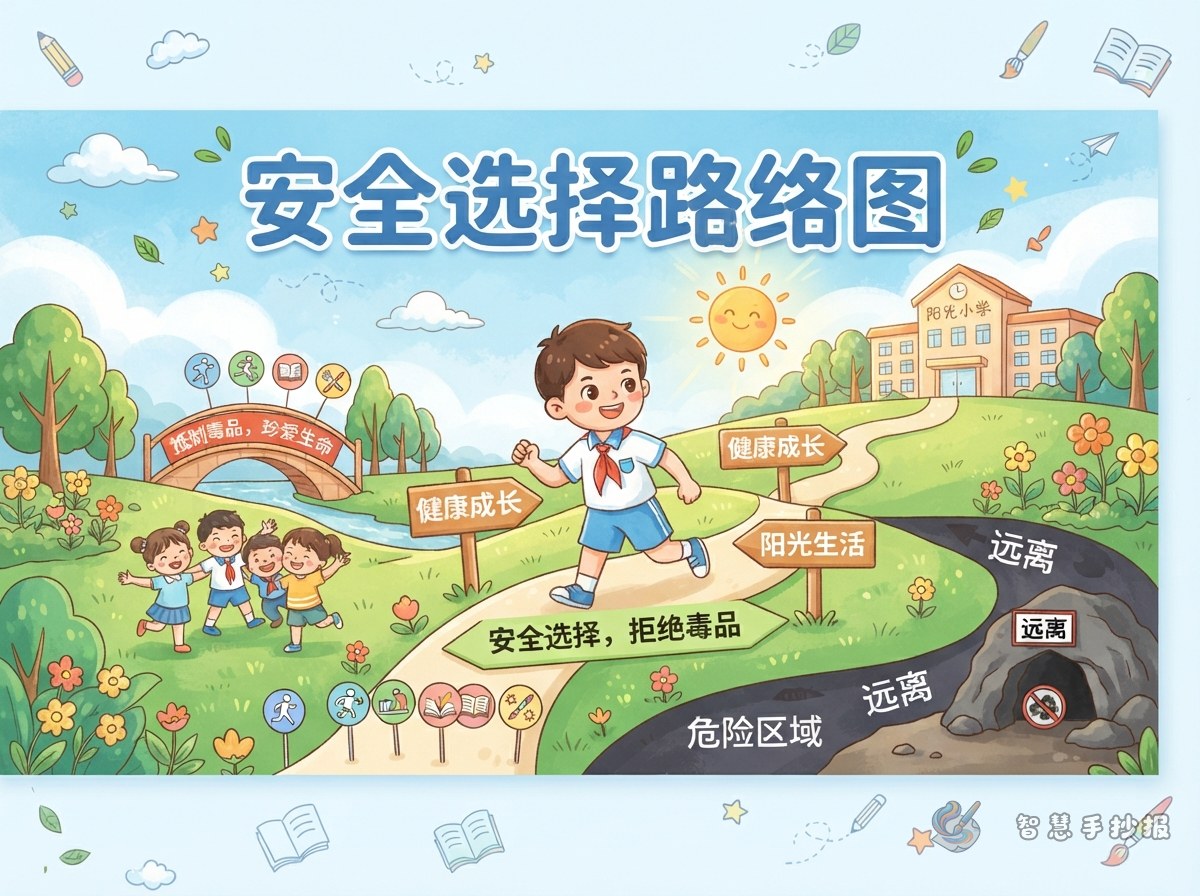
This handwritten newspaper can focus on the message “I choose a healthy life when I face temptation.” Instead of filling the page with slogans, use familiar school-life situations to show how children can stay alert, make safe choices, and ask for help. The main illustration can be a “safe choice route” that moves from “an unfamiliar temptation” to “recognize the risk,” “refuse firmly,” “seek help,” and finally “grow up healthy.”
A suitable title is “When I Face Temptation, I Choose a Healthy Life”, with the subtitle “Cherish Life and Stay Away from Drugs.” This topic leaves room for drawings, short messages, and practical advice.
Show four practical situations
Place a section called “What Should I Do?” in the center or on the left. Short dialogues are easier to read than long explanations.
- A stranger offers an unknown drink: Do not accept or taste it. Leave and tell a teacher or parent.
- Someone says, “Trying it once is harmless”: Say clearly, “No, I do not need it.” Never try something because of curiosity or peer pressure.
- You see unknown pills, powder, or an unfamiliar vape: Do not touch it or spread photos. Keep away and report it to a trusted adult.
- A friend may be in danger: Protect yourself first, then ask a teacher, parent, or another trusted adult for help.
Write these points in speech bubbles or dialogue boxes. The sequence “refuse, leave, and seek help” will be easier for readers to remember.
Turn key knowledge into short sections
Use the right side for a section called “Understand the Harm.” Children do not need many technical terms. It is enough to explain that drugs can harm health, affect learning and daily life, damage family relationships, and create legal risks. Keep the language accurate and calm, without shocking images or details that may encourage imitation.
At the bottom, add three protective sentences: Do not accept suspicious items from strangers; do not try unknown substances out of curiosity; tell a trusted adult when something feels wrong. You can also include healthy alternatives such as sports, reading, drawing, music, and group activities.
Design the page as a visible safety route
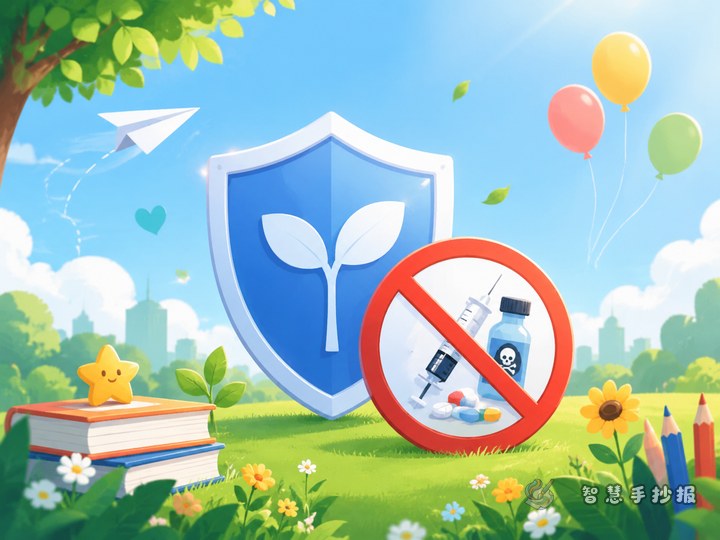
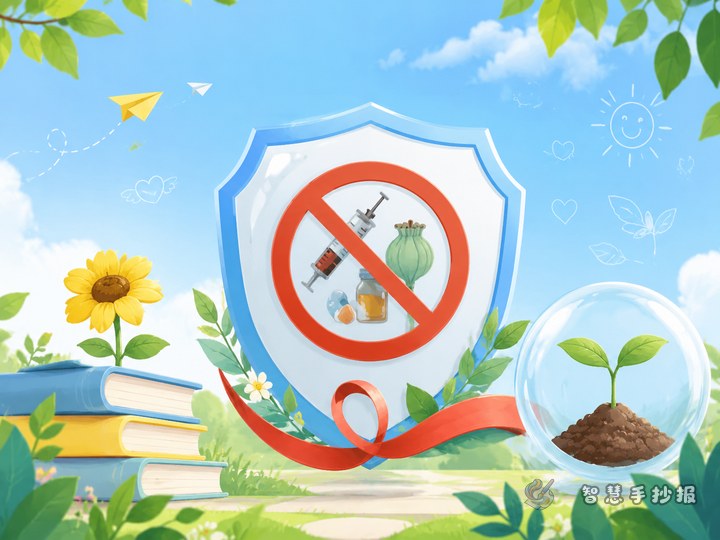
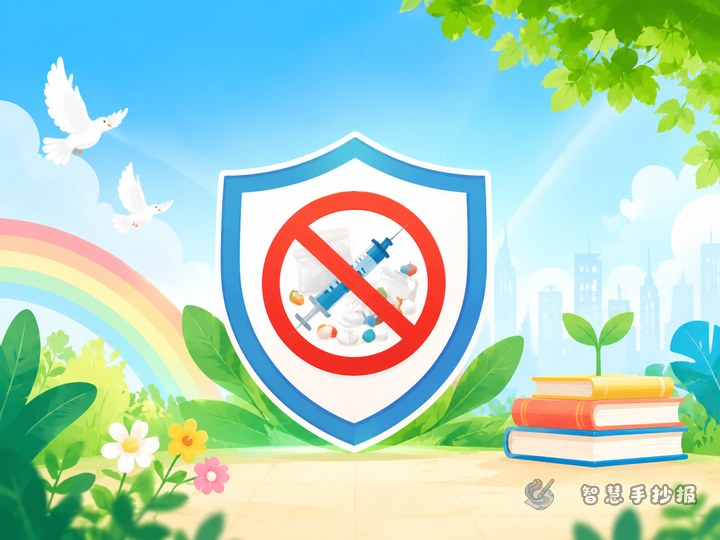
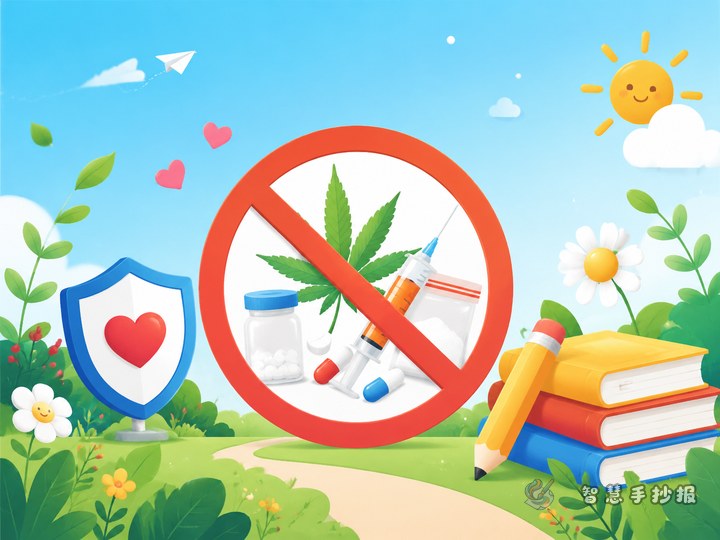
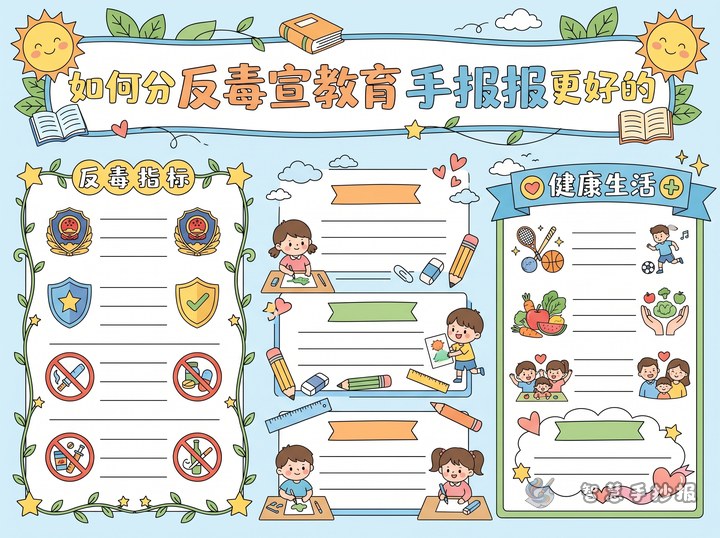
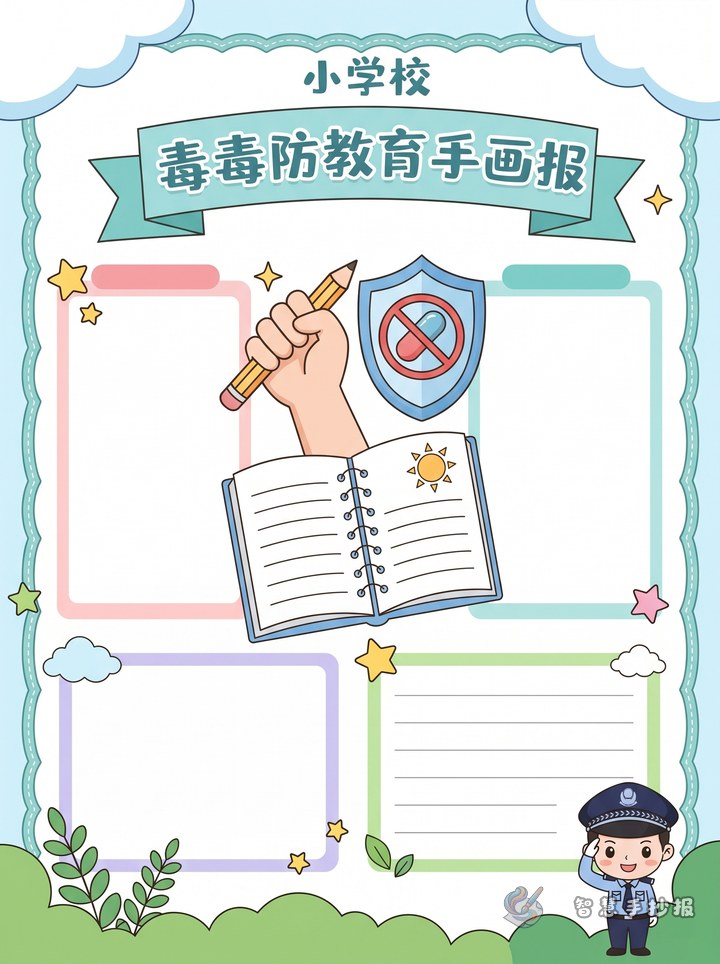
Try a horizontal route layout. Put the title in the upper-left corner, draw a central image using warning signs, a shield, and a green growing tree, and place the four situation sections around it. Use red for danger and refusal, green for health and growth, and black or dark blue for body text so everything remains easy to read.
The border can resemble a road, a knot, or a school fence, but it should stay simple. Keep each section to three to five lines. Sketch the title, pictures, and text areas in pencil before writing and coloring to prevent crowding.
Check whether the page is truly useful
- Can readers immediately see the theme of drug prevention and healthy growth?
- Does the page explain how to refuse, avoid touching unknown items, leave, and seek help?
- Is there enough empty space, and can primary school students read the text quickly?
- Do the illustrations support safety education instead of relying only on frightening images?
After planning the content, open the WeChat Mini Program “Zhihui Shouchaobao” to continue arranging sections, adjusting the layout, and making the handwritten newspaper.