Make the Four Bins the Main Characters
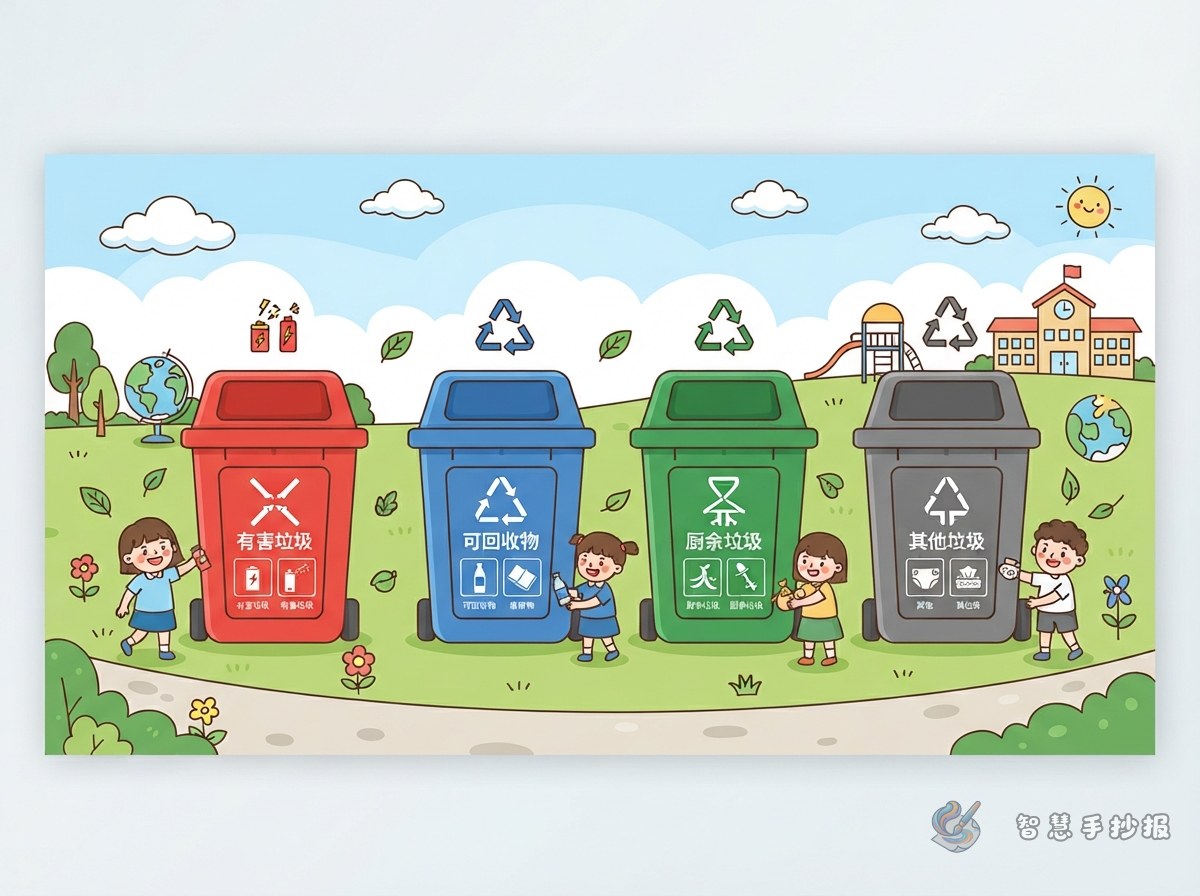
A waste sorting poster does not need complicated drawings. Start with four simple bins made from rounded rectangles, then add lids, handles, wheels, labels, and cheerful faces. Common color schemes may use blue for recyclables, green for food waste, red for hazardous waste, and gray for residual waste. Because local systems differ, students should check the colors and symbols used in their area.
Easy Steps for Drawing a Cute Bin
- Draw a tall rounded rectangle that is slightly narrower at the top.
- Add a lid and handle above it, then draw two small wheels below.
- Leave space in the center for a simple sorting symbol.
- Add eyes, a smile, or a waving arm to give the bin personality.
Show Sorting with Small Object Illustrations
Place three or four example items beside each bin and use short arrows to show where they belong. Keep the objects large and recognizable rather than filling the page with tiny details.
- Recyclables: newspapers, cardboard boxes, plastic bottles, and cans.
- Food waste: fruit peels, vegetable leaves, eggshells, and leftovers.
- Hazardous waste: used batteries, expired medicine, and fluorescent lamps.
- Residual waste: used tissues, broken ceramics, and dust.
Build each object from basic shapes. A battery can be a small cylinder, a bottle needs only a few curved lines, and a banana peel can be simplified into crescent shapes.
Turn the Page into a Sorting Journey
Place the headline across the top and draw a winding green path through the center. Arrange the four bins along the path, then add sections such as “Why Sorting Matters,” “What Goes Where,” and “What I Can Do.” Leaves, water drops, recycling arrows, and a smiling Earth can decorate the corners.
A four-panel layout is another clear option. Give each waste category one equal panel with a bin, several example objects, and a short explanation. Keep the main illustrations in the upper or central area and longer notes near the bottom so that the headline remains easy to see.
Short Text for the Poster
- Topic note: Waste sorting means placing different types of discarded materials into the correct containers so useful resources can be recovered.
- Action tip: Check the label before disposal, flatten cardboard boxes, and empty liquids from bottles.
- Slogan: Sort one small item today and help create a cleaner tomorrow.
- Reminder: If an item is difficult to identify, ask a teacher or parent and check local sorting guidance.
Finish with Consistent Colors
Sketch the title, bins, and text boxes in pencil before outlining and coloring. Use one main color for each category and lighter shades for nearby decorations. Recycling arrows and leaves can connect sections, but too many small motifs will make the page look crowded. After planning the draft, students and parents can continue in the Smart Hand-copied Poster WeChat Mini Program to organize sections, choose a layout, and complete the poster.