Start by defining the theme clearly
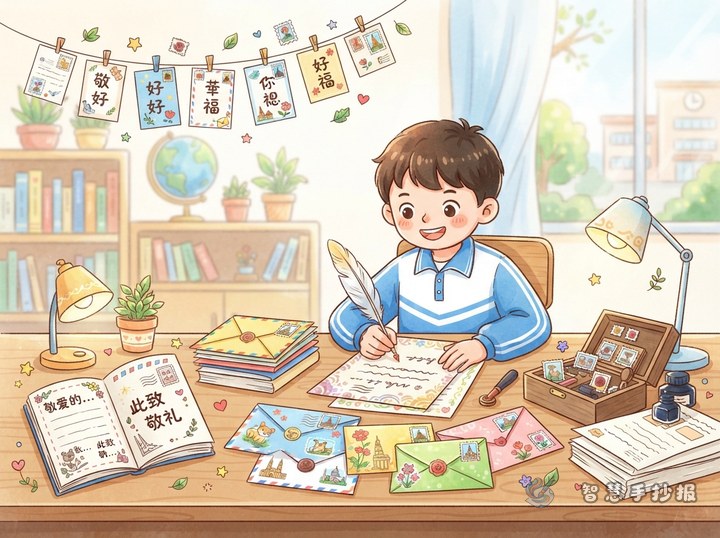
This kind of handwritten newspaper is not only about stamps. It should also show letter etiquette. A good way to understand the topic is: learn communication culture through stamps, and learn polite expression through letters. This makes the project more meaningful and closer to student life.
Possible titles include “Culture in a Small Stamp,” “One Stamp and One Letter,” or “Polite Letter Writing Begins with Good Etiquette.” These titles feel natural and easy to develop into sections.
How to combine the main sections
Section 1: What is a stamp?
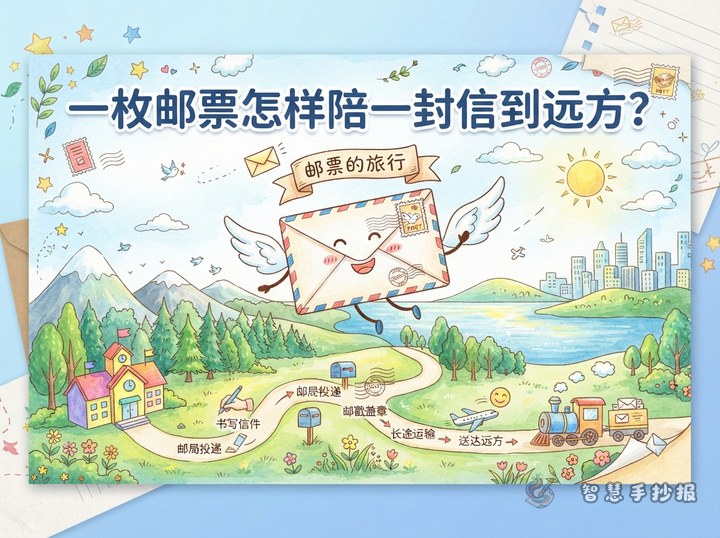
Use a few short lines to explain that a stamp is proof of postage attached to mail. It is also a small printed artwork that can be collected and appreciated. This section works well at the beginning as a simple introduction.
Section 2: Stamp images tell stories
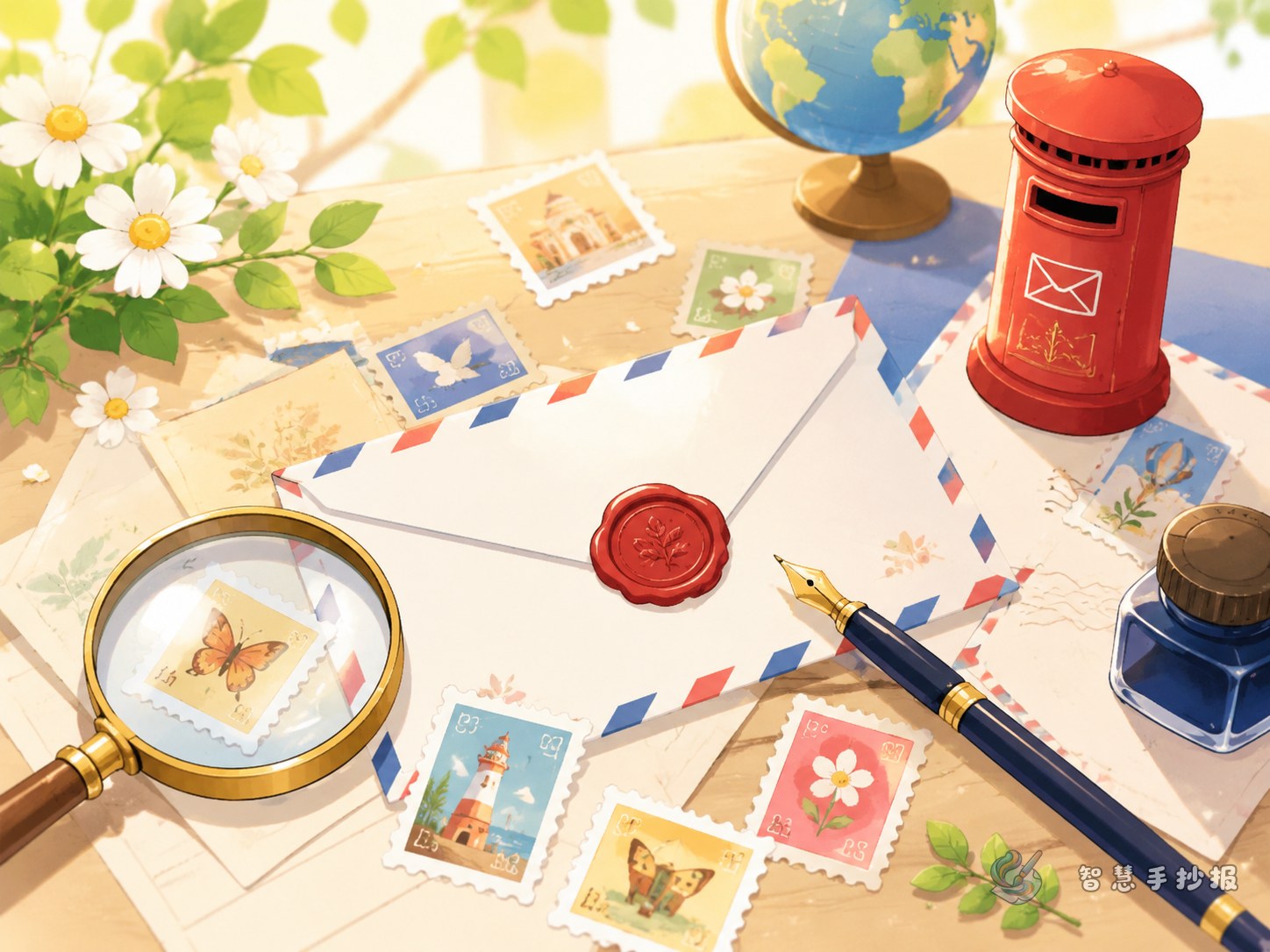
Stamps often show people, landscapes, festivals, animals, and buildings. You can write that although a stamp is small, it reflects history, culture, and local identity. Add a few hand-drawn stamp frames to make this part more lively.
Section 3: What should we pay attention to when writing a letter?
- Use a polite greeting and proper opening.
- Write clearly and sincerely in the main body.
- End with a kind closing or blessing.
- Keep the handwriting neat and the format tidy.
This can be the central section because it connects culture with everyday manners.
Section 4: How to write an envelope properly
Briefly explain that the recipient’s address, name, and postal code should be written clearly, and the sender’s information should also be complete. The goal is to show that accurate writing is an important part of sending mail.
Section 5: A letter I most want to send
This section can feel more personal and warm. Students can write a few lines to a future self, a friend, a family member, or a teacher. It makes the handwritten newspaper feel more original and connected to real emotions.
Ready-to-use writing materials
A stamp may be small, but it carries rich cultural meaning. It not only helps a letter travel, but also records the spirit of its time.
Letter writing is a warm way to communicate. Writing down greetings, blessings, and thoughts carefully is itself a form of respect.
Civilized communication starts with proper writing; sincere expression starts with one letter.
One stamp connects distance, and one letter delivers true feelings.
How to arrange the page like a finished project
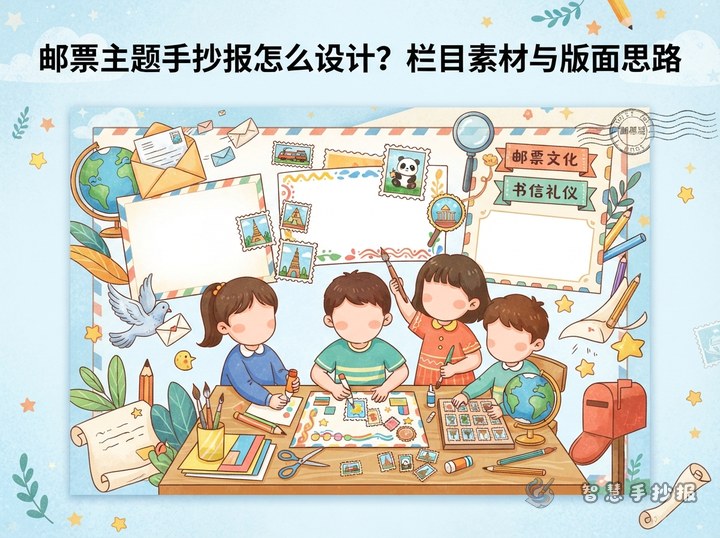
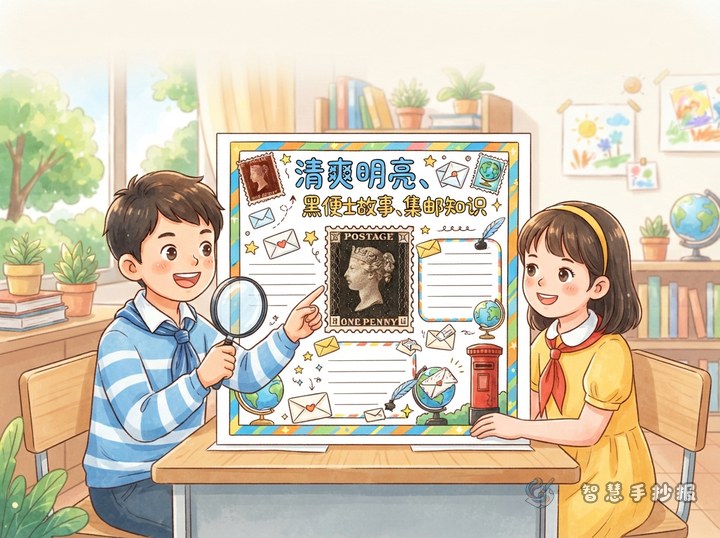
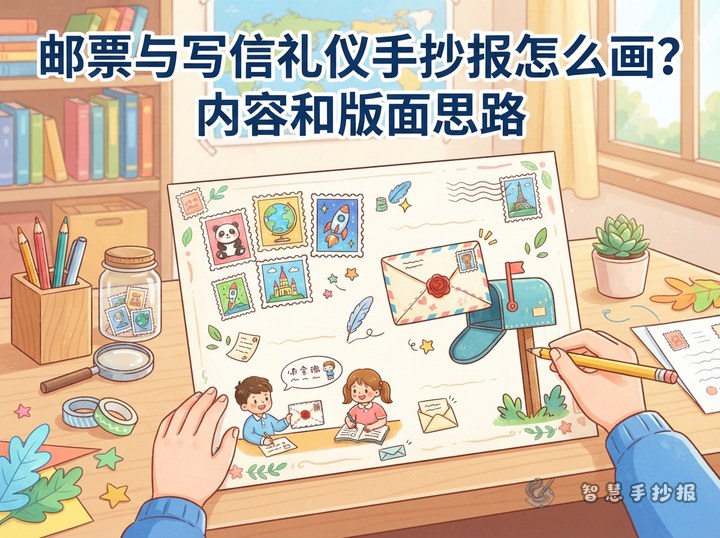
You can use a top-middle-bottom structure. Put the main title at the top with small stamp-shaped decorations on both sides. In the middle, place the two core parts: stamp culture and letter etiquette. At the bottom, add “A message I want to send” or “Polite mailing tips” to complete the page.
- Main colors can be red, blue, and cream for a classic postal feeling.
- Borders can be drawn like stamp perforations for a simple themed effect.
- Useful small decorations include envelopes, postboxes, postmarks, and postcards.
- Important lines can be highlighted with larger text or bold subheadings.
Easy production tips for students
First decide on three to five sections, then add two or three short paragraphs to each one, and finally decorate the page with matching themed elements. This is much easier than starting with a lot of drawing at once. Do not overcrowd the page. Leaving some blank space will make the whole work look cleaner.
If you want to continue with faster layout editing, title changes, and decorative section design, you can keep creating your project in the Smart Handwritten Newspaper WeChat mini program.