Why the Winter Solstice Works Well as a Poetry Poster
The winter solstice is one of the oldest markers in the Chinese calendar, and the old saying goes that it is as important as the New Year. Families in the north make dumplings, families in the south cook sweet rice balls, and many people start the nine-nine cold count or colour in a nine-nine chart. That mix of season, custom and poetry makes a poetry appreciation poster much richer than a plain page about a solar term.
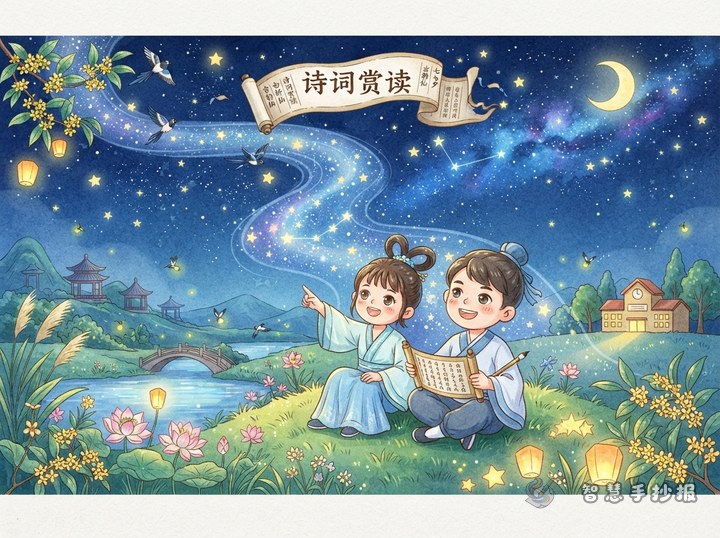
A simple theme line for the top of the page: poems for the cold, customs for the warmth. Choose poems and sections around that line and the layout will hold together.
Three Poems Are Plenty for One Poster
Do not overload the page. Copy one or two lines from each of three poems and leave the rest of the space for short notes and drawings.
Homesickness: Bai Juyi, thinking of home at the solstice
The poet meets the winter solstice at a post station, hugging his knees by a lamp with only his shadow beside him. A one-line note works well here: on a night when families gather, he sits alone. This fits an emotional corner of the page.
Season and hope: Du Fu, 'Little Solstice'
The couplet about heaven's seasons pressing on day by day, and spring coming again as the solstice arrives, makes a strong main title or centrepiece. After the winter solstice the days begin to lengthen, so spring feels close.
Everyday winter: the Nine-Nine Cold Song or Lu You
Lines such as 'first nine, second nine, hands stay in sleeves; third nine, fourth nine, walk on the ice' are easy to remember and easy to copy into a small box. For a quieter tone, use Lu You's image of the sun reaching its southern point while the house stays still.
Four Sections That Keep the Page Tidy
- Poem file cards: title, poet, dynasty and the chosen lines, lined up vertically.
- One-line appreciation: a single sentence of your own beside each poem, not a long translation.
- Solstice customs corner: dumplings, sweet rice balls, remembrance of ancestors, the nine-nine count and the cold chart, one line each.
- My winter note: one small thing you did this winter solstice, so the poster sounds like you.
Colour and Layout: Cool Base, Warm Accents
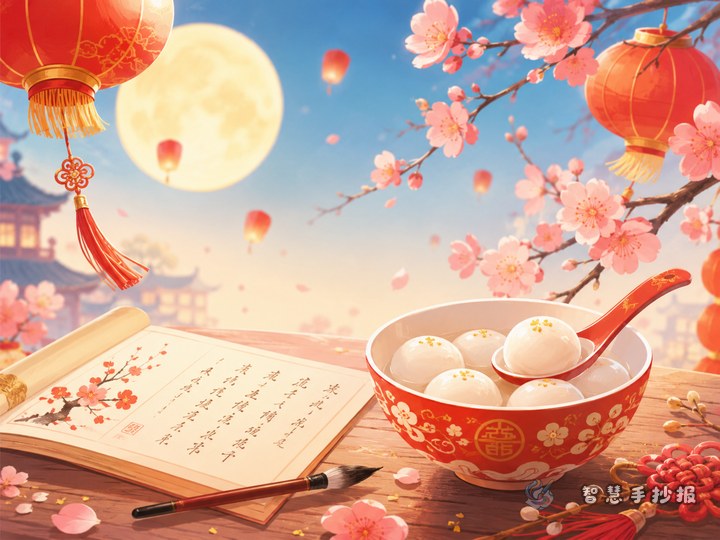
Use off-white, pale grey-blue or soft green for the background, and dark blue, ink green or deep red for headings. Then add a little warm yellow or orange-red on dumplings, rice balls or lanterns. The cool-and-warm contrast matches the mood of the poems.
- Place the main title across the top third with the largest lettering.
- Divide the body into two or three columns and keep the line spacing wide.
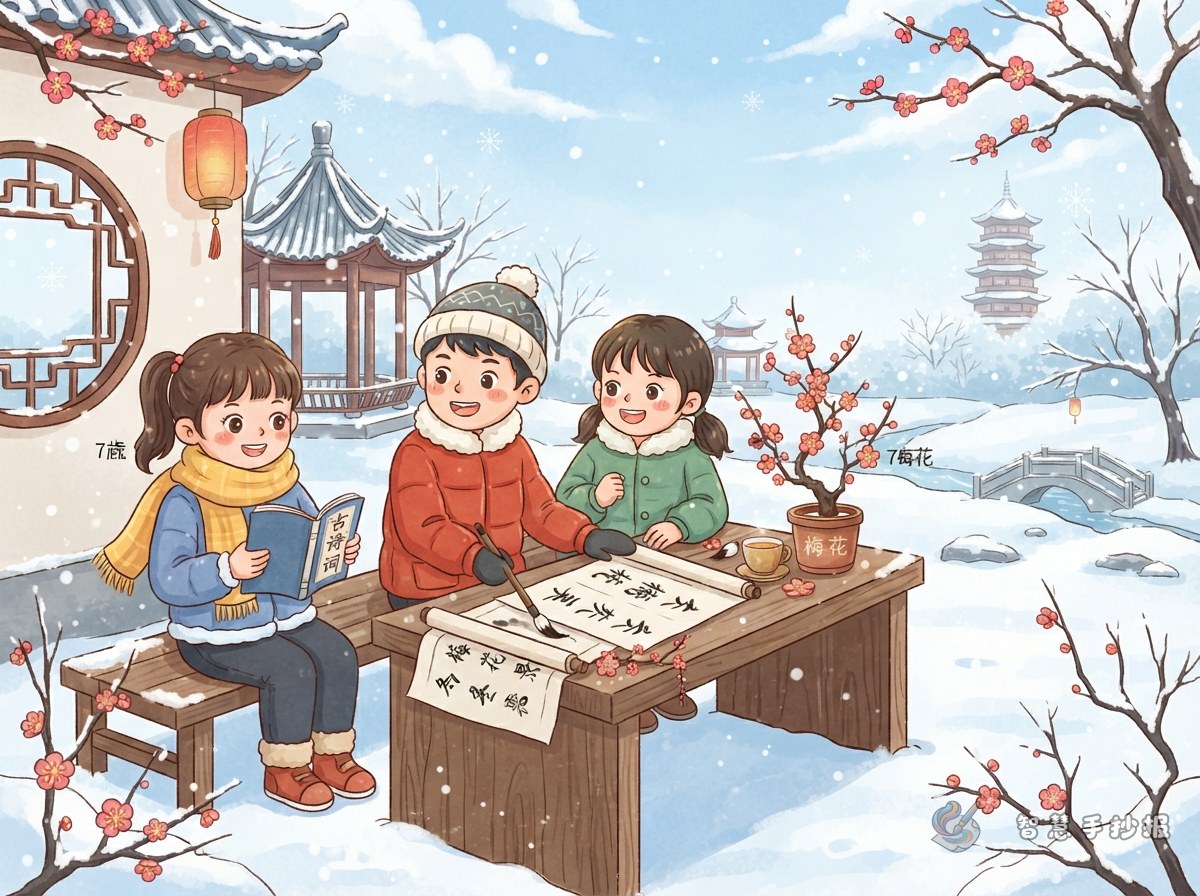
- Fill the corners with snowflakes, plum branches or a small nine-nine chart so decorations do not crowd the text.
- Leave one empty patch for a poem title; white space looks better than a completely full page.
Order of Work Before You Start Writing
- Sketch the blocks lightly in pencil: title, sections and illustrations.
- Copy the poems in neat regular script, and write your own notes slightly smaller to show what matters most.
- Add colour and outlines last, keeping the drawings simple so they never cover the words.
- If you want a ready-made frame and text, the 智慧手抄报 WeChat mini program offers Winter Solstice layouts and poem cards you can copy from, which saves time on arranging the page.