Begin with a Simple Explanation
When making a handwritten newspaper on this topic, there is no need to sound too academic. A clear opening line works best: Chinese opera percussion patterns are a rhythm language created by instruments such as gongs, drums, and cymbals to support stage performance. They do more than add sound. They help shape action, timing, atmosphere, and dramatic effect.
This short introduction can sit under the main title and help readers understand the topic at once.
Useful Sections You Can Add
Section 1: What Do Percussion Patterns Do?
- Guide entrances and exits
- Match movement and fight scenes
- Create excitement, tension, or dignity
- Help the audience feel changes in the story
Section 2: Where Can You Hear Them in Opera?
- When a character appears on stage
- During battle or action scenes
- At turning points in the plot
- When the stage mood suddenly changes
Section 3: Why Are They Interesting?
The most fascinating part is that they connect sound and movement. Audiences do not only hear music. They also see how the rhythm supports every gesture, step, and dramatic pause on stage.
Short Text Materials for the Poster
These lines can be used directly or adapted for student writing:
- Chinese opera percussion patterns are an important part of traditional stage performance.
- The sound of gongs and drums can signal action, movement, and emotion.
- In opera, music does not only sound beautiful. It also helps tell the story.
- Percussion patterns often appear in entrances, transitions, and action scenes.
- When watching traditional opera, listening carefully is just as important as watching closely.
If you have extra space, add a reflection sentence about how traditional opera can be both seen and heard through rhythm.
How to Design the Page with Rhythm
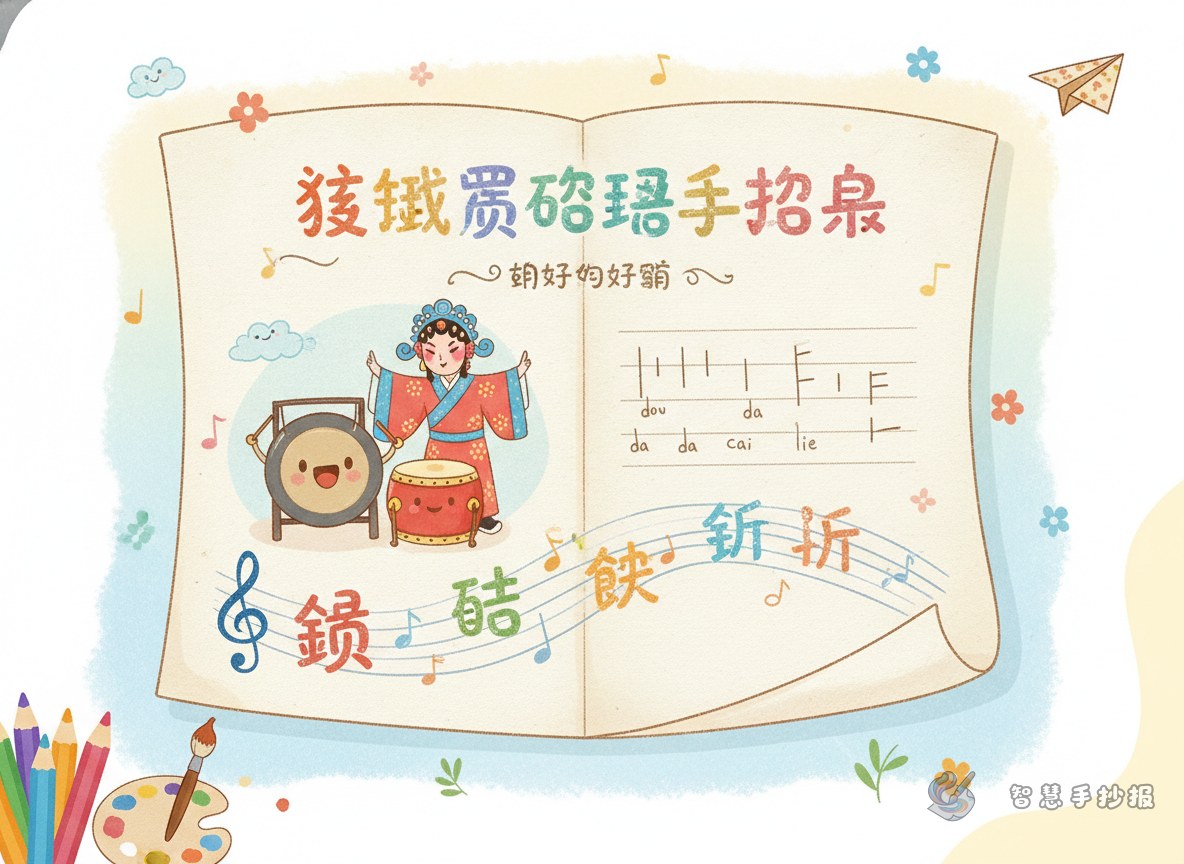
- Place the main title at the top and shape it like a drum, gong, or stage signboard.
- Use two or three clear columns for definition, functions, and examples.
- Add dotted lines, round icons, or repeating marks to suggest drumbeats.
- Decorate with clouds, stage patterns, or simple percussion-themed borders.
For colors, red, gold, and black create a traditional opera feeling. Younger students can also choose orange and light yellow for a brighter and softer page.
How to Keep It Traditional but Easy to Read
Many students worry that traditional opera topics may feel too difficult. A simple method is to organize the content around three ideas: sound, movement, and stage. As long as the newspaper explains how these three work together, the topic will feel clear and lively.
You can even present the whole page as a small discovery: traditional opera is not only about singing and costumes, but also about rhythm that tells part of the story.
Final Check Before Finishing
- Make sure the title clearly highlights percussion patterns
- Include what it is, what it does, and where it appears
- Keep the text balanced so one area is not too crowded
- Choose decorations that match opera culture instead of random drawings
If your text ideas are ready and you want to improve the layout, colors, and presentation, you can continue creating in the Zhihui Shouchaobao WeChat mini program.