Get the identity right: a Qing physician of the warm disease school
Before decorating the page, make the person clear. Ye Tianshi, whose given name was Gui, lived in Wuxian in Jiangsu during the Qing dynasty. He was skilled at treating warm and heat-related illnesses and is remembered as one of the four great physicians of the warm disease school. His book, On Warm Diseases, set out a way of judging how deep an illness has gone.
What makes him a good subject for a handwritten newspaper is not only his skill but his attitude to learning. Put the famous physician and the lifelong student side by side, and your theme becomes clear.
Three ready-to-write story lines you can turn into boxes
1. Never too proud to ask
Tradition says that even as a young practicing doctor, Ye Tianshi would call on anyone said to have a special skill, even if that person was less famous or younger than himself. Folk accounts mention that he studied under more than ten teachers. The point is not the exact number but the spirit: there is always something more to learn.
2. Rich or poor, the illness comes first
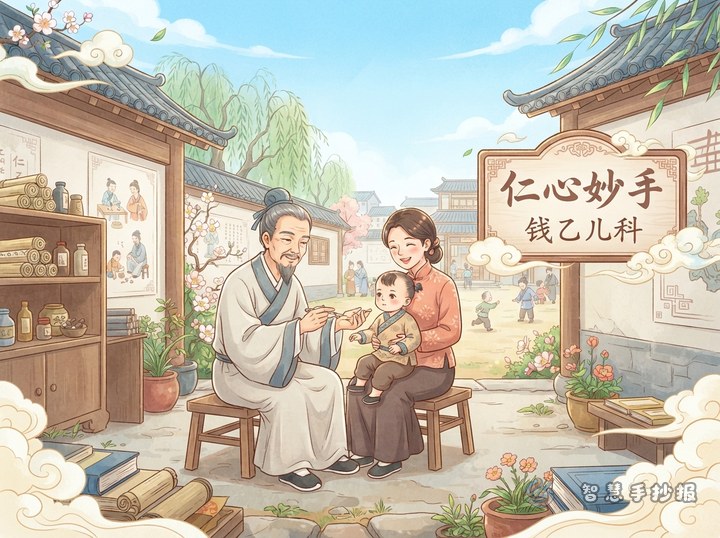
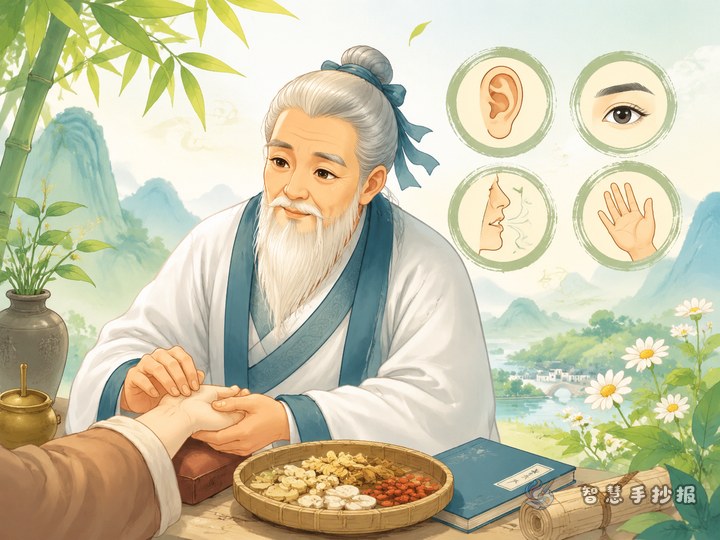
In popular stories he gave poor patients the same careful attention as wealthy ones. He would ask about symptoms and observe the patient's complexion before any talk of fees, and sometimes charged little or nothing when a family was struggling. This scene is easy to draw: an old man helped through the door while the doctor sets down his book and takes the pulse.
3. Hard work on difficult cases
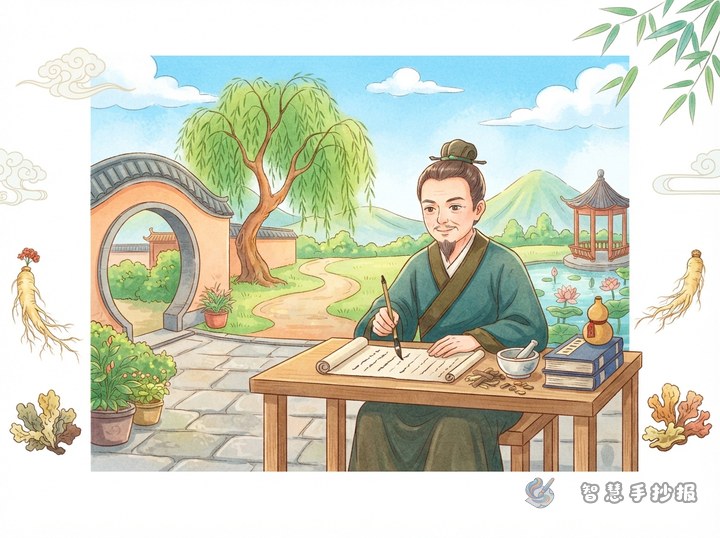
Another widely told detail is that when a case puzzled him, he would not write a careless prescription. He would think it over, ask others, and follow the patient's changes closely. That is exactly what the phrase never tire of diligent practice means.
Text you can copy straight onto the page
Short profile box
- Name: Ye Tianshi, given name Gui
- Period: Qing dynasty
- Known for: treating warm diseases; one of the four great physicians of that school
- Main work: On Warm Diseases
- Key words: humble, diligent, kind to patients
Short lines for a quote column
- Learn medicine first, learn to be a good person first.
- The more skilled you are, the more willing you should be to be a student.
- Every patient deserves the same careful questions.
- One more question may mean one more chance to help.
A layout that keeps a story page tidy
- Title band: write Ye Tianshi, the Physician Who Kept Learning in large letters, with a small seal-style square beside it.
- Profile box: a narrow column on the left, no more than five lines, framed with a dotted line.
- Story boxes: two or three boxes on the right, each with a small heading and two or three lines of text, edged like a scroll or bamboo slips.
- Reflection strip: across the bottom, one short quote plus your own sentence, for example next time I meet a hard question I will ask someone too.
Use soft green, cream and light blue as the base colors, dark ink for headings, and pale lines for decoration. The page stays fresh and your handwriting stays easy to read.
Illustration ideas that stay on topic
- A medicine chest and a herb-grinding pot as matching decorations beside the title.
- A teacher and student seated at a desk with an open medical book.
- A herb leaf, a brush and a stack of thread-bound books as corner ornaments.
- Simple courtyard and door lines to suggest the many visits he made to other physicians.
Do not fill every space. Leaving some blank paper makes the writing easier to follow.
Small tips before you start writing
Sketch the four areas lightly in pencil first, then copy the text. Keep the story boxes to a similar number of lines so the page looks even. When you use a folk story, add a phrase such as it is said or tradition records to make your writing careful.
If you are short of time, finish your text first and then open the Smart Handwritten Newspaper mini program in WeChat to choose an ancient physician template and borders, so you only need to copy the words neatly into place.