Begin with a story about finding useful help for ordinary people
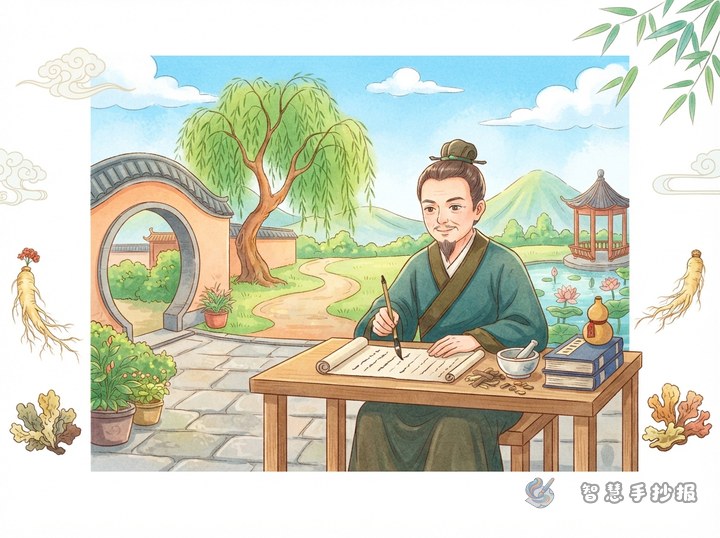
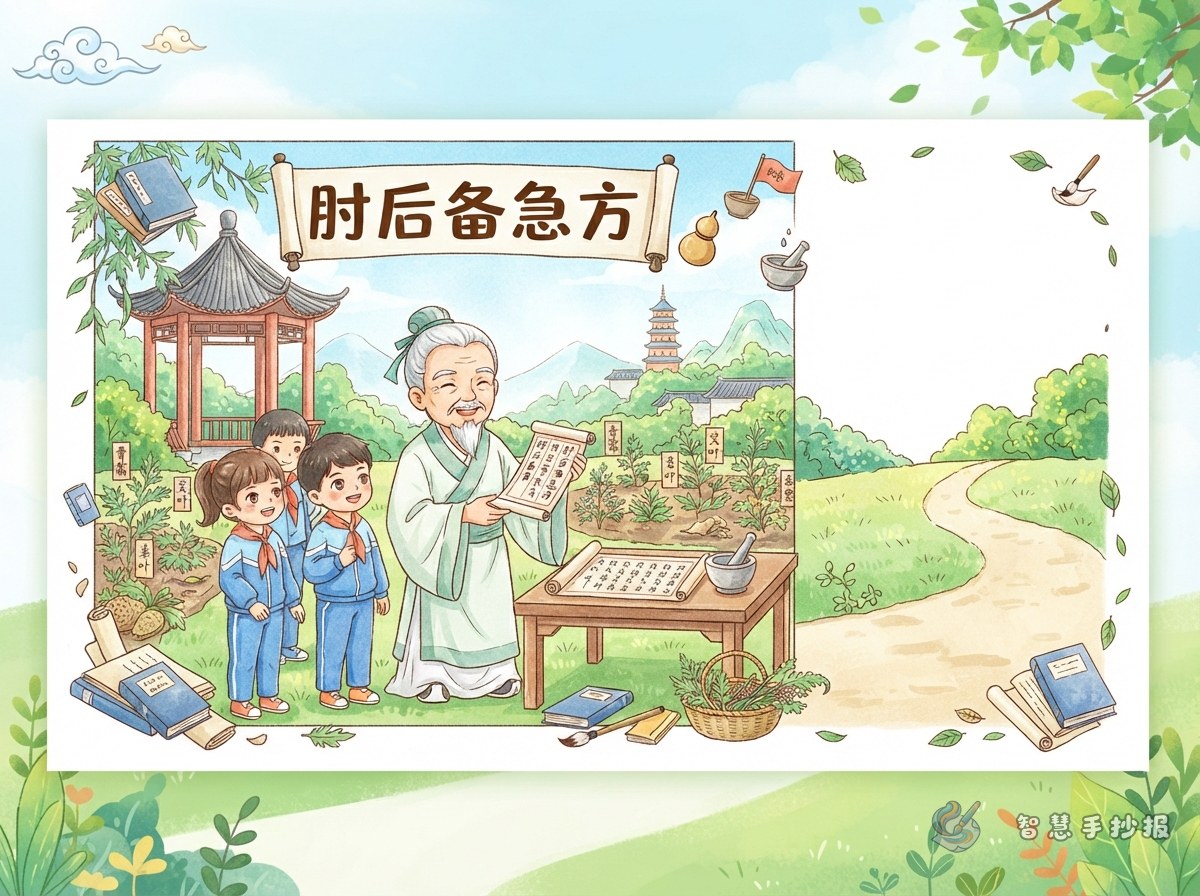
This poster can use Ge Hong and his work Emergency Prescriptions Kept at Hand as its central theme. Ge Hong lived during the Eastern Jin period and valued practical medical knowledge. He collected and recorded methods for dealing with emergencies and common illnesses so that people with limited resources could have useful references. You may begin with this sentence: “A good physician does not only know how to treat illness; they also preserve useful knowledge for more people.”
Key sections for explaining Ge Hong’s contribution
Section one: A short profile
- Name: Ge Hong, a medical scholar and Daoist thinker of the Eastern Jin period.
- Major work: Emergency Prescriptions Kept at Hand, a collection focused on simple and practical medical experience.
- Personal qualities: He valued learning, careful organization, and applying knowledge to real problems.
Section two: What the title suggests
“Kept at hand” suggests that the book was intended to be available when needed, while “emergency prescriptions” highlights its practical purpose. Draw a scroll, medicine box, or bamboo slips to show this idea. Add a note that an ancient medical book is historical material and cannot replace modern professional diagnosis or treatment.
A medical-ethics comic: knowledge should help others
Create a three-panel comic. In the first panel, ordinary people feel worried when someone suddenly becomes unwell. In the second, Ge Hong carefully collects and organizes medical experience. In the third, the recorded knowledge reaches more people. Place four words beside the comic: learning, practicality, compassion, and responsibility. The ethical message should be concrete: studying medicine is meant to reduce suffering, sharing useful knowledge can lessen helplessness, and matters involving life require care and responsibility.
A layered page layout that is easy to read
- Write the main title at the top and draw Ge Hong, bamboo slips, or an ancient medicine box beside it.
- Place the profile and book introduction on the left in a light brown or cream-colored box.
- Use the center for the comic about organizing medical knowledge.
- Set up four colored circles on the right for learning, practicality, compassion, and caution.
- End with this lesson: “Learning useful skills is not only for ourselves; we should also help others within our ability.”
Keep each section short so the page does not look crowded. Dark green and brown work well for headings, while black is suitable for the main text. Add leaves, a medicine mortar, and page decorations around the edges. To arrange columns and decorations more quickly, you can continue designing in the WeChat mini program 智慧手抄报 and adjust the layout to fit your paper.