Start with a spring mood instead of too much information
Guyu, the last solar term of spring, is perfect for showing rain, tea, farming, and growing life. A good handwritten newspaper should first create a fresh seasonal feeling. You can give it a title like “Welcome to Guyu” or “Spring Rain and Growing Grains” so the whole page feels connected to the season.
For younger students, it is better to focus on simple and vivid ideas: what Guyu means, what people see during this time, what customs appear, and what farmers do in the fields. That keeps the project practical and suitable for a handwritten newspaper.
Useful sections students can write directly
The meaning of Guyu
Guyu means “rain nourishes grain.” It tells us that rainfall increases and crops grow better during this time. It also reminds people that this is an important period for spring planting and field care.
Guyu and tea picking
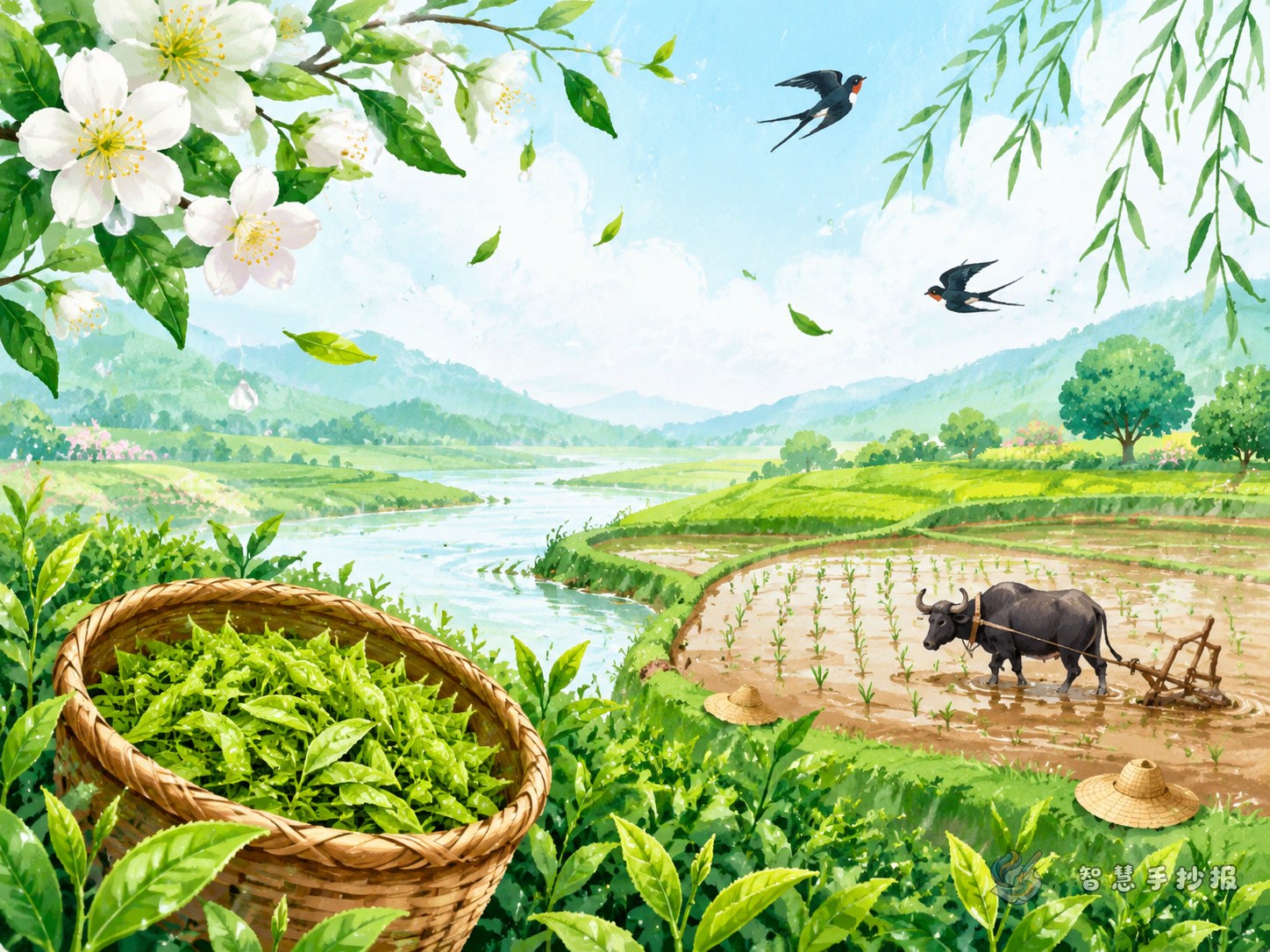
The days around Guyu are a well-known tea-picking season. New spring tea is fresh and fragrant, and tea gardens are full of bright green leaves. This gives the page a very clear seasonal image.
Guyu and spring farming
Farm work becomes busier during Guyu. Common scenes include sowing, raising seedlings, transplanting rice, and caring for crops. A short sentence like “Farmers work hard in spring to welcome a good harvest in autumn” fits well here.
The three signs of Guyu
This part can be short and traditional: duckweed begins to appear, birds become more active, and spring signs around mulberry trees grow stronger. Even simple explanations can add cultural flavor to the page.
Add customs that make the theme feel special
To keep the newspaper from looking like a general spring page, include a few small custom-based points.
- Tea picking shows freshness, movement, and the beauty of spring hills.
- Spring outings or enjoying nature help build a cheerful seasonal feeling.
- Simple farming sayings can show the wisdom of working with the season.
- Seasonal foods such as spring tea or fresh wild vegetables can be mentioned briefly.
Each point only needs one or two sentences. With a few matching decorations, the whole layout will feel richer without becoming crowded.
A layout idea that stays clean and balanced
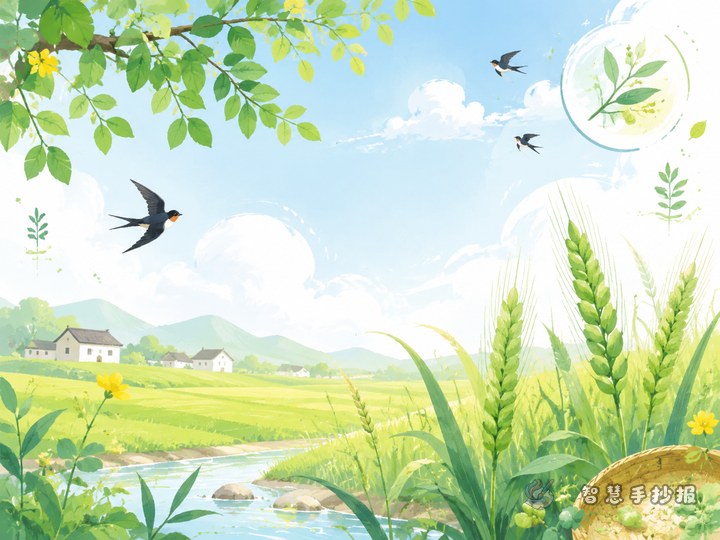
A Guyu page looks especially good with a light top area and a steadier lower section. Put the main title at the top, then decorate it with raindrops, clouds, swallows, or tea leaves. In the middle, place two main text boxes such as “What Guyu Means” and “Tea-Picking Season.” At the bottom, add smaller blocks like “Spring Farming,” “Three Seasonal Signs,” and “Short Spring Lines.”
- Make the main title slightly larger and rounder in style.
- Use borders with leaves, vines, or soft rain lines instead of heavy frames.
- Choose simple illustrations like baskets, buds, seedlings, or umbrellas.
- Leave enough blank space so the page feels fresh and readable.
If the paper is wide, a left-right column design works well. If the space is smaller, use a top-and-bottom arrangement to avoid crowding.
Short lines and a simple ending
A few easy lines can make the page feel complete:
- Gentle Guyu rain, green fields grow.
- Spring rain falls, and life rises.
- Tea fragrance fills the hills, and farm work begins.
- Treasure spring and welcome the season.
You can end the page with a short idea like this: Guyu is not only a solar term of spring, but also a season of labor and hope. Through this handwritten newspaper, we can feel both the beauty of nature and the wisdom of traditional life.
If you already have your theme and sections ready, you can continue polishing the layout and design in the Smart Handwritten Newspaper WeChat mini program.