Start with one clear focus
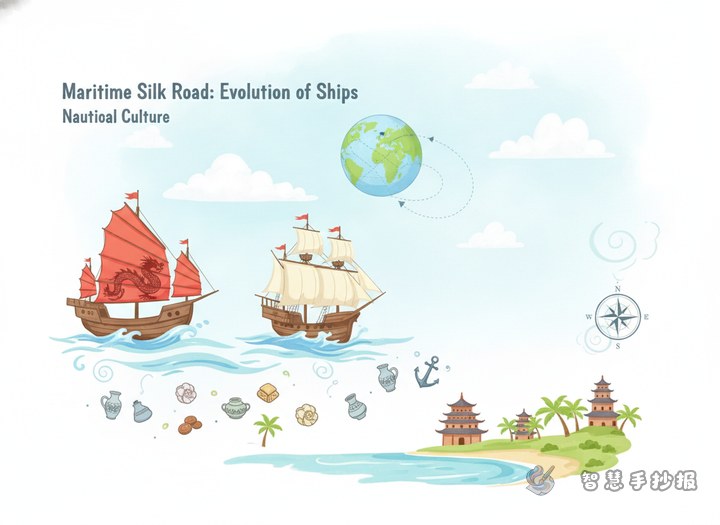
A good Maritime Silk Road poster should help readers understand the topic at a glance. Instead of collecting random history facts, build the page around sea trade routes, ships and navigation, and cultural exchange. This makes the poster feel complete and easy to follow.
For primary school students, a simple theme such as “Civilization Across the Sea” or “The Maritime Silk Road in My Eyes” works especially well. Once the theme is set, the writing and decoration become much easier to arrange.
Best content choices for the poster
What is the Maritime Silk Road?
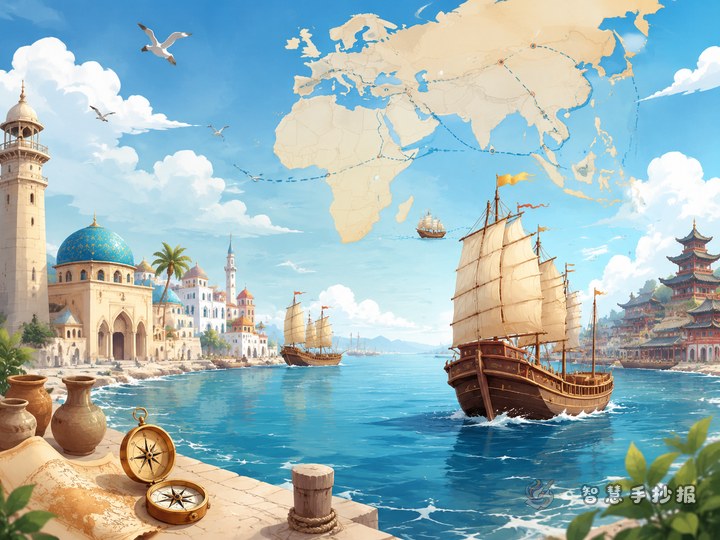
Use a short explanation: in ancient times, people used sea routes to carry silk, porcelain, tea, and other goods to distant places, while also bringing back new products, ideas, and culture. It was not only a trade route, but also a route of friendship and exchange.
Routes and ports
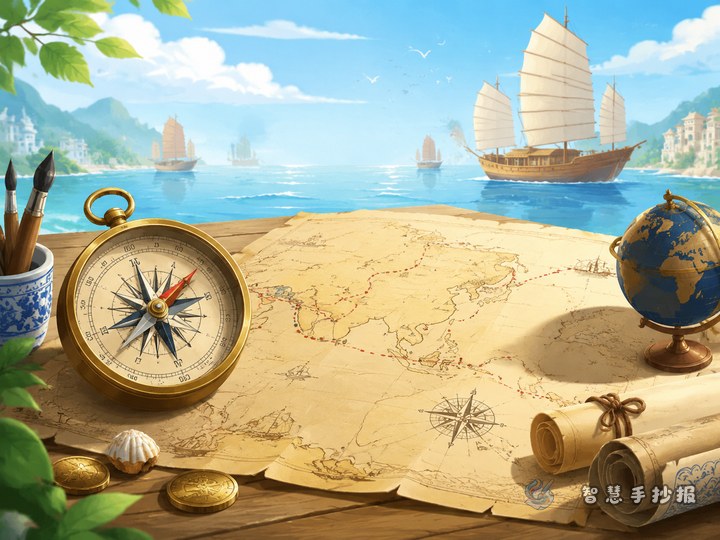
You do not need a complicated map. Just mention several representative ports or coastal stops and describe the journey in a simple way, such as “ships left the harbor, crossed the sea, and connected different lands.”
What made ancient sailing possible?
- Sailboats for long-distance travel
- Compasses to help find direction
- Stars and sky observation for navigation
- Ports for loading goods and meeting people
These details are perfect for a small fact box on the poster.
What did sea exchange bring?
You can mention trade in goods, shared food culture, artistic influence, and technical learning. This gives the poster more depth and shows that the topic is about cultural contact, not only ships.
Short text materials you can use directly
- The Maritime Silk Road connected oceans and civilizations.
- Ancient ships carried silk, porcelain, and tea across the sea.
- Navigation required courage, wisdom, and teamwork.
- Sea travel helped different regions learn from one another.
- Sailboats brought trade, friendship, and new ideas to faraway places.
If you need one final sentence, you can write: “From the Maritime Silk Road, I can feel the bravery and exploring spirit of ancient people.”
A layout that looks neat and impressive
A practical design is a main title in the center or top, side sections for knowledge, and a short conclusion at the bottom. Put the title in a bright blue or orange outline, then use simple waves, wheels, or compasses as decoration.
- Keep 4 to 6 small sections for a clean structure.
- Make the amount of text in each part similar.
- Leave some blank space so the page does not look crowded.
- Use ocean colors like blue, teal, cream, and a small amount of gold.
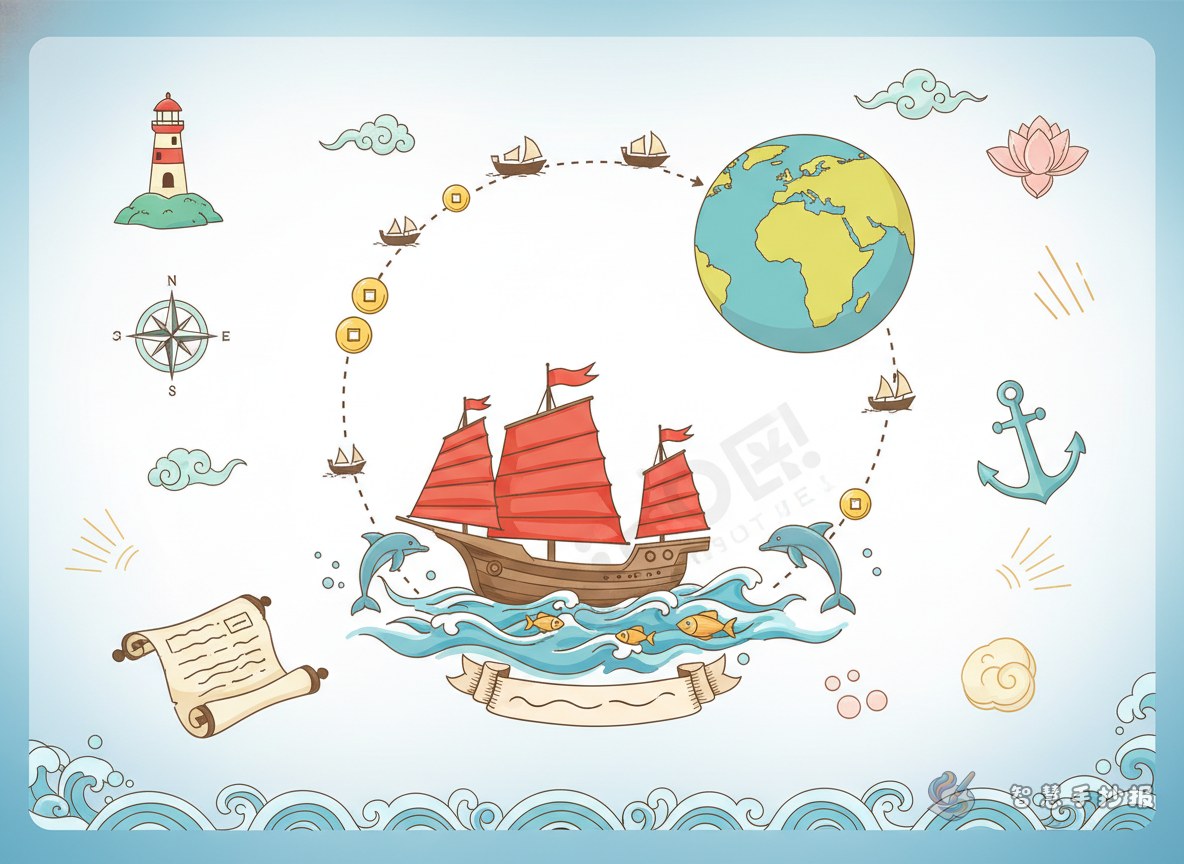
Easy drawings that match the theme
- Sailboats
- Wave borders
- Compasses
- Lighthouses
- Anchors, shells, and seagulls
- Simple route lines on a map
These small drawings make the poster feel lively without taking too much time.
Common mistakes to avoid
- Do not fill the page with long blocks of text.
- Do not focus only on history names and forget navigation culture.
- Do not use a title that is too general.
- Do not let decorations cover important writing.
If you already have your topic but still need help refining the layout, you can continue designing in the Zhihui Shouchaobao WeChat mini program.